
All Stories by Maria Temming
- Climate
Let’s learn about the science of the Winter Olympics
From scientific innovations to climate change and weather, there’s plenty of science to be found among the feats of amazing athleticism.
- Chemistry
Scientists Say: Decay
This word can refer to rotting flesh or the transformation of radioactive atoms.
- Physics
Scientists Say: Voltage
Voltage is a measure of how much electricity is available to power devices.
- Materials Science
Let’s learn about glass
Unlike the atoms in other solids, the atoms in glass don’t exist in an orderly crystal structure. They’re more jumbled up, like the atoms inside liquids.
- Life
Scientists Say: Bacteria
Bacteria get a bad rap for making people sick, but only a tiny portion of these single-celled creatures cause disease.
- Chemistry
Scientists Say: Silicon
The chemical element silicon is used to make everything from bricks to cookware to electronics.
- Animals
Let’s learn about snot
For humans, snot plays a key role in fighting off diseases. Other animals have found different uses for the slimy stuff.
- Space
Scientists Say: Solar wind
This is a powerful gust of charged particles that flows out from the sun through the solar system.
- Animals
Let’s learn about chimpanzees and bonobos
Humankind’s closest cousins in the animal kingdom may look similar, but in terms of behavior, they’re polar opposites.
- Chemistry
This glitter gets its color from plants, not a synthetic plastic
In the new material, tiny arrangements of cellulose reflect light in specific ways to create vibrant hues in an environmentally friendly glitter.
- Animals
Scientists Say: Adaptation
This word refers to a feature of a living thing that helps it better survive in its environment — or the process of that feature evolving in a population.
- Earth
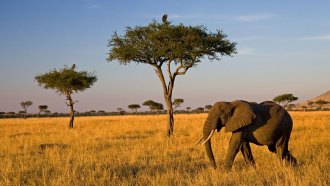
Scientists Say: Savanna
Savannas exist where there is more rainfall than in a desert, but less than in a forest.