Questions for ‘Cities across the world are sinking. Here’s how they might rebound’ 
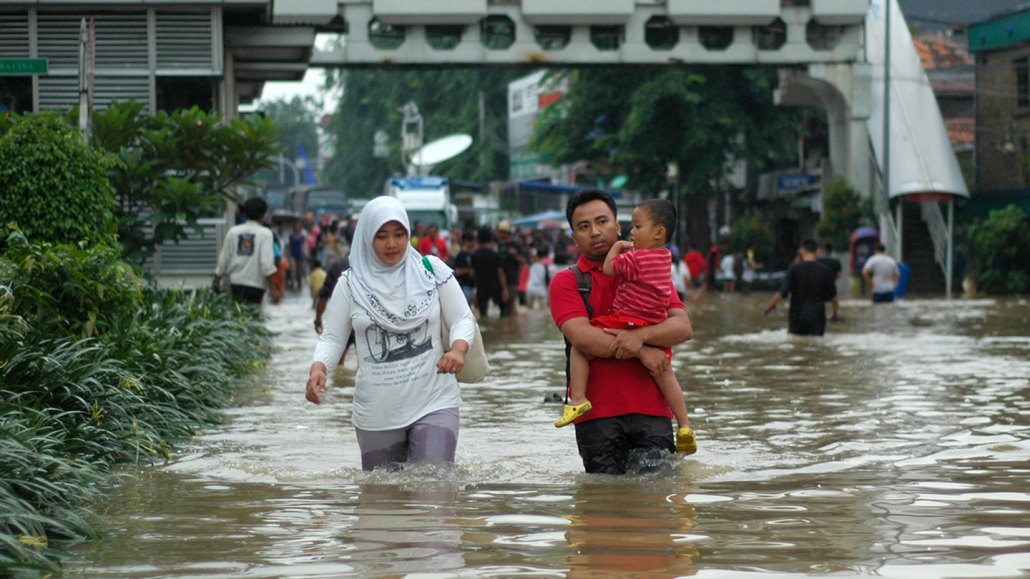
people walk through a flooded street in Indonesia, a woman and a man are walking toward the viewer in water that is thigh-high. The man is carrying a toddler.

When the ground sinks in coastal cities, these sites become especially vulnerable to flooding. Flooding can happen with heavy rain. But in some places — such as in Jakarta, Indonesia (shown here) — even the twice-daily high tides can flood large swaths of land with water.

danikancil/iStock/Getty Images Plus

To accompany Cities across the world are sinking. Here’s how they might rebound’

SCIENCE

Before Reading:

  1. How might sea level rise affect a coastal city? Give two examples of possible changes that could occur over time if sea levels continued to rise. Besides sea level rise, what else might lead to some of these same changes?
  2. Imagine two identical houses — one built on swampy land and the other built on a rock. How might the difference in ground material affect how these houses hold up over time? Briefly explain your answer.

During Reading:

  1. What is subsidence?
  2. Why do people drill into aquifers?
  3. What percent of the 28 most populous cities in the United States are experiencing some subsidence?
  4. List three examples of built objects. How can subsidence affect built objects?
  5. Give one example of how scientists use satellites to study subsidence.
  6. What is a hydrogeologist?
  7. Describe how the Potomac Aquifer’s water pressure has changed over the last century.
  8. The Sustainable Water Initiative for Tomorrow, or SWIFT, works to pump treated wastewater underground. Besides subsidence, what other problem is this approach designed to address?
  9. The ground in the Netherlands contains a lot of peat. What is one benefit of containing so much peat? How does this peat affect the Netherlands’ vulnerability to subsidence?
  10. What is paludiculture?

After Reading:

  1. In Taipei — a city in Taiwan — subsidence occurs seasonally. This city experiences wet summers and dry winters. Use the information in this story to draw a series of four pictures, one labeled for each season. Your pictures should show the same setting and illustrate land level changes over the course of a year. (You need not be an amazing artist, just use some simple pictures to represent a city. Sketches of a simple skyscraper or a house is sufficient.) For each picture, explain the connection between the season and the degree of subsidence.
  2. Imagine a city that undergoes subsidence seasonally, but the pattern occurs opposite that seen in Taipei. That means that the subsidence peak season in Taipei would be this city’s subsidence dip season. Describe a factor that could contribute to this pattern. Feel free to be creative. Look to examples of subsidence in places described in this story for inspiration.
  3. Review the sponge city plan described in this story. Imagine applying the sponge city plan to either the city of Taipei or to the farmland of the Netherlands. In your region of choice, would this approach be more likely to help the problem, worsen it or have no effect? Explain your answer.