Scientists Say
A weekly word defined, in a sentence and in context. Click here to find the alphabetized list.
- Space
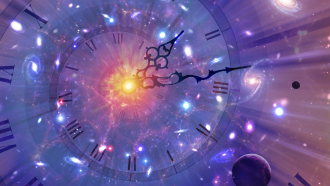
Scientists Say: Spacetime
Weaving together the concepts of space and time allows scientists to understand gravity and more.
- Brain
Scientists Say: Hallucination
Humans are not the only ones who can hallucinate. When a chatbot confidently generates a plausible but incorrect response, this error is called a hallucination.
- Earth
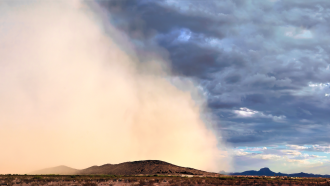
Scientists Say: Haboob
Thunderstorms in the desert create downdrafts that lift desert sand into a moving, wall-like cloud.
- Life
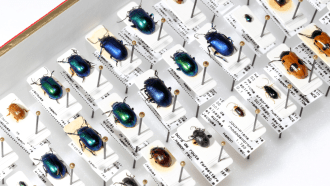
Scientists Say: Taxonomy
This field of study does more than just organize living things. It also reflects the history of life's evolution.
- Math
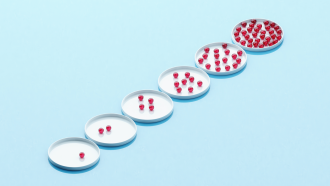
Scientists Say: Logarithm
Think of this math function as just another way to solve equations involving exponents.
- Materials Science
Scientists Say: Tenebrescence
Under ultraviolet light, some minerals adopt long-lasting new hues.
-
- Humans
Scientists Say: Chronohygiene
Artificial lights and other aspects of modern life can confuse our body’s internal sleep clock. But a few minor changes may grant us much-needed control.
-
- Earth
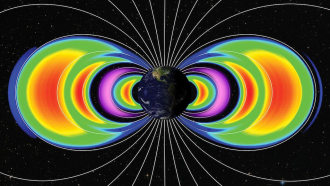
Scientists Say: Van Allen belts
Astronomers have detected these radiation belts around Earth and beyond. Jupiter’s belt is thousands of times as intense as Earth’s.
- Physics
Scientists Say: Blue whirl
Four types of smaller flames create the perfect firestorm of elegantly efficient combustion.
- Animals
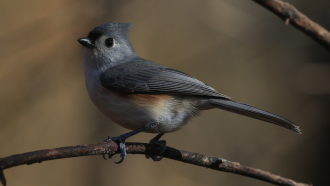
Scientists Say: Kleptotrichy
Based on the Greek words for theft and hair, kleptotrichy is a more common bird behavior than people thought.