Scientists Say
A weekly word defined, in a sentence and in context. Click here to find the alphabetized list.
- Animals
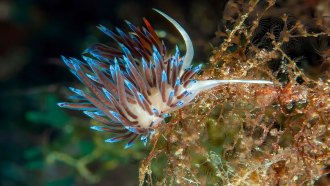
Scientists Say: Kleptopredation
It’s a hunter-eat-hunter world out there, and this feeding strategy gives some double-dipping predators a competitive edge.
- Chemistry
Scientists Say: Lipid
These oily, water-repelling molecules knit together, forming the membranes that sustain life.
- Physics
Scientists Say: Tauonium
No protons, neutrons or electrons. And yet, based on what scientists know about fundamental particles, this variety of atom just might exist.
- Tech
Scientists Say: Prototype
These rough draft models help engineers test how a concept translates from theory to reality.
- Earth
Scientists Say: Heat dome
Typically, weather enters an area, storms through, then leaves. Here's what happens when steamy summer air gets stalled.
-
- Ecosystems
Scientists Say: Ecosystem
The interplay between living things and the physical environment gives rise to Earth’s thriving, life-sustaining ecosystems.
- Space
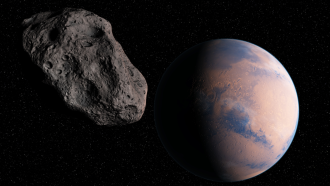
Scientists Say: Quasi-satellite
Unlike a true satellite, these tagalongs orbit outside a planet’s primary sphere of gravitational control.
- Chemistry
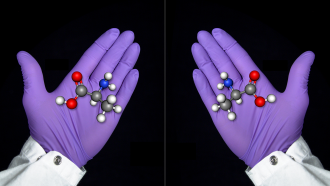
Scientists Say: Chiral
Many biological molecules come in a left- and right-handed form — and biology plays favorites.
- Earth
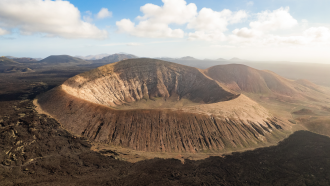
Scientists Say: Caldera
These gigantic craters form when a volcanic eruption empties magma chambers underneath, allowing the mountain to crumble into the void.
- Space
Scientists Say: Interstellar medium
Radiant energy and primordial space dust span the vast reaches between star systems.
- Physics
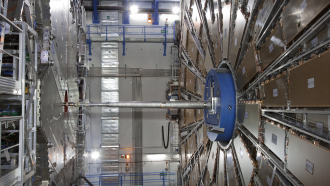
Scientists Say: Lepton
Leptons are a quirky class of particles. Besides electrons, they include ghostly neutrinos and hefty muons and tauons.