Uncategorized
- Life
Scientists Say: Excretion
Every living thing produces waste. Excretion is how organisms take out the trash.
- Health & Medicine
Deadly heat: Expected by century’s end, it’s here already
Instances of hot and humid conditions that threaten human lives are on the rise.
- Materials Science
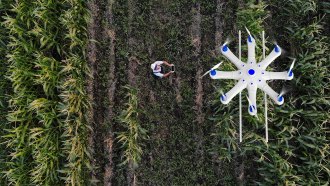
Silk-based microneedles may help treat diseased plants
Engineers have invented silk microneedles to inject medicines into plants. One day farmers might use drones to dart their sick plants with meds from the air.
- Agriculture
Let’s learn about rain
People need rain for their crops and their drinking fountains. But there sometimes can be too much of a good thing.
- Materials Science
Astronauts may be able to make cement with their own pee
Lunar dust and a compound found in urine might one day be used to build future dwellings on the moon, a new study finds.
- Health & Medicine
Waiting for a ‘smart’ toilet? It’s nearly here
With every bathroom visit, we flush away important health data. Scientists hope to change that with 'smart toilets' that analyze your body’s output.
- Earth
Scientists Say: Tsunami
This is a series of ocean waves triggered by an underwater earthquake or volcano. The event starts as small waves, but those waves can grow as they approach land.
- Archaeology
This cave hosted the oldest known human remains in Europe
Bone fragments, tools and other finds in Bulgaria suggest that Homo sapiens moved rapidly into Eurasia as early as 46,000 years ago.
- Health & Medicine
Coronavirus lockdowns may have avoided 531 million infections
Studies find big benefits from global coronavirus lockdowns. More than a half a billion of the potentially deadly infections appear to have been avoided.
- Fossils
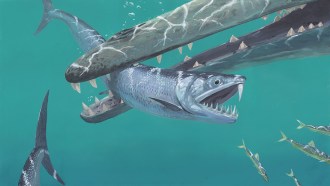
Saber-toothed anchovy relatives were once fearsome hunters
Today’s plankton-eating anchovies sport tiny teeth. But their ancient kin were armed with spiky lower teeth and a giant upper sabertooth.
- Chemistry
Let’s learn about colors
The colors we see come from electromagnetic waves traveling through space and hitting our eyes.
- Physics
Physicists foil classic oobleck science trick
Cornstarch and water — best known as oobleck — solidifies upon impact. Researchers used a new technique to make it stay liquid.