New polish could turn long nails into touchscreen styluses
It registers their touch by disrupting the screen’s electric field
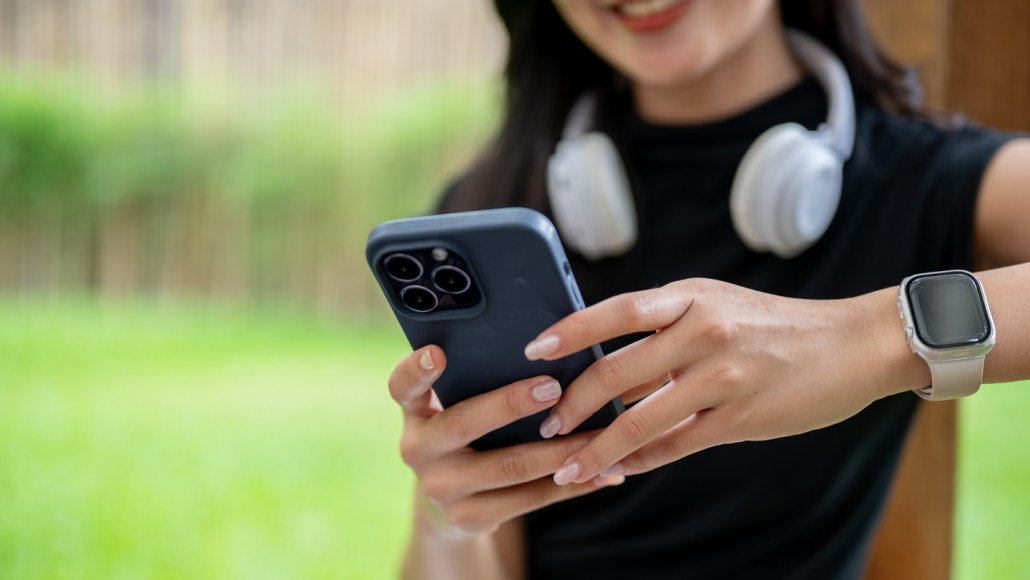
An experimental nail polish could one day make it easier for people with long nails to use touchscreens.
BongkarnThanyakij//iStock/Getty Images Plus
If you wear long nails, you know that they can make it hard to use touchscreens. But a new type of nail polish may change that. When pressed to a screen, this polish disrupts the screen’s electric field — which the device detects as a touch. That could one day let people use their long nails like styluses to navigate phones, tablets and other devices.
“This is huge,” says Shuyi Sun. It shows that practical functions “can be embedded invisibly into everyday cosmetic[s].” A computer scientist, Sun works at the Association of California Nurse Leaders in Sacramento. She did not take part in making the new nail polish. But she has studied how to make cosmetics that can sense information about the body.
Touchscreens are often made of glass. A thin, see-through coating on that glass creates a small electric field. When another electrically conductive object — such as a fingertip — contacts the screen, it disturbs that field. The device registers that disturbance as a touch.
But fingernails are nonconductive. They don’t distort a screen’s field. So they don’t register as touch. People with long nails then have to use a stylus to type, or the pads of their fingers.
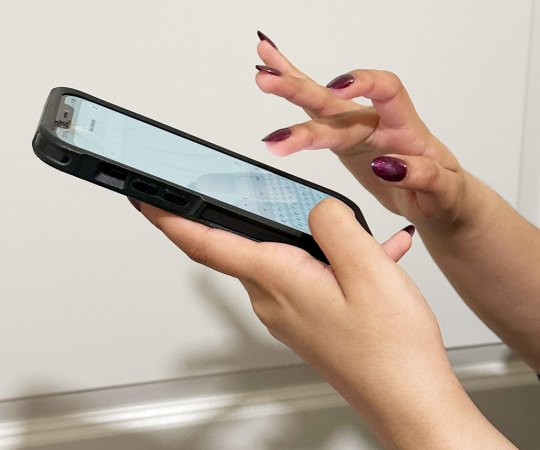
Right now, people with long nails must awkwardly use the pads of their fingers to navigate touchscreens. That can sometimes cause typing mistakes. But the new nail polish allows people to use long nails as styluses on phones, tablets and other devices.
That makes it “really hard to use your phone,” says Manasi Desai. She’s a college student studying chemistry and biology at Centenary College of Louisiana in Shreveport. Awkwardly pressing your fingertip to a screen beneath your nail can lead to typing errors, she notes. It takes some time to get used to the angle.
She and her research adviser, chemist Joshua Lawrence, set out to solve that problem.
Nailing the right ingredients
The team mixed several different chemicals into existing clear nail polish. Then, they held blobs of each batch of modified polish — dozens in all — to a touchscreen with tweezers.
Two of the added chemicals caused the clear polish to activate the screen. One was ethanolamine (Eth-an-OLL-uh-meen). The other was taurine.
Due to having some toxicity, ethanolamine is unlikely to be safe to add to nail polish. Taurine, however, is a common dietary supplement. It also occurs naturally in the human body. So it has a better chance of being safe to use.
“One of our major goals was to make [the polish] clear and colorless,” Desai says. That way, she says, “you could apply it over any manicure or even on your bare nails.” Desai debuted her new polish on March 23 at the American Chemical Society’s spring national meeting. It was held in Atlanta, Ga.
Desai and Lawrence aren’t sure why the chemicals added to the polish activated the touchscreen. But they have a hypothesis. When in contact with the screen’s electric field, the added molecules likely shuffle protons among themselves. That may move just enough charge to affect the field and register as touch. But they need more research to confirm that.
The new polish isn’t ready to hit store shelves just yet, Lawrence says. Right now, painting the polish on a fingernail doesn’t add enough of the chemical to activate the screen. In the future, this duo wants to make their formula work in thin coats on fingernails. They hope to nail down the recipe by adding more taurine.