Uncategorized
- Animals
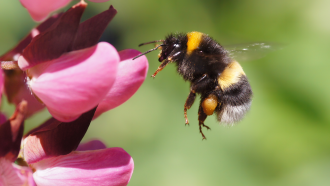
Pesticides can have long-term impact on bumblebee learning
Pesticide-laced nectar and pollen can permanently harm the brains of baby bumblebees.
- Space
Scientists Say: Quasar
This word describes the bright-shining core of a galaxy in which a supermassive black hole sucks in matter and releases a huge amount of energy.
- Climate
Did rain put the Kilauea volcano’s lava-making into overdrive?
Scientists share strongly conflicting opinions about why Hawaii’s Kilauea volcano spewed an overabundance of lava in 2018.
- Animals
Minecraft’s big bees don’t exist, but giant insects once did
Big bees buzz in Minecraft. In our world, blocky bees might starve and be stuck on the ground. Yet long ago, giant insects did roam our planet.
- Physics
Science offers recipes for homemade coronavirus masks
New studies provide data on what types of mask materials protect best against the virus that causes COVID-19. They also point to the value of a really snug fit.
- Health & Medicine
Loss of taste and smell may be top indicators of COVID-19
Loss of a sense of taste and smell are not just possible symptoms of COVID-19. A study now argues they may be among the most predictive ones.
- Materials Science
Micro-barbs could make shots less painful
A new type of microneedle design might take the sting out of shots and stick to the skin better than other approaches.
- Earth
Let’s learn about earthquakes
Dozens of quakes happen every day, but most aren’t big enough for people to notice.
-
Climb like a slo-mo Spiderman using this super suction robot
A whooshing ring of water keeps the robot’s vacuum from losing grip, even on rough surfaces
- Climate
A rainforest once grew near the South Pole
A forest flourished within 1,000 kilometers of the South Pole. That was a while ago, as in millions of years ago.
- Microbes
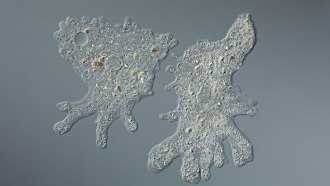
Scientists Say: Amoeba
Amoebas are single-celled microbes that move and eat with shape-shifting bulges that extend from their cells. Some are blobs. Others build a shell.
- Animals
Mice show their feelings on their faces
Pleasure, pain, fear and disgust — all can show on a mouse’s face. As computational analyses show, you just need to know what to look for.