Could a person ever wield lightning as a weapon?
Inspiration might be found in electric eels and laser-guided lightning
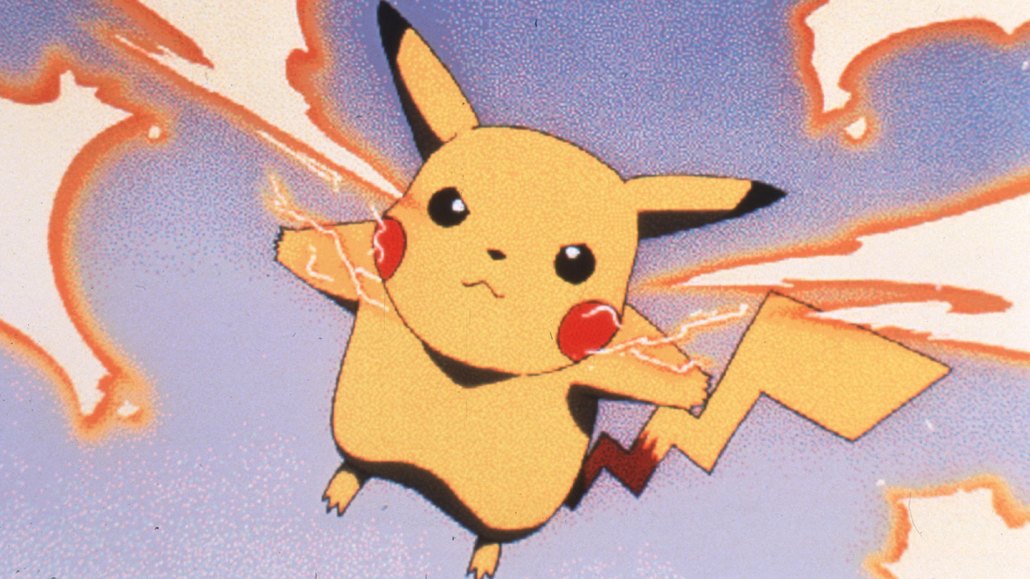
In the Pokémon series, Pikachu can aim electric attacks at enemies from its cheek pouches. In the real world, getting electricity to flow freely through the air would prove challenging.
PICTURELUX/THE HOLLYWOOD ARCHIVE/ALAMY
This is a human-written story voiced by AI. Got feedback? Take our survey . (See our AI policy here .)
In the Pokémon world, Pikachu is a chubby yellow mouse. It may look cute and harmless — but don’t be fooled. When its red cheeks start sparking and it whips out its lightning-shaped tail, Pikachu can fry its opponents with a giant surge of electricity. Its signature move, Thunderbolt, is said to carry 100,000 volts of power.
Pikachu isn’t the only character who fights with electricity. In the Marvel universe, Thor hurls lightning with his hammer, Mjölnir. In Avatar: The Last Airbender, Azula bends lightning into crackling blue arcs.
In fiction, electricity seems easy to control, like swinging a sword or pulling a trigger. But in the real world? Not so much. That’s because electricity is a flow of tiny charged particles. Those particles usually need a clear path, such as a wire, to travel along. Getting it to arc freely through the air — on command and in a chosen direction — is much, much harder.
But nature offers some examples of how to generate electricity on the fly. And engineers already have some surprising tricks up their sleeves to wrest control over lightning. From the waters of the Amazon to the tops of Swiss mountains, researchers are learning how to make and direct electric power.
Shocking creatures
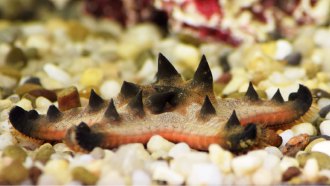
In the wild, some animals can generate their own electricity. That’s especially true of fish. Shocking swimmers include electric rays, electric catfish and the most powerful of them all: the electric eel. This long, snakelike fish lives in the Amazon River. Adult electric eels can grow up to about 2.5 meters (8 feet) long and weigh as much as 18 kilograms (40 pounds).
Like Pikachu, electric eels can choose exactly how and when they want to use their electricity. “Electric eels have amazing control over their superpowers,” says Raimundo Nonato Mendes-Júnior. He’s a biologist at the Chico Mendes Institute for Biodiversity Conservation in Brasilia, Brazil.
Electric eels send out weak zaps to find prey or talk to each other. But when they need to defend themselves or attack, they can unleash a much stronger jolt. Their biggest shock can reach 860 volts, Mendes-Júnior and his colleagues have found. That’s about seven times the electricity in a U.S. wall outlet.
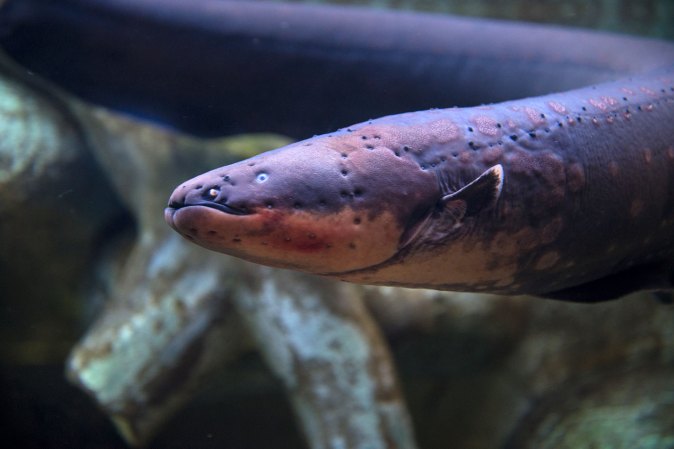
They can do this thanks to thousands of special cells in their bodies called electrocytes. These cells work like tiny batteries. They’re stacked in long rows, each with a positive and negative side. When the electric eel wants to strike, it sends a signal that tells all the electrocytes to fire at once. Then, a burst of electricity zaps into the water.
“Electric eels give lots of shocks, but they recover quickly,” says Mendes-Júnior. That’s because they eat often and are really good at turning food into electric power.
Because water spreads out electricity, the power gets diluted before it hits the target. So when electric eels are faced with a threat partly above water, such as a caiman (a relative of crocodiles), the eels jump. They headbutt their targets in the air to deliver devastating shocks not softened by water. The higher the eel rises out of the water, the more powerful the attack becomes.
Electric eels’ battery-like cells are impressive. But their zappy attacks still have nothing on Pikachu, Thor or Azula. To supercharge electrical powers in real life, we might instead tap into some of the biggest power surges on Earth: lightning storms.
Aiming lightning
Lightning forms when static electricity builds up inside a thundercloud. As the storm churns, tiny ice particles collide and swap electrons. This causes one part of the cloud to become packed with negative charge.
Normally, air is a poor conductor. That is, electricity can’t easily flow through it. But when enough charge builds up in a cloud, it can start to break down the air around it. Electrons get ripped off their atoms, making a hot soup of free-floating charged particles called plasma.
Once plasma forms, it acts like a kind of invisible wire through the sky, says Jerry Moloney. He’s a physicist at the University of Arizona in Phoenix. Lightning strikes when electricity zips along that invisible wire.
Each bolt is loaded with power. “It’s the energy needed to power your house for a week,” says Carmen Guerra-Garcia. She studies the physics of air at the Massachusetts Institute of Technology in Cambridge.
Lightning generally takes the easiest route to the ground. It often strikes the tallest object available, such as a tree or tower. That’s why Benjamin Franklin invented the lightning rod. Lightning is more likely to hit a big metal pole sticking into the sky than anything else around it, keeping buildings safe.
But what if you didn’t want to just catch lightning in a certain place — but catch it, and then send it somewhere else?
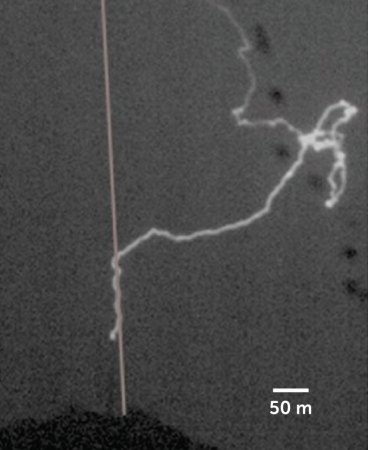
In 2021, scientists in Switzerland did just that. They used a high-powered laser to guide lightning during a thunderstorm. A laser is a super-focused beam of light that stays in a straight line. If it’s powerful enough, its energy can knock electrons off air molecules. This helps it create a thin line of plasma in the air that lightning can follow.
When lightning struck near a Swiss mountaintop, it followed a plasma channel made by the laser about 50 meters (160 feet) to a lightning rod on a tower.
If someone like Thor or Azula were to aim lightning in real life, they’d need to make a plasma path like this. “In principle, you can fire the laser in different directions and create these ‘wires’ at different points in space,” says Moloney. Then, if you didn’t want to wait for a storm, all you would need is a big enough electric charge to send your own lightning down the line.
But don’t try it at home. Moloney says, “I always joke that if you have a graduate student on the ground firing a laser, the student might evaporate if struck directly by lightning.”
Good thing Pikachu is made of sturdier stuff.