
All Stories by Bethany Brookshire
- Health & Medicine
Is the Netflix show 13 Reasons Why linked to suicide?
The Netflix show 13 Reasons Why attracted a lot of controversy for showing suicide. Two studies now look for signs that watching the show may elevate suicide risk.
- Genetics
Scientists Say: Genealogy
This is the study of someone’s ancestry. It could mean finding out about someone’s family tree or the history of evolution from one species to another.
-
Scientists Say: Optogenetics
This technique lets scientists control cell activity with light. The light triggers the cell to become more or less active.
- Health & Medicine
Scientists Say: Relapse
This is when a health condition comes back, or gets worse, after a period where it had disappeared or been improving.
- Ecosystems
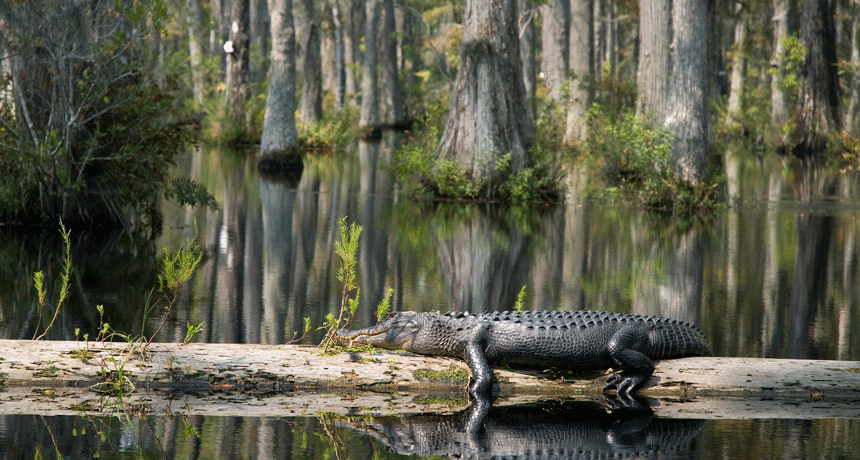
Scientists Say: Wetland
Wetlands are land areas that are flooded with water some or all of the time. They’re more than just wet, though. They filter water, shelter young animals and much more.
- Animals
Have we found bigfoot? Not yeti
Believe in bigfoot or sasquatch? The scientific evidence says bears are to blame for traces of yeti and abominable snowmen. But it’s ok to keep searching.
- Space
Scientists Say: Red Dwarf
Red dwarfs are the most common kind of star in the Milky Way. They are much smaller and cooler than our own sun.
- Climate
Using art to show the threat of climate change
Climate change can sometimes seem like a huge pile of hard-to-grasp numbers and graphs. These artists are finding new ways to help people understand big changes.
-
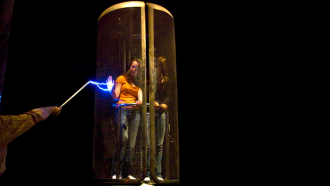
Scientists Say: Faraday cage
A Faraday cage is an enclosure that distributes electrical charge all over its outside. That keeps the inside totally safe from electromagnetic waves.
- Life
Explainer: Prokaryotes and Eukaryotes
Prokaryotes tend to be small and simple, while eukaryotes have embraced a highly organized lifestyle. These divergent approaches to life have both proved very successful.
- Animals
Could an elephant ever fly?
Dumbo is known as the only elephant to take flight. He’s not real. But could he be?
- Earth
Scientists Say: Geyser
Geysers are underground springs with vents to the surface. When the water gets heated from nearby magma, the geyser blows.