
All Stories by Bethany Brookshire
- Health & Medicine
Scientists Say: Neutrophil
Neutrophils are the first cells to arrive when an infection takes hold. They can trap, eat and spew out chemicals that fight bad bacteria.
- Animals
Let’s turn a genie blue
Aladdin’s genie is very magical. He’s also blue. What might explain that? Nature has some tricks on offer.
- Animals
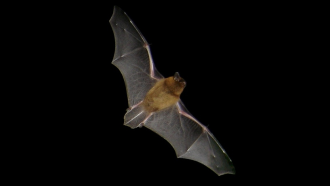
Bats in the attic prompt boys to create a better bat detector
When a teen learned he had 700 bats in his attic, he decided to develop a better bat detector.
- Computing
Novel fabric could turn perspiration into power
Sweat cools people by evaporating. A teen now wants to use it to generate electricity as well.
- Health & Medicine
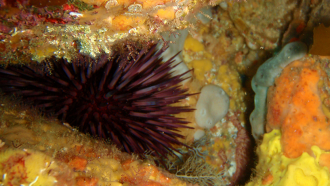
Sea urchins inspired a strong new medical staple
Teens combined forces to study how a sea urchin spine might inspire a better medical staple.
- Animals
Scientists Say: Guinea worm
Scientists and health care workers are working to eradicate this parasite, which causes a painful condition called Guinea worm disease.
- Health & Medicine
GPS jewelry helps refugee moms and kids stay healthy
Two teens wanted to help refugee parents get their kids vaccines and the nutrition they need. So the teens built a website to help — and paired it with GPS trackers.
- Science & Society
This fish ‘tag’ runs on fish power
Tags that researchers use to track fish can run out of power. A teen from Taiwan invented a tag that converts fish swimming into the electricity needed to keep it running.
- Animals
Two teens pull DNA from birds out of the air
Animals shed DNA into their environment. Usually scientists find it in water or soil. Now, two teens have figured out how to capture this “environmental DNA” from air.
- Animals
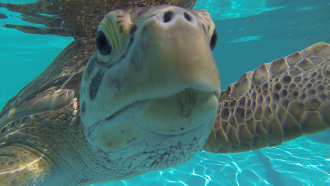
Teen designs belt to hold down a sea turtle’s bubble butt
Sea turtles hit by boats can develop an injury called “bubble butt syndrome.” One teen invented a vest to help them dive again.
- Science & Society
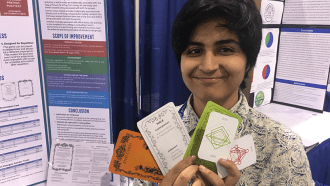
Game may help rid people of biases they didn’t know they had
After experiencing gender discrimination — a type of bias — in their own life, a teen developed a game to counter the problem.
- Space
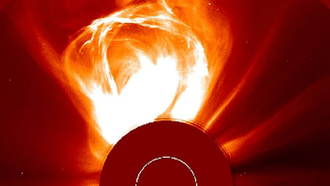
Scientists Say: Space weather
It may not be cloudy with a chance of rain, but space has weather too. Wind and ejections from the sun can send charged particles toward the Earth, knocking out our electricity.