Scientists Say: Synesthesia

This curious trait entangles the senses — and sometimes inspires art

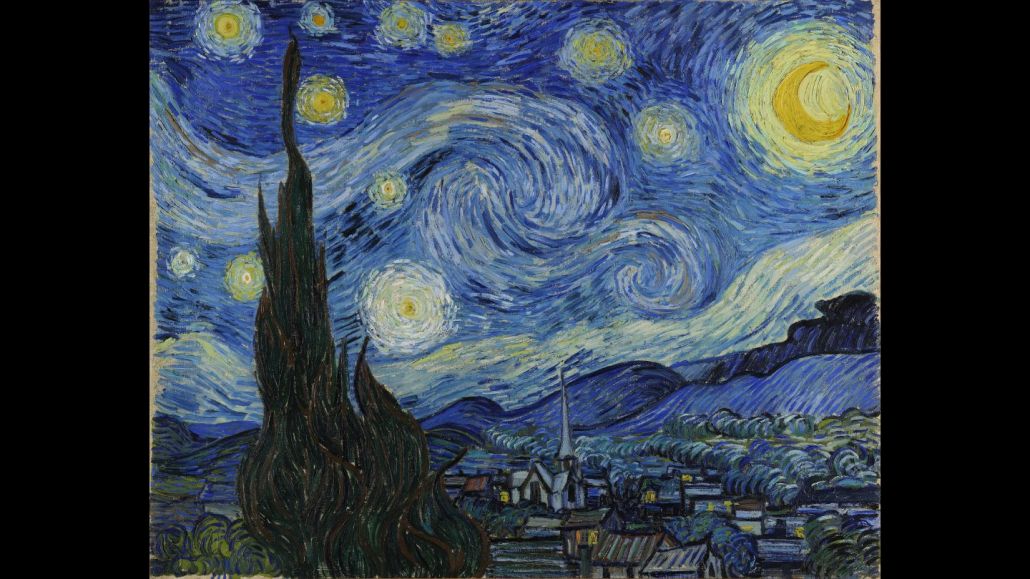
19th-century artist Vincent van Gogh is believed by many experts to have had chromesthesia. That is a type of synesthesia in which a person’s brain entangles sounds with sights.

Vincent van Gogh/Wikimedia Commons (Public Domain)

Synesthesia (noun, “sin-es-THEE-jah”)

Synesthesia is a trait that some people have in which one kind of sensory input triggers other senses. To someone with synesthesia, different colors may have different tastes. Or hearing certain sounds may cause them to see certain shapes.

This phenomenon is not a mental illness. Rather, it is considered a form of neurodiversity. Up to 4 percent of people may have some form of synesthesia.

This trait takes many forms. Grapheme-color is one type. This means that a person sees letters or numbers in different colors. For instance, when a person sees the number 7, it may always appear yellow. About 1 percent of people share this trait.

Another type is called chromesthesia. That’s when hearing a sound causes a person to see colors or shapes around them. Historians think that Vincent van Gogh, a 19th-century painter, may have had this trait. He described seeing colors around him when he played the keys of a piano.

Other famous artists, such as singer and songwriter Billie Eilish, have described this experience, too. “Everything that I make I’m already thinking of what color it is, and what texture it is, and what day of the week it is, and what number it is, and what shape,” the musician told iHeart Radio.

Scientists are not sure exactly what causes synesthesia. But they believe it is at least partly linked to a person’s genes.

In a sentence

Taria Camerino — a chef based in Atlanta, Ga. — was born with a form of synesthesia that links certain sounds with flavors.

Check out the full list of Scientists Say.

Katie Grace Carpenter is a science writer and curriculum developer, with degrees in biology and biogeochemistry. She also writes science fiction and creates science videos. Katie lives in the U.S. but also spends time in Sweden with her husband, who’s a chef.