All Stories by Maria Temming
- Physics
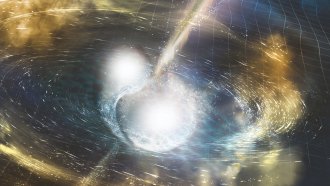
Let’s learn about gravitational waves
Gravitational waves offer scientists a new way to view extreme objects such as black holes and neutron stars.
- Life
Scientists Say: Fungi
Although some fungi can cause diseases, others can be eaten, used to make medicines or serve other useful functions.
- Animals
How boa constrictors squeeze their prey without strangling themselves
Tracking boas’ ribs in X-ray videos revealed the snakes’ squeezing secrets. It’s the latest Wild Things cartoon from Science News Explores.
- Animals
Ancient ‘ManBearPig’ mammal lived fast — and died young
Developing in the womb for a while — but being born ready to take on the world — may have helped post-dinosaur mammals rise to dominance.
- Physics
Scientists Say: Force
When an object experiences a force, its change in motion — or acceleration — depends on its mass.
- Math
Let’s learn about dealing with math anxiety
Writing about math anxiety and maintaining a “growth mindset” can help soothe stress about the subject.
- Physics
Scientists Say: LED
LEDs, or light-emitting diodes, light up TV screens, traffic lights and many other devices used in daily life.
- Brain
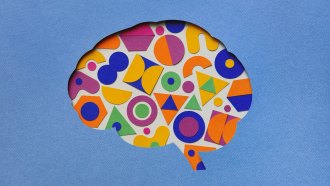
Scientists Say: Cognition
Cognition is involved in all conscious mental activity, from thinking and reasoning to remembering.
- Brain
Let’s learn about reading
Reading can be fun — but it can also be really hard. New research is exploring how to make reading easier for people of all ability levels.
- Earth
Scientists Say: Humidity
Feel sticky when you step outside on a summer day? Blame humidity — water in the air.
- Genetics
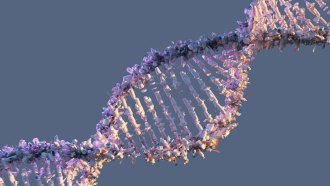
Scientists Say: DNA
Short for deoxyribonucleic acid, DNA is the molecule that determines how each living thing looks and works.
- Psychology
Scientists Say: Trauma
No one experiences trauma the same way. Its effects can be physical or emotional. Immediate or delayed. Brief or long-lasting.