Life
- Animals
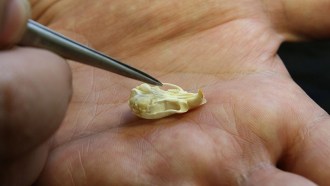
How the house mouse found its home
Once people started settling down 15,000 years ago, a mouse species followed them indoors. The animals didn’t need people to be farming and storing food.
- Animals
Nighttime lights can dim a firefly’s flash
Fireflies blink to attract mates. But when it’s too bright at night, the insects may stay away.
- Life
Weird mega-worm found to have odd diet
Giant shipworms have bacteria in their gills that produce food for them. This has made their digestive organs shrink from lack of use.
- Health & Medicine
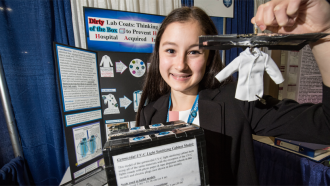
A light-filled box could blast bacteria from lab coats
Doctors can pick up bacteria on their lab coats. A teen has designed a special light-filled box to keep those coats from infecting others with those germs.
- Animals
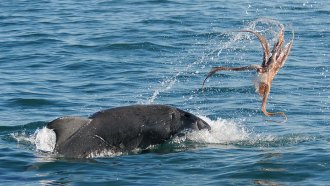
Toss and slap — how dolphins disarm a dangerous meal
Octopus can be a deadly meal, especially if you don’t have hands to cut it up. But dolphins in Australia have figured out how to eat octopus without choking to death.
- Brain
Analyze This: Sleep patterns vary widely across the world
Data on four very different groups of people show that sleep patterns vary based on the local environment, the culture and daily schedules.
- Health & Medicine
This mix turns pink when sunscreen wears thin
Many people know to put on sunscreen. Remembering to put more on is harder. A teen invented an indicator that glows pink when it’s time to reapply.
- Microbes
Tweaked germs glow to pinpoint buried landmines
Finding landmines could become much safer with a new technology. It uses genetically modified bacteria that glow under laser light.
- Life
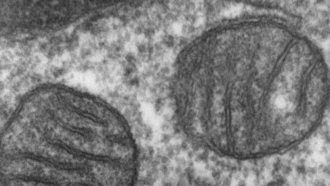
Scientists Say: Mitochondrion
Mitochondria are structures inside cells that converts certain chemicals into adenosine triphosphate — a molecule cells use as energy.
- Health & Medicine
Library books could come with a side of germs
People transfer microbes to most of the things we touch. Does that extend to our library books? A teen did an experiment to find out.
- Animals
These killer whales exhale sickening germs
A group of endangered killer whales are exhaling disease-causing germs. Researchers worry these microbes could make the animals sick.
- Animals
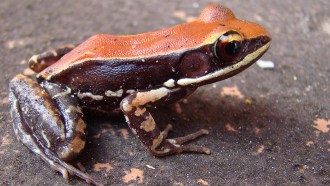
Flu fighter found in frog slime
A protein found in the mucus secretions of an Indian frog can take down a type of flu virus, a new study finds.