Life
- Physics
Could a person ever wield lightning as a weapon?
From the shocking powers of electric eels to laser-guided lightning, aiming electricity is more real than it sounds.
- Animals
As toddlers, chimps are major risk takers
Human kiddos are generally too closely supervised to be able to monkey around as much as young chimps. Instead, older kids — teens — are usually the bigger risk takers.
- Environment
Antarctica faces a green and weedy future
Warming is allowing alien species to invade a land that had been isolated for 30 million years. They now threaten local ecosystems unique to Antarctica.
- Plants
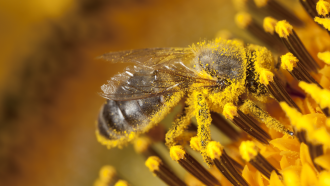
Scientists Say: Pollination
Plants call upon wind, water or helpful animals to carry out this crucial step of their life cycle.
- Fossils
Prehistoric ‘sea’ monster also lurked in rivers, data show
A 66-million-year-old fossil tooth turned up alongside remains of a T. rex and ancient crocodile. This shows some mosasaurs roamed into rivers.
- Tech
Scientists Say: Cryogenic
This deep-frozen field of science allows conservation biologists to preserve the DNA of endangered species and more.
- Health & Medicine
You need to eat protein — but the right mix really matters
All proteins are not equal, research is showing. So while most Americans get plenty of protein, they might not be eating the most nutritious blend.
- Fossils
Let’s learn about Tyrannosaurus rex
These fearsome predators truly were enormous — with the bone-crushing bite power to match.
- Animals
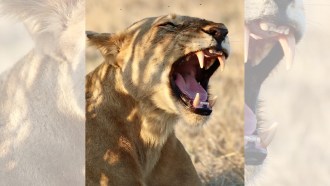
Lions have a second roar that scientists have only just discovered
This insight from machine-learning analyses of recordings of calls in the wild might help detect where lions are declining.
- Animals
Chicago’s Rat Hole? Science concludes it’s likely not from a rat
Researchers employed tools of paleontology to analyze the iconic landmark — a sidewalk critter crater made when a mystery rodent fell into wet concrete.
- Brain
Scientists Say: Hallucination
Humans are not the only ones who can hallucinate. When a chatbot confidently generates a plausible but incorrect response, this error is called a hallucination.
- Plants
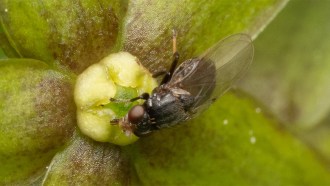
Yum! Flies swarm to a flower that smells like wounded ants
A type of Japanese dogbane emits the distress signal of injured ants — a particular scent — to draw in scavenging flies that end up pollinating its flowers.