Plants
- Plants
Potatoes and tomatoes share a surprising history
Today’s potato likely came from a chance cross between an ancient tomato and a spud-less potato-plant lookalike, research shows.
- Plants
Physics explains how rose petals get their iconic shape
Scientists thought they knew what was behind rose petals’ geometry. They were wrong.
- Chemistry
Uncover leaves’ hidden colors in this science activity
Let’s use a technique called paper chromatography to separate the pigments lurking in tree leaves.
- Genetics
DNA reveals the origin of East Asia’s favorite sweet bean
Where those red beans — also called adzuki — came from had been murky. A new study says it all started in Japan.
- Plants
Pollinators send out good vibrations — and plants respond sweetly
Snapdragon blooms can distinguish between the sounds of pollinators and thieves. They boost or drop the sugar in their nectar depending who’s arriving.
- Plants
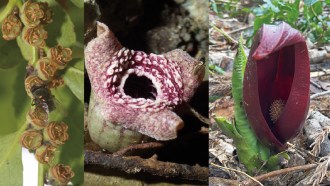
A genetic trick leaves these stinky plants reeking of rotting flesh
This DNA tweak in plants harnesses the same molecule behind our bad breath and transforms it into something worse: the stink of rotting flesh or dung.
- Environment
Eco-friendly sunscreen? That’s bananas!
Bananas make their own natural sunscreens. A teen thinks these could work to protect our skin as well, while being safe for aquatic life.
- Plants
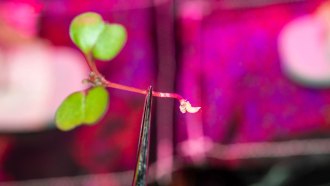
Magnets mimic gravity’s guiding hand for plants growing in space
Without constant gravity, plants waste energy twisting and coiling, trying to reach toward the sun. Teen ISEF finalists might have found a solution.
- Plants
For some trees, acting as lightning rods helps them survive
Being struck by lightning is usually bad. But for one tropical tree, a mighty zap can kill rivals and parasitic vines.
- Plants
Let’s learn about plant movement
Some plants use their powers of superspeed to spread spores, while others use it to snatch up prey.
- Plants
Scientists Say: Circumnutation
Plants are always on the move, their tips slowly waving in search of better light — a process called circumnutation.
- Plants
Could trees ever get up and walk away?
In fantasy, trees can walk, climb and even fight. Real trees move, too. It just happens in extreme slow mo.