All Stories
- Earth
Scientists Say: Frost Quake
When wet soil abruptly freezes, it creates high pressure underground. When the pressure releases, it can trigger a mini-earthquake called a frost quake.
- Plants
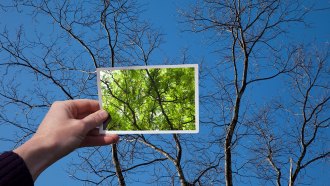
Explainer: How to identify tree species in the winter
No leaves to be found? Then buds, bark and branches might help you ID what tree you see.
- Brain
This neuroscientist looks at how your brain plans for the future
Freek van Ede studies how the brain selects information to plan for the future. He’s finding clues in the tiny movements people make with their eyes.
- Tech
Bird-inspired airplane wings could boost flight performance
Rows of flaps inspired by a bird wings’ feathers improve airfoil performance to boost lift and reduce drag.
- Planets
A peek into a stellar nursery has revealed six baby giant worlds
Images of six Jupiter-sized worlds taken by the James Webb Space Telescope offer clues to how planets and stars form.
- Tech
To stay cool, some future homes may build on past power-free tech
Accordion-pleated walls and other heat-managing structures could cool homes in hot, dry places naturally — without electricity.
- Earth
A landslide in a Greenland fjord echoed around Earth for 9 days
Warming permafrost and glacial melt destabilized a fragile mountain slope, leading to a landslide-triggered tsunami in a fjord. Is this a sign of more to come?
- Tech
A man silenced by paralysis got his ‘voice’ back, thanks to AI
New computer-linked brain implants offer hope to those who have lost the ability to speak or move.
- Animals
Let’s learn about octopuses
These clever, color-changing cephalopods live all over the world.
- Brain
Scientists Say: Dopamine
This brain chemical helps focus our attention and plan our path toward success.
- Physics
Shark intestines inspire pipes with a strictly one-way flow
The pipes contain a twisty coil that lets liquids flow in one direction but not the other.
- Math
Two teens have proved an ancient math rule — again
Ne’Kiya Jackson and Calcea Johnson proved math's Pythagorean theorem — in a way thought impossible for 2,000 years — and they did it 10 different ways.