All Stories
- Tech
A lucky lab accident produces Spider-Man-like silk
Researchers found a way to mimic Spider-Man’s web shooters in real life. This is the first adhesive that can stick to and lift things from a distance.
- Brain
Purple exists only in our brains
Most colors represent a single wavelength of light. But your brain invents purple to deal with wavelengths from opposite ends of the visible spectrum.
- Oceans
The world’s largest coral is longer than a blue whale
Scientists found the coral off the coast of the Solomon Islands.
- Life
Scientists Say: Chimera
What does it mean to be an individual? The genetic mashups called chimeras might challenge your assumptions.
- Climate
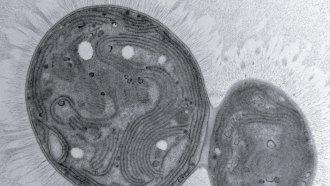
Meet Chonkus, a mutant microbe that could help fight climate change
A hulking marine cyanobacterium, Chonkus has traits that appears to make it especially good for storing away carbon on the ocean floor.
- Artificial Intelligence
Want your own AI double? There could be big benefits — and risks
People are using AI to mimic their own voice, likeness and personality. Some are excited about these new digital clones. Others worry, what could go wrong?
- Artificial Intelligence
AI job-screening tools are very prejudiced, study finds
AI job-screening tools ranked white-associated names higher than Black-sounding ones. Male names also were preferred. Black male names were never favored.
- Ecosystems
Analyze This: In movies, wetlands often get a bad rap
Swamps in films are often linked to danger, death and strange things. But movies also highlight wetlands’ biodiversity and resources.
- Archaeology
Let’s learn about radiocarbon dating
Through the power of radioactivity, carbon dating can reveal the age of many fossils and artifacts.
- Space
This zombie star’s spiky filaments are baffling astronomers
The star's odd tendrils were somehow formed by a supernova that skywatchers saw way back in 1181.
- Planets
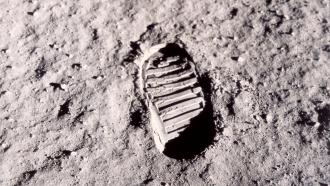
Scientists Say: Regolith
This sandlike dust blankets planets, asteroids and other rocky surfaces of our solar system, including our own planet.
- Brain
A single sniff is enough to detect slight odor changes
The speed of our ability to perceive odors is on par with that of color perception, a new sniff device shows.