All Stories
- Humans
Burps and farts: Why the body is such a gas
People make a lot of gas, and it’s got to come out one end or the other. Understanding those farts and burps could tell us a lot about our health.
- Animals
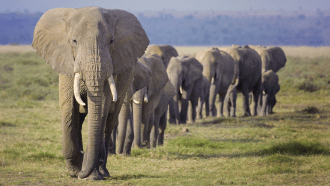
Farting fish and tooting manatees — how some animals use gas
Humans think farts are funny — but some animals rely on farts for flotation, communication and more.
- Oceans
Analyze This: Even as Earth’s oceans warm, one spot has gone cold
A cold blob of water in the North Atlantic suggests that an important ocean current is weakening.
- Animals
Cuddling helps apes keep the peace
Humans could learn from chimpanzees and bonobos. When things get tense, these apes turn to group members for hugs, touches and other physical comfort.
- Artificial Intelligence
AI … in space!
In WALL-E, artificial intelligence runs an entire ship. Real-life AI, though, is too finicky and prone to mistakes to manage that.
- Science & Society
Scientists Say: Paradox
When gut instinct leads you astray, paradoxes can point the right way.
- Tech
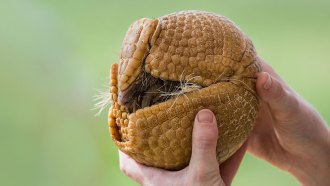
Like an armadillo, a new soft robot rolls up to protect itself
Like the three-banded armadillo, this device can roll up to shield its innards, such as sensitive electronics and a small payload.
- Archaeology
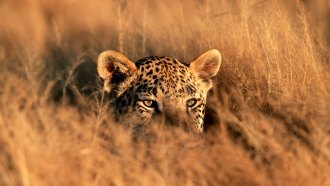
When we were prey
Bite marks on a 2-million-year-old human jaw suggest leopards once hunted people as prey. People likely survived by learning to team up.
- Oceans
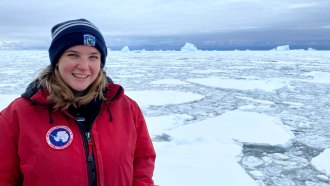
Seals helped this oceanographer study the Southern Ocean
Oceanographer Lily Dove uses remote robots to study Antarctica’s perilous oceans.
- Fossils
Let’s learn about trace fossils
Trace fossils — such as burrows, footprints and vomit — offer snapshots of ancient life.
- Physics
Scientists Say: Antimatter
Most of the universe consists of ordinary matter. But not all. A tiny fraction is matter’s mysterious twin: antimatter.
- Health & Medicine
A protein building block may help fight viruses and cancer
As a food supplement, arginine might one day help cut tumor formation and the proliferation of viruses in the body, mouse data suggest.