Uncategorized
- Archaeology
Stonehenge enhanced voices and music within the stone ring
Scientists built a 'Stonehenge Lego' model in a sound chamber to study how sound would have behaved in the ancient stone circle.
- Animals
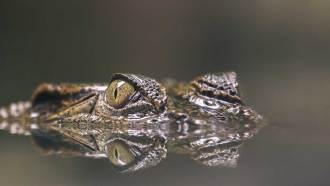
Let’s learn about alligators and crocodiles
Alligators and crocodiles seem similar — but they live in different places and look different, too.
- Chemistry
Scientists Say: Plastic
Plastics are made of long polymer chains and can take on many shapes. Unfortunately, they stick around for a long time.
- Physics
Strange but true: White dwarfs shrink as they gain mass
Telescope observations of thousands of these stars now confirm a decades-old theory on how their masses relate to their waistline.
- Animals
One tiny sea parasite survives 200 times atmospheric pressure
Known as the seal louse, this tiny insect can survive deep oceanic dives on its mobile home, a marine mammal.
-
A dirty and growing problem: Too few toilets
As the famous book says, everybody poops. That’s 7.8 billion people, worldwide. For the 2.4 billion with no toilet, the process can be complicated.
- Physics
The exotic ‘atom’ positronium surprises scientists
New measurements of a weird but simple atom, one without a nucleus, suggest it may have unexpected properties. Scientists find this troubling.
- Animals
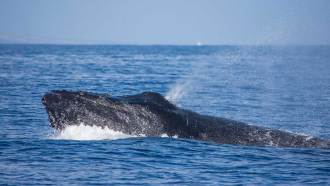
Whale blowholes don’t keep out seawater
Whales’ blowholes aren’t as protective as scientists had thought. They not only can let in water but also pollutants.
- Chemistry
New solution for carbon dioxide: Turn it into ‘green’ fuel
Chemists have created a new way to convert carbon dioxide into ethanol. It might one day help remove excess CO2 — a greenhouse gas — from the air.
- Animals
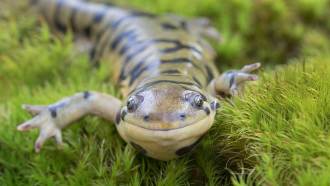
Scientists Say: Amphibian
Amphibians are ectotherms that live dual lives — they start off in water, breathing with gills, and end up breathing air with lungs.
- Life
If bacteria stick together, they can survive for years in space
Tiny clumps of bacteria can survive at least three years in outer space. This raises the prospect of interplanetary travel by microbial life.
- Ecosystems
Soggy coastal soils? Here’s why ecologists love them
Coastal wetlands can protect our shores from erosion, flooding and rising sea levels.