Uncategorized
- Climate
The faster trees grow, the younger they die
As climate change spurs forest tree growth, it also shortens trees’ lives. That results in a quicker release of climate-warming carbon back into the atmosphere.
- Genetics
Some Neandertal genes may up the risk of severe COVID-19
Most of the affected people descend from communities in South Asia or live in Europe today.
- Physics
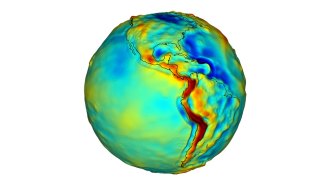
Scientists Say: Gravity
Gravity is a fundamental force that attracts objects with mass to other objects with mass. It decreases with distance.
- Physics
Trees power this alarm system for remote forest fires
Wind moving through tree branches is all the energy needed to power devices that can detect a remote fire before it rages into an uncontrolled inferno.
- Animals
Whales get a second life as deep-sea buffets
When a whale dies and sinks to the seafloor, it becomes a feast for hundreds of different types of creatures.
- Humans
You should guess answers to your homework before searching online
Over a span of 11 years, an increasing share of students performed more poorly on exams than on their homework. Online homework help may explain why.
- Animals
Let’s learn about bones
Bones hold us up and help us fight gravity with every step. They also make blood cells, hormones and more.
- Physics
This high-tech sweeper is designed for super-clingy moon dust
An electron beam is the newest tool being developed to remove sticky and damaging lunar dust from surfaces.
- Environment
Washing your jeans too much might pose risks to the environment
Jeans shed thousands of denim fibers in every wash. Those fibers, and the chemicals used to treat them, now are showing up in even the Arctic Ocean.
- Climate
Scientists Say: Desert
Deserts are ecosystems that get less than 250 millimeters (10 inches) of precipitation per year.
- Animals
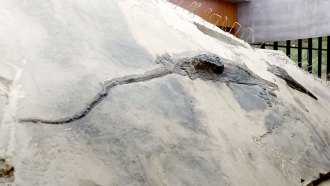
This ancient reptile’s last meal may have truly been a killer
An ichthyosaur’s eyes were too big for its stomach. And that may have led to this ancient reptile’s death.
- Chemistry
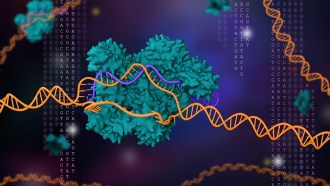
2020 chemistry Nobel goes for CRISPR, the gene-editing tool
Only eight years after its development, CRISPR has revolutionized genetics. It also just brought Emmanuelle Charpentier and Jennifer Doudna acclaim.