Uncategorized
- Health & Medicine
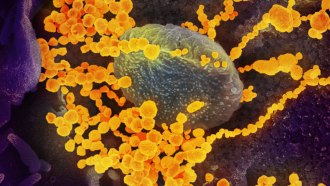
Coronavirus most contagious before and right after symptoms emerge
Once the body starts making antibodies to the new coronavirus, it stops making 'live' virus. But beware long-lasting live virus on surfaces, scientists warn.
- Space
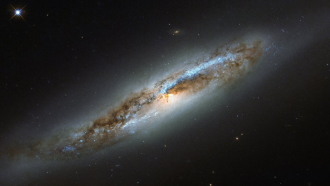
Black hole mega-burp was truly explosive
Long, long ago, in a galaxy far, far away, a black hole blasted out 100 billion times as much energy as our sun ever will. One word for that: Wow!
- Space
Scientists Say: Light-year
This is the distance light travels in one year — about 9.48 trillion kilometers. Light-years are used to measure vast distances, like those in space.
- Animals
Pandas use their heads as a kind of extra limb for climbing
Their short legs on a stout bear body mean pandas use a rare technique to climb up a tree.
- Environment
Decades-long project is linking our health to the environment
Started in 1959, this California study is one of the oldest ongoing research projects in the world.
- Health & Medicine
WHO calls COVID-19 a global pandemic
The United Nations’ World Health Organization has finally called COVID-19 a global pandemic. Here’s why.
- Brain
Do you sleep enough to banish unpleasant moods?
A large, long-term study in kids has linked getting too little shuteye with mood and behavior problems.
- Earth
Weight lifting is this planetary scientist’s pastime
Beck Strauss uses magnetic fields to explore the makeup of Earth and other planets.
- Earth
Newfound ‘dunes’ is among weirdest of northern lights
There’s a new aurora dubbed the 'dunes.' It’s weird and joins the ranks of black auroras, STEVE and other odd natural light shows.
- Chemistry
Scientists Say: Fermentation
Fermentation breaks down carbohydrates, such as sugars, producing energy and making gases, acids or alcohol. This process can help make foods and fuels.
- Animals
Here’s how butterfly wings keep cool in the sun
Butterfly wings sport structures that let living tissues release more heat than the rest of the wing.
- Genetics
Answers to your questions on the new coronavirus
As SARS-CoV-2 spreads globally, researchers are looking for answers on why this novel coronavirus is so infectious and hard to control.