Uncategorized
- Health & Medicine
Analyze This: Most teens have been cyberbullied
Name-calling was the most common type of six types of cyberbullying that surveyed teens reported.
-
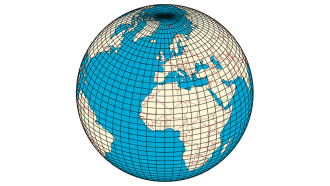
Scientists Say: Latitude and Longitude
Latitude is a measure of how far a location is north or south of the equator. Longitude is a measure of how far east or west a location is from the Prime Meridian.
- Science & Society
Students strike to spur adults into climate action
Students worldwide are demanding action on climate change. Coordinated school strikes were slated to take place around the world on March 15.
- Animals
Bones show ancient marine reptile was a big baby
A new study of a rare baby plesiosaur reveals that these marine reptiles were huge at birth, then continued to grow speedily.
- Health & Medicine
Here’s why Rapunzel’s hair makes a great rope ladder
The fairy tale ‘Rapunzel’ features a princess with a lifesaving head of hair. Could someone really use their hair as a ladder? Sort of.
- Physics
On the lookout for micro-missiles from space
Speeding specks of space dust can damage spacecraft. But if they make it to Earth, these tiny rocks can offer lessons on how the solar system formed.
- Space
Caught on camera: A small rock hit the moon
Photographers documented a rocky impact during January’s total lunar eclipse.
- Health & Medicine
Could eating clay help manage weight?
A new study suggests that clay could help soak up fat in the gut. In rats, it works as well as a weight-loss drug.
- Animals
Bee parasite is more werewolf than vampire
Inventing fake bee larvae prompts scientists to rethink how a mite — ominously named Varroa destructor — does its damage.
- Climate
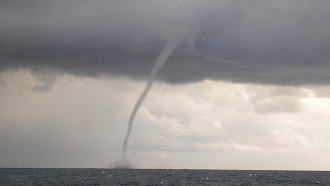
Scientists Say: Waterspout
A whirlwind over land is just a whirlwind. But over water, a whirlwind becomes a waterspout.
- Earth
Earth’s core may have hardened just in time to save planet’s magnetic field
Earth’s inner core began to solidify within the past 565 million years, a study finds. That could explain why the planet’s magnetic field did not collapse.
- Chemistry
Shell shocked: Emerging impacts of our acidifying seas
As Earth’s climate changes, the oceans are becoming more acidic. Here’s how oysters and reefs are responding to their acidifying bath.