A protein building block may help fight viruses and cancer
As a food supplement, arginine might one day fend off some infections and tumors, mouse data suggest
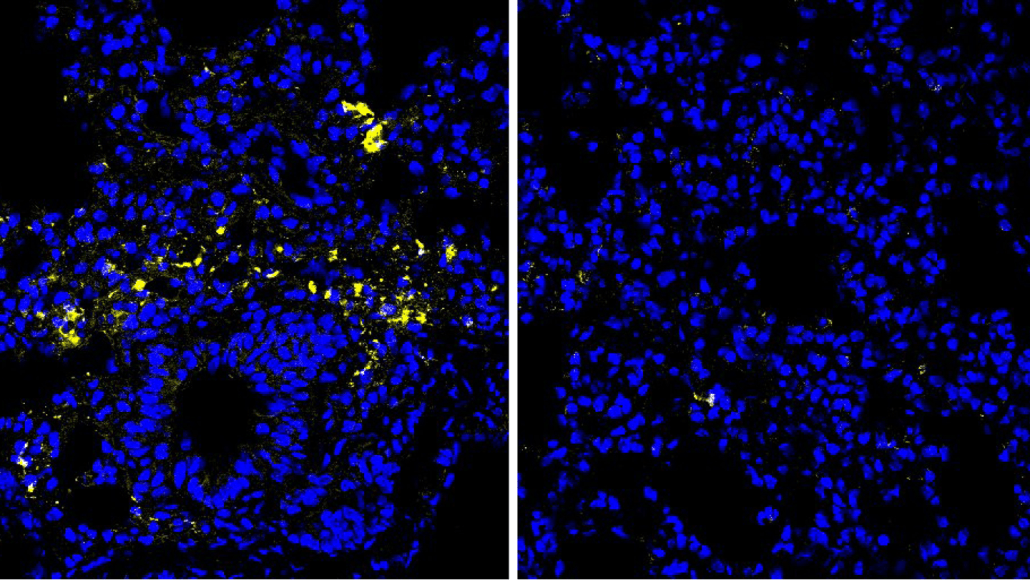
After SARS-CoV-2 infection, mice that had been fed a low-arginine diet had more virus (yellow) in their lungs (cell nuclei shown in blue) compared with those fed a high-arginine diet (right).
Q. Wu et al/Cell 2026
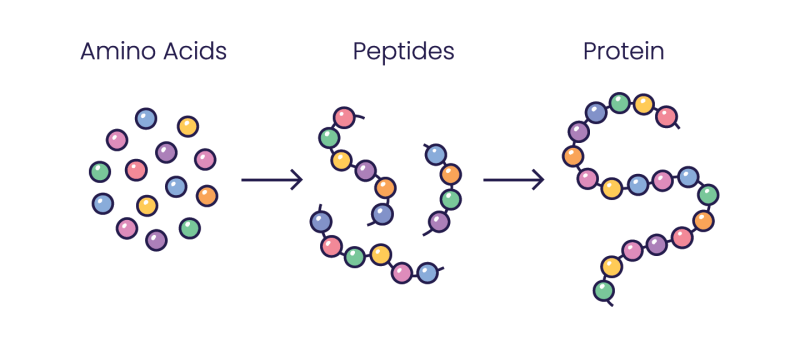
Proteins are made of building blocks known as amino acids. Human proteins are made of various combinations of 20 of these. A diet especially rich in one of them — arginine — appears to help the immune system. It can fend off infections and at least one type of cancer, finds a new study in mice.
Arginine appears to ramp up the immune system’s ability to spot danger. A high-arginine diet seemed to offer the rodents some protection against flu and COVID-19 viruses. It also quashed colon tumors, says Sohail Tavazoie. A doctor and cancer biologist, Tavazoie works at Rockefeller University in New York City.
His team shared the new findings July 30 in Cell.
“I don’t want the takeaway to be that everyone should be just consuming arginine all the time,” says Tavazoie. It’s just too soon, he says, to know if taking it as a food supplement could prevent or even treat these diseases in people. But he’s interested in launching human studies to test that.
The new data do make a compelling case for further testing, says Costas Lyssiotis. He had no role in the new study. But he is a cancer researcher at the University of Michigan Medical School in Ann Arbor.
Might a high-arginine diet help the human immune system recognize tumors and target them for destruction? That’s not yet clear, Lyssiotis says. But, he adds, it’s something that is “super provocative and should be pursued.”
Not ‘essential’ — but beneficial
Research has been suggesting that arginine may play an outsized role in disease.
Nine amino acids are considered “essential” nutrients. That’s because our bodies use them but can’t make them; they must be acquired as part of what we eat. Arginine is not one of those. But because this amino acid can open blood vessels, some people do take arginine as a food supplement. The goal is to help their blood circulate.
Arginine also tends to be scanty in the lungs of people with influenza or COVID-19. It’s barely present, too, in the tumors that develop in people with colon cancer. What’s more, studies have shown that both cancer and viral infections can crank up the destruction of arginine.
Tavazoie’s team wondered what was so important about this amino acid that multiple diseases shut it down.
In the lab, his group tinkered with arginine levels in mouse and human cells. Cutting back on arginine reduced levels of key immune proteins, they found.
Take what’s known as MHC class 1 proteins. Riding on the surface of our cells, they tell the immune system what to watch out for. Like a police officer holding up a sketch of a criminal, they display snippets of viral or cancer proteins. But the immune system has trouble recognizing and rousting those outlaws when cells have fewer MHC-1 proteins than normal.
A key player in immunity?
Tavazoie’s team then turned to mice at risk of colon cancer. When the researchers fed them a low-arginine diet, MHC-1 levels fell and the number of colon tumors rose. But add bonus arginine to the diet — what would be about 10 grams a day for humans — and the outcome flipped. Now MHC-1 levels rose and tumor-forming fell.
These data suggest dietary arginine can control MHC-1, a very important group of immune proteins, Tavazoie says.
Arginine-starved cells slowed their assembly of MHC-1 proteins. That may be because these proteins contain long stretches of arginine units. If there aren’t enough of these building blocks available, “there’s a supply-chain shortage,” he says. At that point, MHC-1 construction stalls.
The team observed a similar story in mice infected with the flu virus or the virus that causes COVID-19. Low-arginine diets led to them having low levels of MHC-1 proteins. They also had more viral proteins and inflammation in their lungs compared to mice eating high-arginine diets.
This suggests arginine was blunting the effects of infection. And arginine supplements given after flu infection boosted mouse survival, the team found. That points to it as a possible treatment one day. Tavazoie now wonders whether other amino acids may play similarly important roles.
There’s still much work needed to know if the mouse data predict effects in people, says Pierre Close. He’s a cancer researcher at the University of Liège in Belgium. He didn’t participate in the new study. But, he says, this research might one day lead to therapies that help the immune system better tackle disease. “We are all looking for new strategies.”
Do you have a science question? We can help!
Submit your question here, and we might answer it an upcoming issue of Science News Explores