The human brain may owe a lot of its size to our love of sweets
Fruits may have fueled a lot of brain growth in our primate cousins and human ancestors
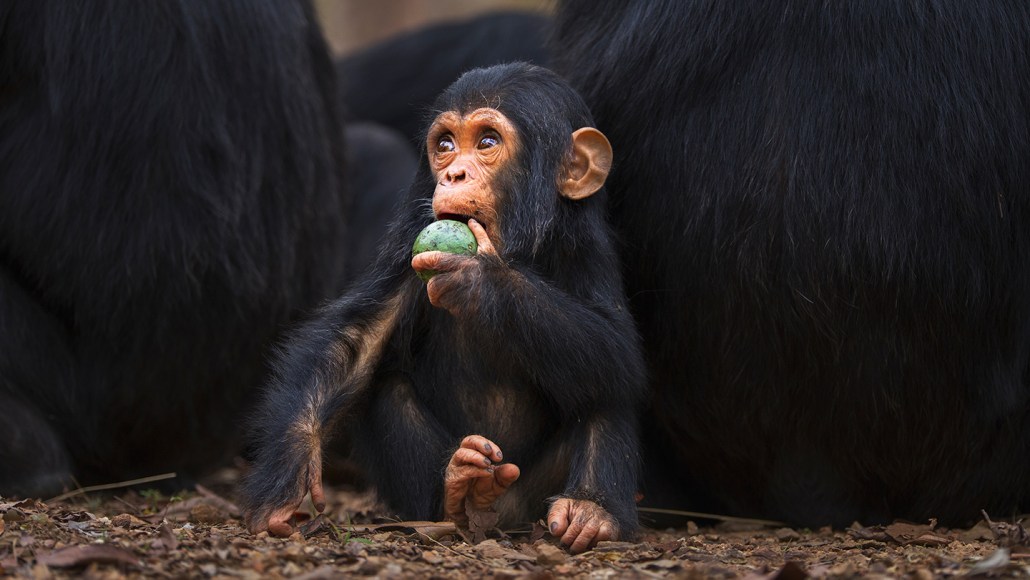
A new analysis of what early human ancestors and their close relatives (including chimpanzees, shown) ate reveals the potentially important role of sugary foods in brain evolution. Researchers dubbed the finding SWEET — for sugars were essential in evolution too.
Anup Shah/Stone/Getty Images
Our sweets cravings may have set the stage for the human brain to become big and powerful. That’s the finding of a new study.
The brains of our upright-walking ancestors, some 4 million years ago, weighed only around 300 grams (11 ounces). That’s about equal to a medium apple. Today, the human brain averages 1,500 grams (3.3 pounds). That’s about equal to 1.5 liters of water. Much of this brain expansion took place before early humans mastered both fire and cooking. That’s a point that marked when they could start regularly dining on energy-dense starches.
Carbohydrates come in two main classes. Sugars tend to be relatively simple molecules. Starches tend to be bigger and more complex. A new analysis of existing data from human ancestors, as well as chimps, suggests that a large share of their energy probably came from sugary carbs, such as those in fruits and honey.
Simple sugars may have played an overlooked — but important — role in human evolution, researchers now conclude. They describe why in the August 6 Science.
Until now, much of how diet affected human evolution has centered on meat. Around 2.5 million years ago, our early upright-walking ancestors began eating more meat — raw at first, then eventually cooked. Meat is rich in protein and fat. And that appeared to play a big role in fueling our ancestors’ ever-expanding brains.
But Jennie Brand-Miller thought there might be more to the story. A nutrition scientist at the University of Sydney, in Australia, she wondered how sugars might have affected the evolution of our brains.
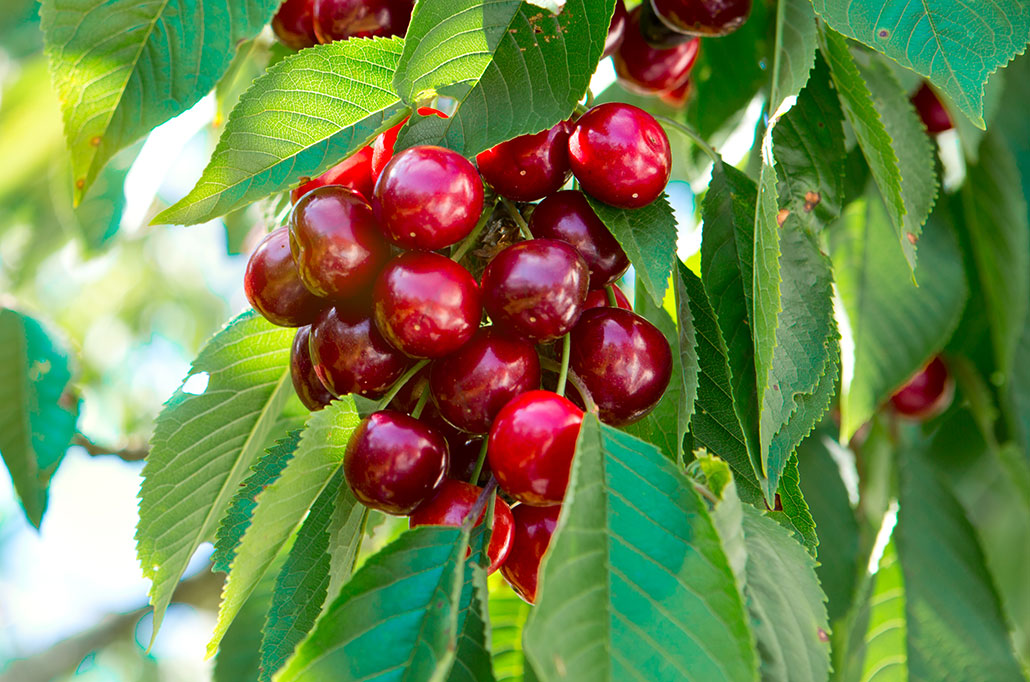
A 2017 study had shown that fruit-eating primates had bigger brains than leaf-eating ones. Eating fruit boosts demands on various thought processes, other researchers had suggested two decades earlier. Might this have kickstarted the evolution of big brains in humans?
Explains Brand-Miller, “You need to remember when various species of ripe fruit begin to ripen, then you need to remember where it is in the forest.” And, she adds, “Your memory is associated with a bigger brain.”
Fossil primates and later hominids, such as Homo erectus, showed signs of tooth decay, Brand-Miller notes. This suggests a diet containing soft, sugary foods. (Homo erectus was the first of our ancient cousins to venture outside Africa; that was 2 million years ago).
“All these things kept adding pieces to this lovely tapestry, this puzzle that said fruit-containing sugars must be important [in human evolution],” she says.
Do you have a science question? We can help!
Submit your question here, and we might answer it an upcoming issue of Science News Explores
Still, what about meat?
Brand-Miller is part of a team that has now calculated the dietary needs of chimps, humans and three early species of human ancestors. To do this, the researchers combined data from fossils, teeth, the species’ metabolism and the biology of bodily processes.
Our earliest chimp-like ancestors from around 4 million years ago were largely vegetarians, they found. Fruit likely provided more than two-thirds of their food energy. And it played a big role as hominid brains grew over the next few million years, the data also suggest.
Clever foraging skills would have helped fuel their energy-sapping brains. These would have included hunting, cracking nuts, grinding seeds or extracting bone marrow. Later, once cooking became common, humans could have turned to starches (such as grains, beans and tubers). But a constant need for sugary foods appears to have been a key player in our evolution. And it didn’t disappear after a shift to foods high in proteins and fat, such as meats.
Meat and sugars? “I see them as parallel stories, not one replacing the other,” Brand-Miller now says. “Animal foods were clearly important. They’re very nutrient dense.”
A past focus on meat-eating may have missed some food trends that helped build the human brain, agrees Julie Lee-Thorp. She’s an archaeologist at the University of Oxford in England. She did not take part in the new study.

Focusing on meat’s role may reflect a modern bias, she adds. “Meat is a high-status food today,” notes Lee-Thorp. “And that has perhaps been carried over into the way we think about the past.”
But Brian Wood largely dismisses that. The study of human evolution has not been obsessed with meat-eating, he says. A biological anthropologist, Wood works at the University of California, Los Angeles. A diverse range of foods fueled our evolution, he says. And they were made possible by our growing “ability to capture and harvest high-quality, difficult-to-acquire foods.” This included hunting, sure. But, he adds, foraging for fruit, honey, nuts and the underground parts of plants was also part of it.