When we were prey
Bones with leopard bites show humans didn’t always top the food chain
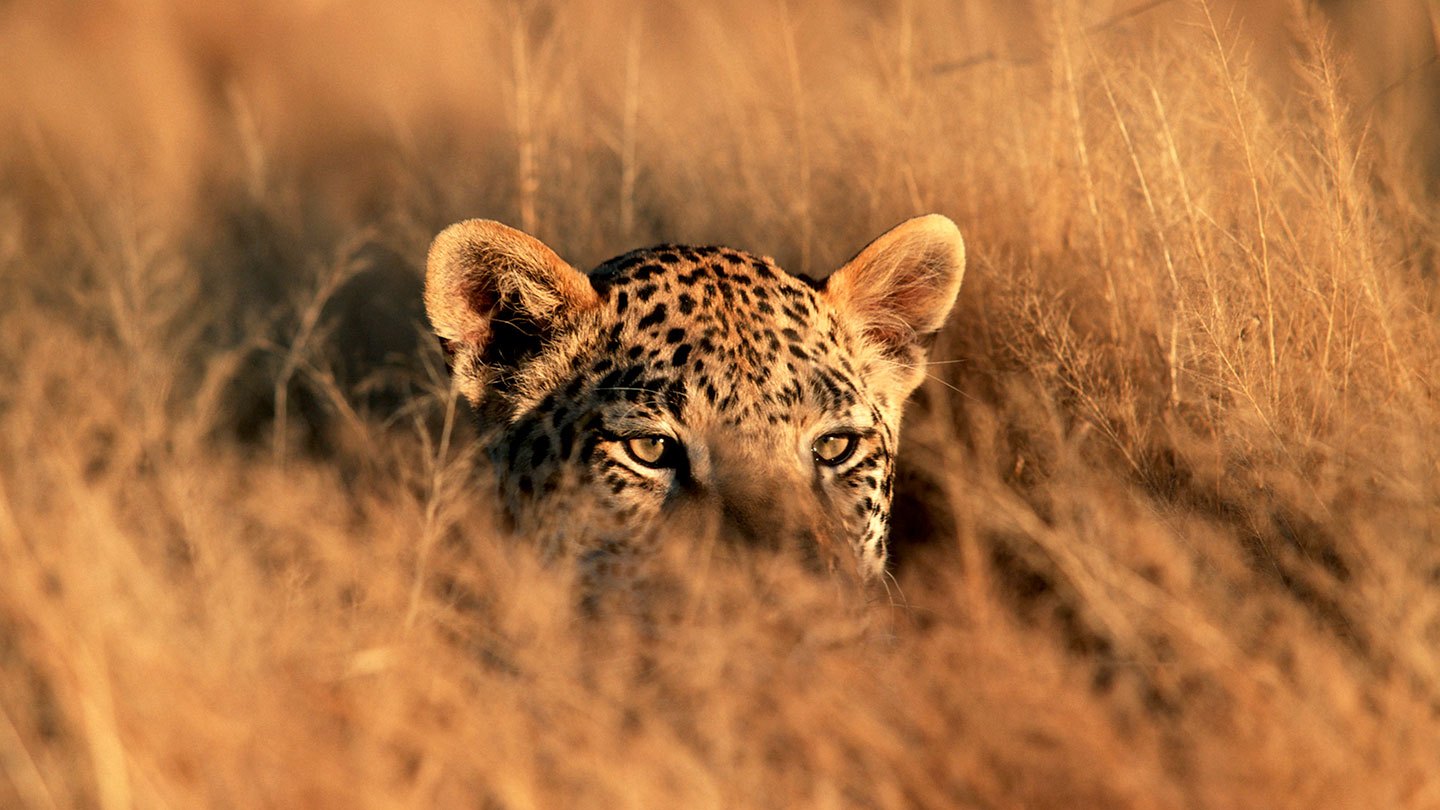
Imagine seeing the eyes of this leopard stalking you from the tall grass. Fossil evidence suggests such big cats hunted our human ancestors nearly 2 million years ago.
Martin Harvey/The Image Bank/Getty Images
Nearly 2 million years ago, a leopard in Africa sank its teeth into the face of an early human. This bite etched tiny tooth marks into the unlucky person’s jawbone. That bone now speaks to a chilling early chapter in our history: when humans were prey.
The fossil belongs to Homo habilis. It’s one of the earliest members of our genus. (Homo includes modern humans and our closest relatives.) At first glance, the bone marks look like scratches. But a recent, close analysis tells another story. The bite marks suggest leopards hunted these early folk.
That discovery helps solve a fossil mystery. It also raises questions about a time when humans held a more precarious spot in the food web. Sometimes people ate meat. Other times, they were the meat being eaten.
That threat of becoming prey to some other predator likely shaped how humans evolved. To survive, our ancestors learned to count on each other for protection. They may have lived and worked in groups, sharing information about dangers and teaching each other skills. Over generations, these behaviors could have helped people become more cooperative and successful.
Today, it’s easy to imagine our early ancestors as fearless hunters, chasing prey across ancient savannas. But that image reflects a time late in our evolution. Before we became one of the world’s most successful predators, we first had to survive life as prey.

When humans were on the menu
Much of what scientists have learned about ancient humans comes from fossils found at Olduvai Gorge, in Tanzania. Since the 1930s, researchers have unearthed many bones from our early ancestors at this site in southeastern Africa. They include a pair of tooth-marked jawbones.
Other finds include tools made of stone or bone.
Sharp stones likely served as knives. Cut marks on animal bones suggest early humans ate meat. This led many scientists to assume H. habilis was a hunter. But these early people may have dined on leftovers scavenged from bigger, stronger predators.
The bitten human jawbones add another angle to this story.
Marina Vegara-Riquelme studies our human ancestors and their fossils at the University of Alcalá in Spain. She led a team that examined H. habilis bones using artificial intelligence, or AI. Her group wanted to know what animal had left its bite marks on a human jaw.
Different carnivores have different eating habits. Hyenas often scavenge dead carcasses. Leopards, in contrast, rarely eat meat they didn’t kill. Knowing which one left the marks would suggest whether the H. habilis had been hunted or died some other way.
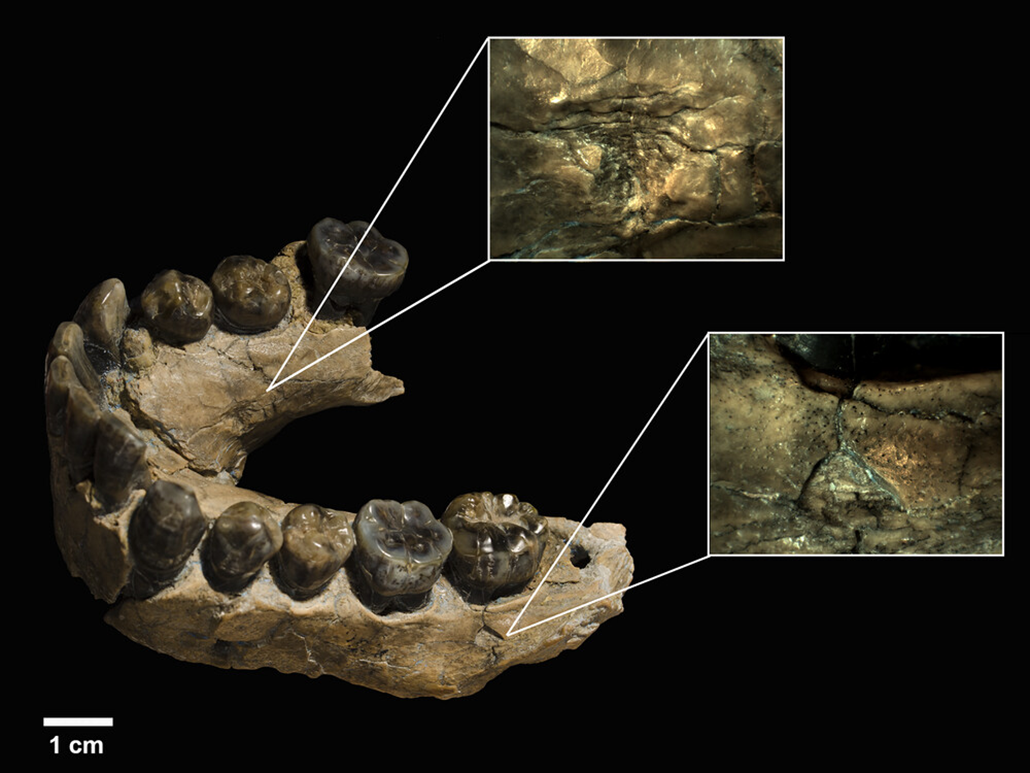
Even experts can struggle to tell apart the tooth marks of a leopard from those of a hyena, Vegara-Riquelme notes. But AI can. By comparing thousands of details, it can spot patterns too subtle for the human eye to see. Her team used thousands of tooth-mark images from modern carnivores to train the AI. Then they showed it the bones in question.
“Two Homo habilis specimens show tooth marks most likely inflicted by leopards,” Vegara-Riquelme says. That makes it look less like scavenging.
Study co-author Manuel Domínguez-Rodrigo co-directs the Institute of Evolution in Africa in Madrid, Spain. To him, it’s clear how the encounter ended. “That individual was preyed upon,” he says. “Not scavenged.”
If true, what had the lives of H. habilis been like with lions and leopards as neighbors? Could survival have required new traits that helped our ancestors ascend the food web?
Life in a world of predators
For millions of years before H. habilis, our ape ancestors spent most of their time in trees. They might venture to the ground now and then. But when danger emerged, they’d dart into the trees and out of reach.
By the time H. habilis evolved, humans were walking upright (though not as well as today’s H. sapiens), spending far more time on the ground.
An open savanna offered new opportunities. Ambling upright helped early humans travel farther. It also gave them a better vantage to spot potential food across the landscape. But being out in the open may have made them easier targets, too, for powerful predators.
Craig Stanford studies predator and prey relationships among primates. He’s an evolutionary biologist at the University of Southern California in Los Angeles. He’s spent years in Tanzania watching Africa’s monkeys work together and protect one another.
Life on the open savanna would have been risky for early humans, he says. Even if predators killed only a few people, the threat would have shaped how early species lived and behaved.
“Predation may have been rare, but that doesn’t mean it was unimportant,” Stanford says. “There’s no question that predation influenced our evolution.”
Many prey species rely on group living for protection. “You have more eyes to detect a predator coming,” Stanford explains. When one animal spots danger and yells an alarm, others can run or climb to safety.
And safety in numbers isn’t just about watching. It can also help to fight back.
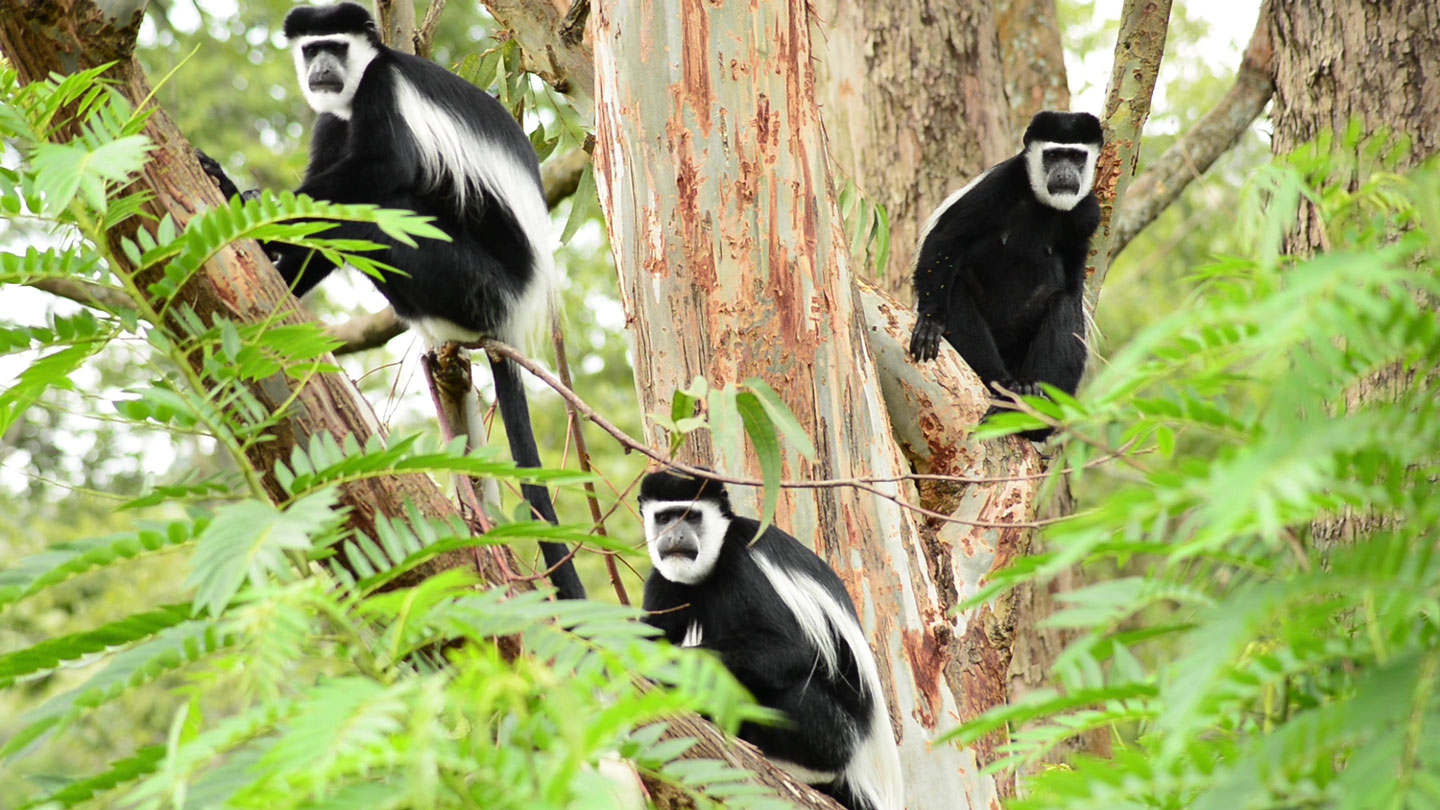
In Tanzania, Stanford saw male colobus monkeys work together to fend off threats. They would leap onto chimpanzees that threatened them. An adult male chimp weighs about 54 kilograms (120 pounds); a colobus monkey only about 9 kg (20 lbs). “So three [monkeys] together weigh half of what the chimp weighs,” Stanford says. “They’re biting the chimps.” Such group attacks could fend off a chimp.
Early humans on the open savanna may have similarly benefited from teaming up. Faced with threats from big cats, people who were more alert and willing to cooperate may have been more likely to survive. If so, they could have passed along those traits to their offspring.
Do you have a science question? We can help!
Submit your question here, and we might answer it an upcoming issue of Science News Explores
Working together for a better dinner
Survival wasn’t just about not becoming someone else’s meal, though. It also was about getting access to your own high-quality food. Here, too, cooperation would have helped.
Briana Pobiner works at the Smithsonian’s National Museum of Natural History in Washington, D.C. She studies what ancient humans ate and how they got their food. Marks on fossil bones can say a lot about this, she says.
Early humans would have cut meat from wherever they could get it. Consider butchery marks on bones that don’t have a lot of meat on them — “like ankle bones and lower foot and leg bones,” says Pobiner. Here, she says, “We think [humans] mostly got the scraps after the predators ate.”
Such a pattern suggests people were scavenging.
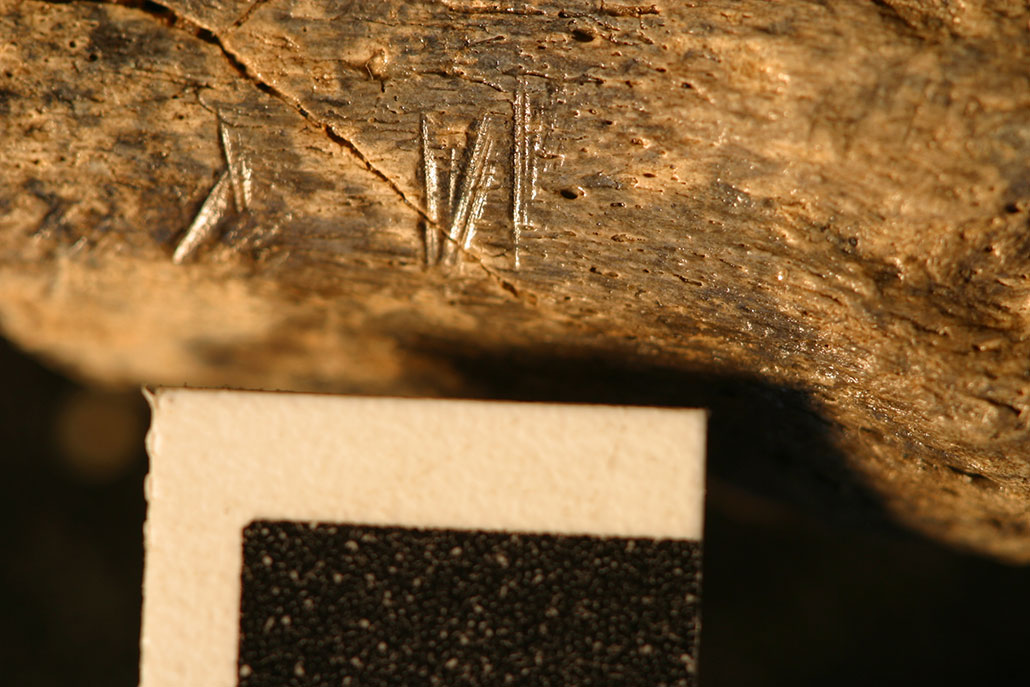
With large prey, early humans likely ate after big carnivores had already taken the better meat. That doesn’t mean these humans didn’t hunt. They may have captured smaller animals on their own. Taking down large prey, however, would have been much harder and more dangerous.
“Early humans probably got the not-great parts of animals when they were able to eat meat,” Pobiner says. “The predators were getting the best parts.”
But, she adds, “At some point that changed.” By around 1.5 million years ago, fossils show stone-tool cut marks on bones from some of the meatiest parts of big game. By now, it seems, people were no longer eating just the leftovers.
Fossils can’t directly show cooperation. But the bone markings suggest humans gained better access to meat over time. Researchers think teamwork may have helped make that possible.
Working in groups would have given humans a better chance of getting larger prey and better meat. Sharing meat may have strengthened social bonds. Plus, large carcasses are hard for one person to process or defend.
Such cooperation may have paved the way for humans to become more successful.
Human species across time
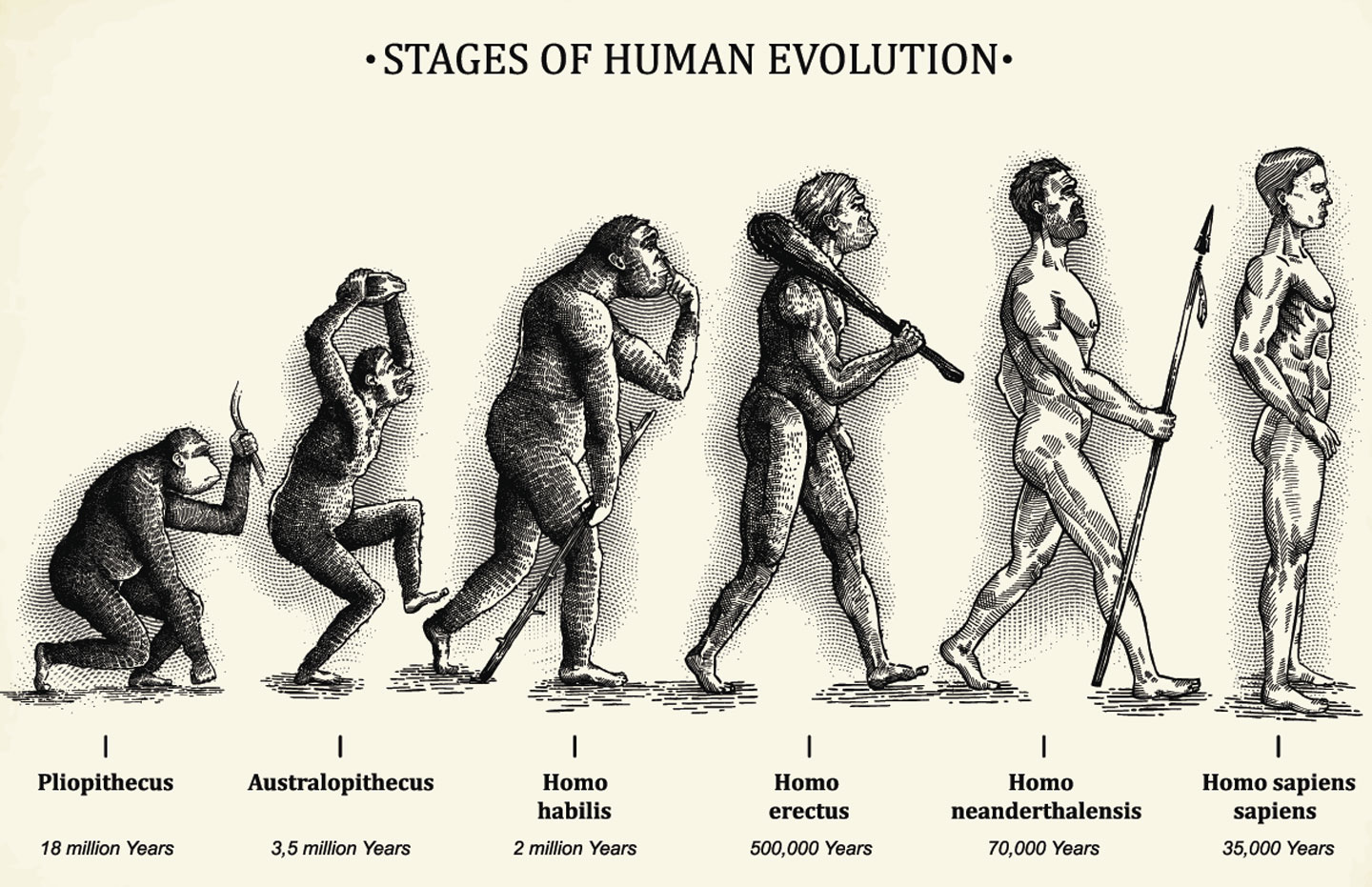
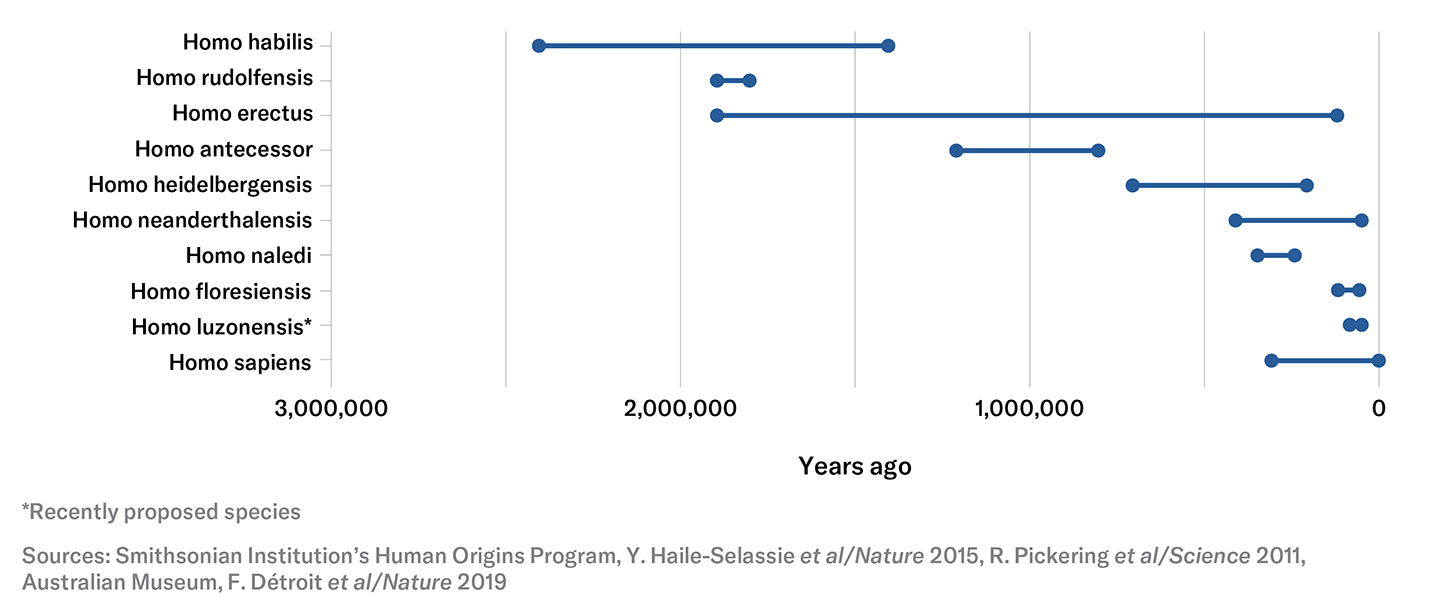
This chart shows the emergence (and later die-offs) of many humans — Homo species — throughout the past 3 million years. Notice how far apart H. habilis and H. sapiens are.
Learning to control fire
People likely evolved group living for several reasons, cautions Richard Wrangham. He works at Harvard University in Cambridge, Mass. As a biological anthropologist, he studies how fire has shaped human evolution.
Around 1.8 million to 1.5 million years ago, fossils show the rise of a new species of human, Homo erectus. Compared to earlier species, such as H. habilis, H. erectus had longer legs, a larger body and a bigger brain. These changes suggest humans were better adapting to life on the ground. This may have included sleeping there rather than in trees.
Here, fire also may have been key. “Once you’ve got fire, it increases the amount of protection against predators substantially,” Wrangham says. Flames and smoke would have scared off big cats, especially at night. He says, “I would imagine that there was much more predation of [early humans] prior to fire.”
Groups able to control fire may no longer have needed to retreat to trees each night. Sleeping on the ground would have marked a major shift in human evolution. With time, arms got shorter. Legs got longer. Walking and running became more efficient. Such changes would have made them more effective hunters, too.
People who could travel long distances could also track prey across broad savannas.
Fire had another benefit: It helped people get more energy from their food.
Cooked food is easier to digest. That extra energy could have allowed brains to grow bigger and more complex. Wrangham explored this idea in the 2010 book, Catching Fire: How Cooking Made Us Human.
Ours is the only human species alive today. But earlier in history, multiple human species lived — and evolved — beside each other. Fossils suggest that not all of these species advanced at the same pace. The pressures of avoiding predators while getting enough food may have nudged some species higher in the food web. As a result of these gradual changes, some species flourished. All but one of them — H. sapiens — died out.
By 300,000 years ago, stone-tipped spears appeared. Archaeologists found dozens of these along with the bones of hunted and butchered animals at a site in Germany. The find suggests that people had become skilled hunters. They planned ahead and worked in groups to hunt big animals. No longer just surviving within their ecosystem, humans were beginning to dominate it.
Those leopard bites on ancient jawbones remind us that humans haven’t always been on top. Our ancestors came to survive by working together, sharing resources and developing new tools and skills. Over time, these behaviors helped people shift from fearing predators to competing with them.
That almost nothing hunts us is a fairly recent development. Our history has been shaped by our vulnerability and the behaviors that allowed our ancestors to survive long enough to thrive.