
All Stories by Bethany Brookshire
- Math
Scientists Say: Velocity
Velocity is more than speed. It is both speed and the direction in which an object is traveling.
- Computing
Let’s learn about virtual reality
Scientists use virtual reality to build new games and to help people fight their fears.
- Animals
Scientists Say: Apoptosis
When it’s time for cells to die, they need to do it carefully, so they don’t harm other cells.
- Brain
Scientists Say: Puberty
Puberty is a time when hormones surge and people develop the ability to have children. But it’s so much more than that.
- Animals
Scientists Say: Evolution
Evolution is how species change over time. Individuals in the group vary, and some will pass on their genes. Over time, the whole species changes.
- Planets
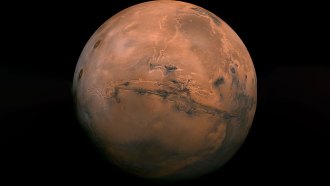
Let’s learn about Mars
Traveling to Mars offers many challenges, including life without gravity, cosmic rays and communication delays.
- Brain
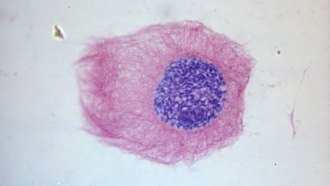
Scientists Say: Nucleus
Nucleus comes from the Latin term “nuc,” meaning nut or kernel. In science there are lots of nuclei. Every one of them is the center of something.
- Earth
Scientists Say: Earthquake
An earthquake is a sudden and sometimes violent shaking of the ground.
- Chemistry
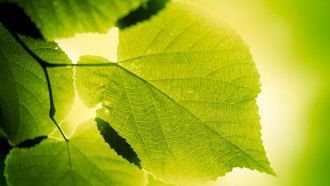
Explainer: How photosynthesis works
Plants can take in light, water and carbon dioxide, and send out sugar and oxygen. Here’s how it works.
- Physics
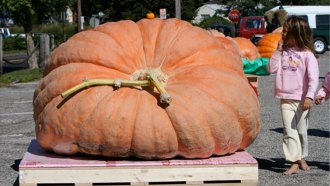
Here’s how giant pumpkins get so big
Cinderella took a ride in a pumpkin coach. Though real pumpkins do get big enough, here’s why their ride would be uncomfortable at best.
- Climate
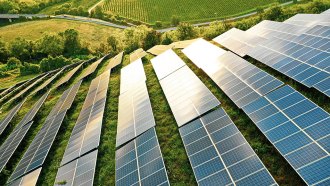
Let’s learn about solar power
Solar power is a way to harness energy from the sun, and lessen our reliance on fossil fuels.
- Brain
Scientists Say: Narcotic
Scientists refer to a narcotic as a drug that stops pain, but the word can be used in other ways as well.