HS-ESS1-2
Construct an explanation of the Big Bang theory based on astronomical evidence of light spectra, motion of distant galaxies, and composition of matter in the universe.
- Physics
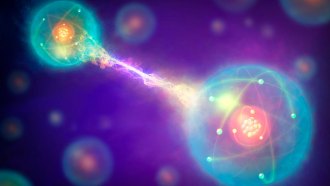
Let’s learn about the quantum realm
On the smallest scales, the universe behaves in some pretty strange ways.
- Space
NASA is readying to send humans back to the moon
The launch of NASA's Artemis I is a huge step toward sending humans back to the moon and beyond.
- Planets
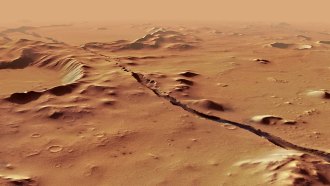
Mars might still be volcanically active, quakes there suggest
Seismic rumblings picked up by NASA’s InSight lander hint at molten rock moving deep below the planet’s fractured surface.
- Space
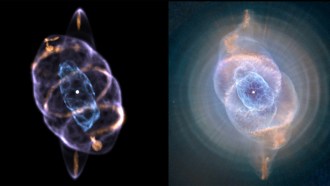
Jets may have sculpted rings of Cat’s Eye nebula
The Cat’s Eye nebula is one of the most complex of its kind. A 3-D model now reveals the source of that complexity.
- Planets
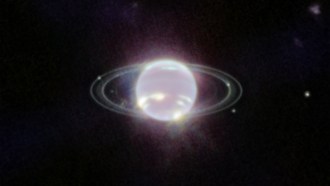
Check out the first direct look at Neptune’s rings since the ’80s
The Voyager 2 spacecraft took the first pics of Neptune’s rings 33 years ago. Now, NASA’s James Webb telescope is providing a more detailed view of them.
- Physics
Mysteries about the universe abound, from its beginning to its end
Scientists have a good understanding of the laws that make our universe tick. But they still don’t quite know how it began — or will end.
- Physics
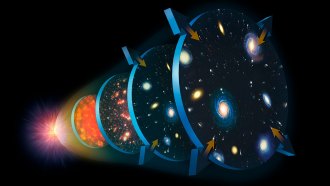
Cosmic timeline: What’s happened since the Big Bang
Energy, mass and the cosmos' structure evolved a lot over the past 13.82 billion years — much of it within just the first second.
- Space
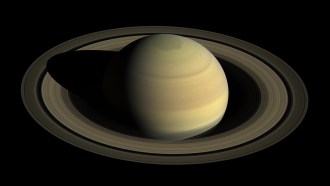
A missing moon could have given Saturn its rings — and tilt
The hypothetical moon is being called Chrysalis. It could have helped tip the planet over before getting shredded to form Saturn’s rings.
- Physics
Let’s learn about ‘ghost particles’
Ghostly particles called neutrinos are so lightweight that for a long time, they were thought to have no mass at all.
- Tech
NASA’s DART spacecraft crashed into an asteroid — on purpose
This mission could provide a blueprint for how to deflect a killer asteroid, if one is ever found headed for Earth.
- Physics
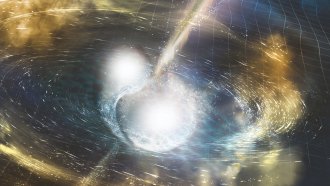
Let’s learn about gravitational waves
Gravitational waves offer scientists a new way to view extreme objects such as black holes and neutron stars.
- Space
My 10 years on Mars: NASA’s Curiosity rover describes its adventure
Did life evolve on Mars? NASA’s Curiosity rover spent the last 10 years trying to answer that question. Here’s the story from the rover’s point of view.