Animals
- Animals
Crabs play defense, save corals
In 2008, an outbreak of large starfish killed off much of a coral reef. But some patches were spared. New data point to why: Mini crabs had fended off the big attackers.
- Animals
Bat signals jammed
Mexican free-tailed bats can jam each other’s signals while hunting at night. The interference makes snagging an insect supper even more competitive for the flying mammals.
- Animals
Scientists seek bat detectives
Bats emit high-pitched calls in the night to find their way around. A citizen science project is eavesdropping on these calls to probe the health of ecosystems.
- Animals
Ancient jellyfish died a strange death
Scientists have probed the fossilized remains of an ancient jellyfish. It reveals a bizarre sequence of events that led to its preservation 310 million years ago.
- Animals
When life exploded
Life exploded in diversity during the Cambrian Period. Experts are exploring what could account for this sudden change 540 million years ago.
- Animals
New frog discovered in New York City
This animal could almost be mistaken for the southern leopard frog — until it opens its mouth. The call the males issue has proven unique.
- Animals
Fish just wanna have fun
Although biologists have observed fish playing before, scientists have now recorded hours of video showing a new type of antic in fish.
- Animals
Teen studies living flashlights of the deep
A teen studies a cryptic fish to better understand when and why it flashes its bacterial glow.
- Animals
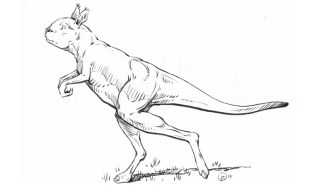
News Brief: No hopping for these ancient ‘roos
By hopping, today’s kangaroos can scoot swiftly through the countryside. That was not true for some of their ancient cousins. True giants, those now-extinct kangaroos would have walked on two feet — and relied on their tippy-toes.
- Animals
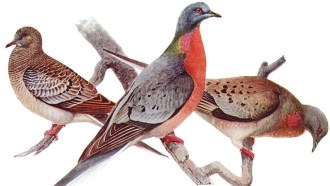
Coming: The sixth mass extinction?
Species are dying off at such a rapid rate — faster than at any other time in human existence — that many resources on which we depend may disappear.
- Animals
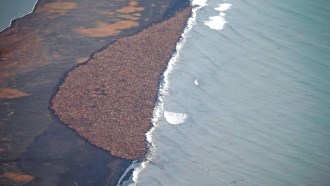
Picture this: Too many walruses
A giant herd of walruses have hauled out onto a beach in Alaska. They don’t belong there, but with no ice nearby, they have taken to land.
- Animals
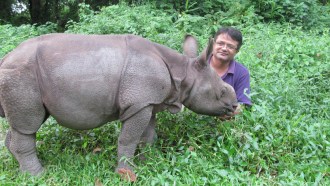
Rare as a rhino
Most species are rare. Some have always been rare. A problem develops when people are responsible for accelerating a species’ rarity to the point that extinction threatens.