Earth
- Tech
Recycling rare-earth elements is hard — but worth it
As demand for these valuable metals has been skyrocketing, scientists have begun inventing new — and greener — ways to reuse what they have in hand.
- Environment
Rare-earth mining is dirty but key to a climate-friendlier future
That’s spurring new research to find a steady but safer supply of these precious metals, including in the United States.
- Earth
Scientists Say: Altitude
Altitude is used to describe heights in geography, astronomy and math.
- Health & Medicine
How to be heat-safe when playing sports
Protecting young athletes from overheating is getting more important as climate change turns up the temperature.
- Environment
Sea life may suffer as plastic bits alter metals in water
This interplay between plastics and metals could affect how each affects the environment — and suggests opportunities for controlling their risks.
- Climate
Here’s how to increase clean energy without harming wildlife
Wind farms, solar panels and more take up land and may harm wildlife. Researchers are working to resolve this conflict.
- Agriculture
Native Amazonians make rich soils — and ancient people may have too
Modern Amazonians make nutrient-rich soil from ash, food scraps and burns. The soil strongly resembles ancient “dark earth” found in the region.
- Physics
A powerful laser can control the paths that lightning takes
In a mountaintop experiment, a laser beamed at the sky created a virtual lightning rod that snagged several bolts.
- Earth
Scientists Say: Equinox and Solstice
Equinoxes and solstices mark the maximums, minimums and mediums of hours spent in daylight.
- Climate
Creating less new stuff could greatly help Earth’s climate
Instead of throwing unneeded things away, scientists recommend moving to a cycle of reducing, reusing, repairing and remaking old things into new ones.
- Earth
Scientists Say: Seismology
Seismology is the branch of science focused on seismic waves — vibrations that run through or around Earth.
- Environment
Protecting forests may help head off future pandemics
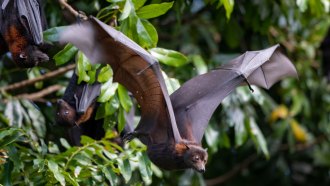
Hungry bats are more likely to shed harmful viruses to people or livestock when they spread out to hunt food. Conserving forests may limit this risk.