Earth
- Earth
Fossil-fuel use is confusing some carbon-dating measurements
Carbon-14 dating of recent artifacts will soon give scientists confusing results. That’s another price society pays for its reliance on fossil fuels.
- Climate
Greenland’s inland ice is melting far faster than anyone thought
Inland melting of the Northeast Greenland Ice Stream is accelerating — and may contribute far more to sea level rise than earlier estimates suggested.
- Animals
Study finds big drop in animal populations since 1970
But the same thing is not happening throughout the kingdom. For instance, more than half of vertebrate populations are stable or increasing.
-
- Environment
This chemist uses online videos to teach about the perils of microplastics
Imari Walker says her journey as a scientist and science communicator lets her talk about and advocate for her passion.
- Environment
Bacterial ‘living wires’ could help protect the seas and climate
Long, thin bacteria that conduct electricity may be able to help clean up oil spills and reduce emissions of methane, a powerful greenhouse gas.
- Agriculture
Let’s learn about eating bugs
Eating more insects, rather than pork, beef or other kinds of meat, may be better for the planet.
- Earth
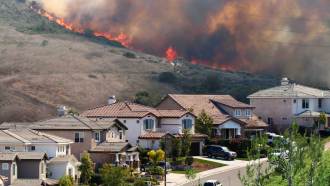
Analyze This: Wildfires are pumping more pollution into U.S. skies
Researchers wanted to study the health effects of wildfire smoke. But they realized they didn’t know where it was and how much exposure people had.
- Environment
‘Forever’ chemicals show up in students’ school uniforms
Researchers found PFAS “forever chemicals” in kids’ school uniforms and other clothing. Studies have linked these compounds to health risks.
- Materials Science
Let’s learn about microplastics
Microplastics have turned up everywhere from the highest mountains to the bottom of the ocean — and even inside animals and people.
- Climate
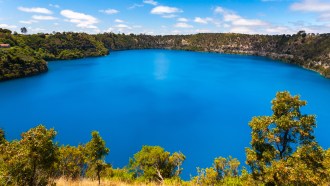
Warming temps could turn some blue lakes green or brown
Slightly warmer summers could cause thousands of blue lakes to become a murky green or brown, according to a tally of color in 85,000 lakes worldwide.
- Earth
Scientists Say: Pole
A pole is either of two opposite ends of a molecule, magnet, battery, planet or other object.