Humans
- Health & Medicine
Early school starts can turn teens into ‘zombies’
Teens face serious consequences when they don’t get enough sleep. Yet most school start times don’t allow a full night’s rest, doctors say. The result: Too many students become ‘walking zombies’.
- Animals
Chef puts eco-bullies on the menu
Some immigrant species can become a nuisance, eating up or displacing the natives. Often people find little incentive to catch and remove the newcomers — unless they find them too yummy to pass up.
- Brain
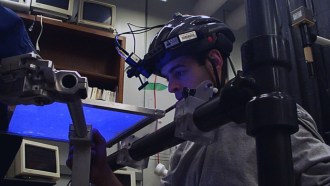
Mistakes: A key to learning
This man uses a robotic arm to move a cursor across a computer screen. The screen blocks his view of his hand and arm. This focuses his attention on any errors he makes as he tries to move a cursor to a target location.
- Brain
Learning rewires the brain
Brain cells actually change shape as we learn. It’s one way we cement new knowledge. And much of the action happens as we sleep.
- Health & Medicine
Starchy foods may cut meaty risks
Eating red meat can increase the risk of certain types of cancer. But scientists have discovered that eating potatoes and other foods containing 'resistant' starch can help limit those risks.
- Health & Medicine
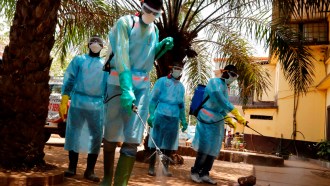
Ebola emerges in the Congo
The Democratic Republic of Congo (formerly Zaire) is where the Ebola virus was first discovered in 1976. This nation has just been hit again by the disease. Scientists suspect this is a new and independent outbreak — not a spread of the epidemic ravaging West Africa.
- Health & Medicine
Ebola treatments and vaccines could be near
Using experimental medicines against Ebola might help to slow or end an outbreak in Africa that has defied efforts to control it.
- Health & Medicine
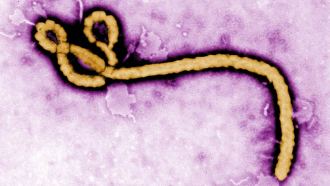
Explainer: What is Ebola?
A virus is behind the hemorrhage-inducing infection called Ebola. It causes fevers and often intense bleeding — seemingly from anywhere and everywhere.
- Health & Medicine
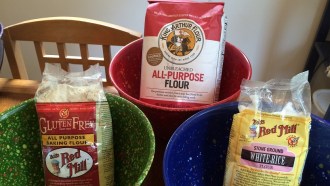
Cookie Science 2: Baking a testable hypothesis
I would like to make a gluten-free cookie that my friend can eat. But to do that, I need to come up with a hypothesis to test.
- Health & Medicine
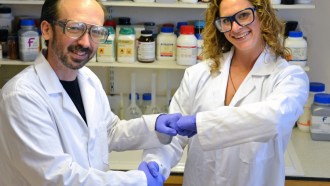
Fist bumps cleaner than handshakes
A handshake, while welcoming, can transmit lots of germs — many times more than a high five or, especially, a fist bump.
- Animals
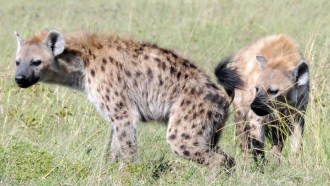
Germs explain some animal behaviors
The bacteria that people and other animals host in and on their bodies are invisible to the eye. Yet they can play a very visible role in behavior. It’s something scientists are just coming to appreciate.
- Animals
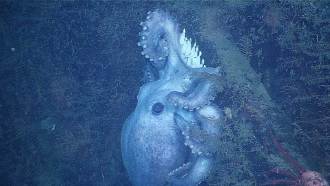
Octopus sets egg-nurturing record
Animals will do extraordinary things to help their babies survive. Consider ‘Octomom:’ She sat on one clutch of eggs for nearly 4.5 years.