Life
- Genetics
Scientists Say: DNA sequencing
All of us have our own individual DNA. Now, scientists can determine what each individual strand is made of — a process called DNA sequencing.
- Animals
End of Latin America’s Zika epidemic is in sight
A computer simulation suggests the Zika epidemic in Latin America is peaking and may not strike hard again for up to three decades.
- Animals
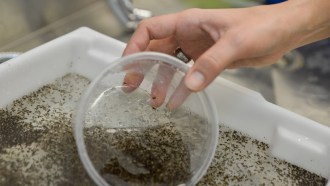
GM mosquitoes cut rate of viral disease in Brazil
Adults males carrying the altered gene cannot father young that survive to adulthood. That’s when they suck blood — and can transmit disease.
- Animals
Scientists Say: Crepuscular
Day creatures are diurnal. Night creatures are nocturnal. Animals active at twilight get a special name.
- Climate
Climate closing the gender gap for this mountain flower
Among valerian plants, males like it hotter than the females do. So a warming climate has been speeding their migration up once-cool mountainsides.
- Animals
Frigate birds spend months without landing
Frigate birds can fly non-stop for months. They stay in the air with the help of upward-moving airflows, a new study finds.
- Animals
Scientists Say: Venomous
A poison-arrow frog is poisonous, but a rattlesnake is not. What’s the difference? It’s how their poisons are delivered.
- Fossils
Parasites wormed their way into dino’s gut
Tiny burrows crisscross the stomach of a 77-million-year-old dinosaur fossil. These may be tracks left behind by slimy parasitic worms.
- Animals
Current coral bleaching event is the longest known
Heat stress has led to the longest coral bleaching event on record. Scientists now worry that global warming may make such prolonged crises more frequent.
- Brain
Hormone affects how teens’ brains control emotions
Using scans of brain activity, scientists show that surging hormones drive where emotions get processed in a teen’s brain.
- Brain
Gasp! At the movies, your breaths reveal your emotions
Researchers took air samples as they screened movies. What people exhaled were linked to film scenes’ emotional tone, they found.
- Health & Medicine
Zika vaccines look promising
As a Zika epidemic surges through Brazil and northward, scientists are looking for drugs to keep more people from becoming infected. Several vaccines show promise in early tests — but none has yet been tried in people.