Life
- Animals
Elephants’ trunks: These leaf-blowers snag food
Researchers at a Japanese zoo filmed two elephants using their trunks as leaf-blowers, pulling food toward them with puffs of air.
- Genetics
Expert panel approves human gene editing
Scientists have recently been reporting big advances in the ability to tweak the genes of living organisms, including people. But some question the ethics of doing that. A panel of experts now says such research can go ahead — with one major exception.
- Agriculture
Banana threat: Attack of the clones
Researchers find that disease-causing fungi — all clones of one another — will continue to infect banana plants unless new steps are taken to stop their spread.
- Animals
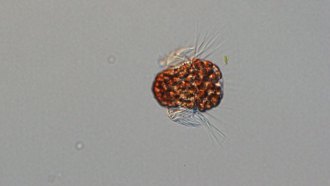
Scientists identify plankton from space
Plankton are often too tiny for our eyes to see. But when huge numbers bloom at once, they now can be ID’d from space, a new study shows.
- Fossils
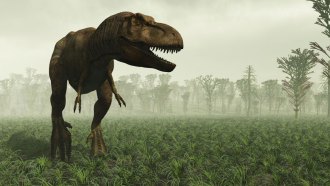
Predatory dinos were truly big-mouths
Large meat-eating dinosaurs could open their mouths wide to grab big prey. Vegetarians would have had a more limited gape, a new study suggests.
- Animals
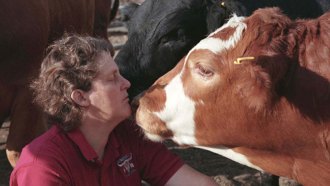
Profile: A human touch for animals
Temple Grandin uses her own autism to understand how animals think. The animal scientist is famous for fostering the humane treatment of livestock.
- Microbes
Fossils show sign of ancient vampire microbes
Scientists have found 750-million-year-old fossils of cells with puncture wounds. This appears to offer evidence that vampirelike creatures sucked them dry.
- Animals
Taking attendance with eDNA
Environmental DNA, or eDNA, tells biologists what species are in an area — even when they’re out of sight.
- Animals
Wildlife forensics turns to eDNA
Environmental DNA, or eDNA, tells biologists what species have been around — even when they’re out of sight or have temporarily moved on.
- Animals
Kangaroo farts: Not so ‘green’ after all?
Scientists had thought that kangaroo farts were environmentally friendly because they had little methane. That may not always be true.
- Brain
When every face is a stranger’s face
Some people can’t recognize faces — any faces, even their mother’s. Scientists are working to understand this ‘face blindness’ and help those who suffer from it.
- Animals
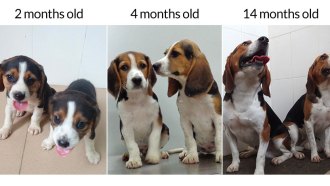
Gene editing creates buff beagles
Scientists showed that a potentially useful new gene-editing tool can work in dogs. It created a pair of adorable, muscular puppies. But the goal is to use it for other research purposes.