Physics
- Physics
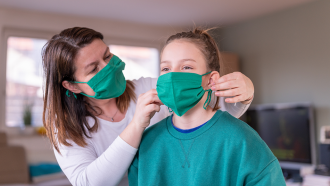
Science offers recipes for homemade coronavirus masks
New studies provide data on what types of mask materials protect best against the virus that causes COVID-19. They also point to the value of a really snug fit.
- Materials Science
Micro-barbs could make shots less painful
A new type of microneedle design might take the sting out of shots and stick to the skin better than other approaches.
- Earth
Let’s learn about earthquakes
Dozens of quakes happen every day, but most aren’t big enough for people to notice.
- Environment
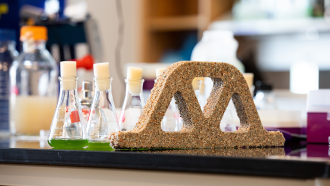
This ‘living’ concrete slurps up a greenhouse gas
Microbes help harden a mix of sand and gelatin into a living concrete that could interact with people and the environment in great new ways.
- Physics
Explainer: Rainbows, fogbows and their eerie cousins
Light shining through a water droplet can make more than just a rainbow. A range of other colorful arcs also can develop.
- Climate
How to curb the climate heating by contrails
Contrails are narrow clouds left behind in the sky by jets. They add to climate change. But a new study suggests a way to curb their contribution.
- Animals
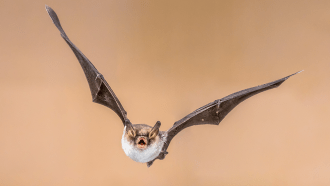
Scientists Say: Echolocation
This word describes a method that some animals use to sense their environments by making sounds and listening for their echoes.
- Environment
Here’s one way to harvest water right out of the air
Need water but you have no access to rain, lakes or groundwater? Materials known as metal-organic frameworks could be used to slurp that water from the air, new data show.
- Health & Medicine
Six foot social-distancing will not always be enough for COVID-19
To avoid COVID-19, keeping a 6-foot social distance is a good rule of thumb. But for plenty of instances, that might not be nearly far enough.
- Chemistry
Batteries should not burst into flames
Because lithium-ion batteries power modern life, they need to store a lot of energy. Now scientists are focusing on making them safer.
- Math
Lack of diversity in his field has troubled this mathematician
As a kid, Edray Goins didn’t like math. But he fell in love with the subject in college and is now training the next generation of minority mathematicians.
- Physics
Scientists Say: Photon
This word describes light as a particle. A photon is the tiniest possible bit of electromagnetic radiation.