Physics
- Chemistry
Like Magneto? Microcrystals give magnets superpower over living cells
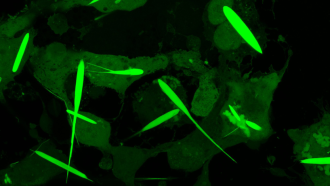
New iron-rich protein crystals could help researchers better understand the nerve cells that control movement and sensation. All they need are magnets.
- Physics
Explainer: Understanding meteors and meteor showers
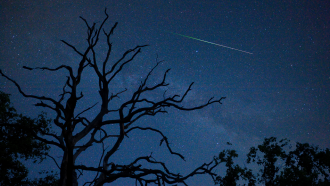
Meteors regularly enter Earth’s atmosphere. Most ‘shooting stars’ pose few risks to life on the ground, but the rare big ones can be lethal.
- Physics
Tests challenge whether centuries-old violins really are the best ever
Some centuries-old Italian violins are reputed to be the best ever made. Scientists tested that. Their data now show new instruments can sound at least as good — and sometimes better.
- Physics
Magnetic fields may supercharge the sun’s release of heat
Astronomers have linked flame-like tendrils rising from the sun to changes in its magnetic fields. This may be one step toward understanding why the sun’s corona is so very, very hot.
- Climate
Hotspots found for lightning’s superbolts
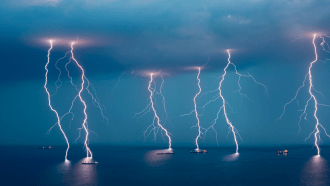
A nine-year survey reveals where and when the most energetic lightning strikes — and it’s not what scientists expected.
- Life
A new spin on lab-grown meat
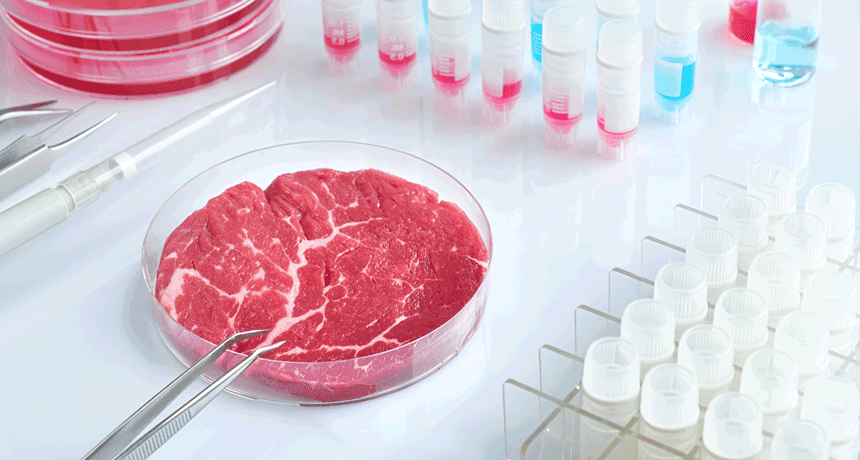
A technique inspired by how cotton candy is spun could help produce lab-grown meat at a lower cost and on a bigger scale.
- Animals
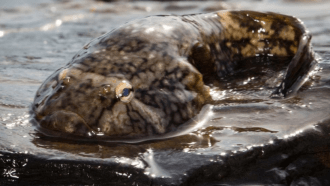
Weird little fish inspires the development of super-grippers
Suction-cup designers were inspired by the rock-grabbing tricks of the aptly named clingfish.
- Physics
Scientists Say: Power
This word describes the rate at which energy is delivered or used to do work, along with related ideas, such as ways of making electricity.
- Physics
Frozen’s ice queen commands ice and snow — maybe we can too
In the Frozen movies, Elsa magically manipulates snow and ice. But scientists, too, make snowflakes. If they reinforce it, architects can build with ice and snow.
- Physics
First heavy element identified from a neutron-star collision
Scientists have at last witnessed newborn strontium in the afterglow of a neutron-star smashup. It confirms what they had suspected about how many massive stars are created.
- Physics
Musicians could benefit from teens’ research that pictures sound
While in middle school, Hannah Shu and Isabelle Katz developed ways to picture musical tones. Their research could help everyone from instrument shoppers to vocal coaches.
- Earth
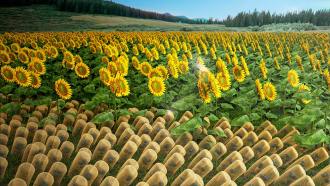
Sunflower-like rods could boost efficiency of solar collectors
A new material bends to follow the sun. Rods made from it could soak up far more of the sun’s light than ordinary solar collectors.