Physics
- Physics
Physics finally explains the sound of clapping
The “Helmholtz resonator” concept is responsible for the sound produced by hand-clapping.
- Microbes
Living lenses? Glass-coated microbes might take better photos
Bacteria with a gene from sea sponges can coat themselves in glass. Working as tiny, bendable lenses, they could lead to thinner cameras or sensors.
- Space
The universe: How will it end?
The Big Bang likely brought our universe into existence. What will mark its grand finale? Scientists blend imagination and data to make predictions.
- Physics
This weird ice may exist on alien planets
Scientists used high pressure and heat to create plastic ice, which has qualities of both ordinary ice and liquid water.
- Physics
Scientists Say: Lift
An airplane wing’s unique shape creates air pressure differences that result in this gravity-defying force.
- Tech
Experiment: Make the fastest rubber band paddleboat
With a rubber band and some cardboard, you can build your own paddleboat to speed across the surface of a pool.
- Materials Science
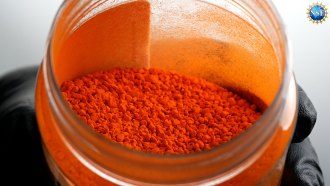
Orange food dye can temporarily turn skin transparent
When mixed with water and rubbed on the skin, a common food dye allows researchers to peer inside the body of a mouse.
- Physics
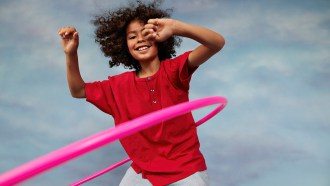
Wiggling robots reveal the physics of how Hula-Hoops stay up
Newbies should swing their Hula-Hoops fast and in line with their bodies, the new findings suggest.
- Earth
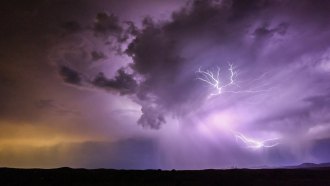
Scientists Say: Dark lightning
We don't see it, but rare gamma-ray lightning can bolt from stormy skies like regular lightning.
- Physics
Let’s learn about static electricity
The effects of static electricity are all around us — from lightning strikes to clothes clinging together out of the drier. But scientists still don’t fully understand this phenomenon.
- Math
His love of math led to a career in quantum computing
James Whitfield began his career when quantum computing was still in its infancy. Today, he’s helping to make it more accessible to educators, researchers and others.
- Materials Science
Experiment: How much water is needed to cook pasta?
In this cooking experiment, let’s find out if we can save time, energy and resources by boiling noodles in less water.