Science & Society
- Artificial Intelligence
AI learned how to influence humans by watching a video game
New research used the game Overcooked to show how AI can learn to collaborate with — or manipulate — us.
- Psychology
You’re too distracted. Here’s why that matters and what to do about it
Science reveals the many reasons we are so distracted, from poor sleep and social media to diet and exercise. It also shows us how to take back our focus.
- Humans
Explainer: What is autism?
Autism is not a disease, but a description used to characterize a certain type of brain development.
- Plants
This urban gardener is mimicking nature to create healthier plants
Urban garden specialist Kwesi Joseph is experimenting with rock dust and plants. He also helps New York City community and school gardens with gardening problems.
- Science & Society
U.S. lawmakers look for ways to protect kids on social media
The U.S. government wants to protect young social media users from exploitation, bullying and more. The companies should play a role in this, it says.
- Health & Medicine
Health problems persist in Flint 10 years after water poisoning
Flint, Mich., residents still show health impacts long after a switch in their drinking-water source exposed them to toxic lead and other pollutants.
- Science & Society
Community action helps people cope with Flint’s water woes
Activism, social media and public education are helping residents in the aftermath of the water crisis in Flint, Mich.
- Health & Medicine
9 things to know about lead’s health risks — and how to curb them
Lead has been linked to lower IQ, behavior problems, mental-health disorders, strokes and more health impacts. There are ways to reduce your exposure.
- Brain
Scientists Say: Confirmation Bias
Confirmation bias is the tendency to seek out and believe information that agrees with what we already think.
- Environment
Bottled water hosts many thousands of nano-sized plastic bits
The finding emerges from tests of a new tool that identified smaller-than-ever tiny plastic bits in three brands of bottled water.
- Science & Society
Scientists Say: Model
Models are representations of real-life systems or processes that we use to ask questions, make predictions and test our knowledge.
- Space
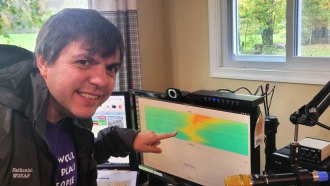
This space physicist uses radios to study eclipses
Nathaniel Frissell uses radio data to study how eclipses affect a layer of the atmosphere called the ionosphere.