biologist: A scientist involved in the study of living things.
cell: (in biology) The smallest structural and functional unit of an organism. Typically too small to see with the unaided eye, it consists of a watery fluid surrounded by a membrane or wall. Depending on their size, animals are made of anywhere from thousands to trillions of cells. Most organisms, such as yeasts, molds, bacteria and some algae, are composed of only one cell.
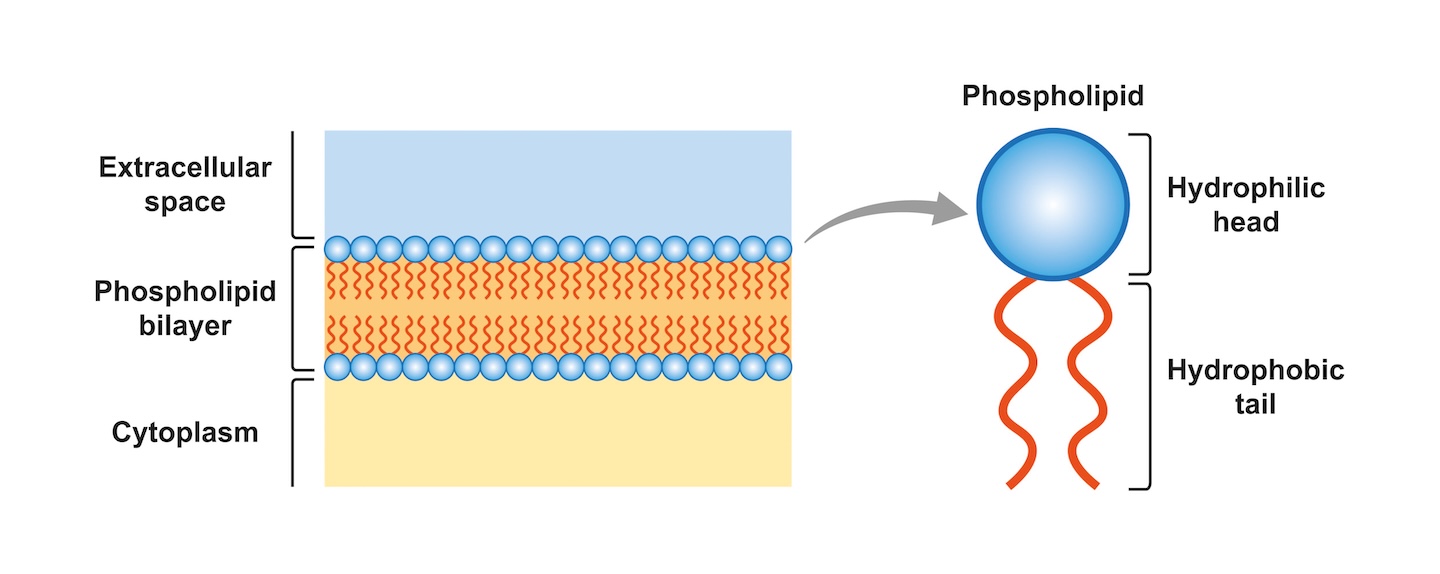
cell membrane: A structure that separates the inside of a cell from what is outside of it. Some particles are permitted to pass through the membrane.
chemical: A substance formed from two or more atoms that unite (bond) in a fixed proportion and structure. For example, water is a chemical made when two hydrogen atoms bond to one oxygen atom. Its chemical formula is H2O. Chemical also can be an adjective to describe properties of materials that are the result of various reactions between different compounds.
cortisol: Also known as hydrocortisone, this is a hormone produced by the adrenal glands. It can serve as the body’s main warning that it is under stress. It helps regulate a wide range of body functions, including how we process the energy in food, create memories and control inflammation.
decay: The process (also called “rotting”) by which a dead plant or animal gradually breaks down as it is consumed by bacteria and other microbes.
dissolve: To turn a solid into a liquid and disperse it into that starting liquid. (For instance, sugar or salt crystals, which are solids, will dissolve into water. Now the crystals are gone and the solution is a fully dispersed mix of the liquid form of the sugar or salt in water.)
element: A building block of some larger structure. (in chemistry) Each of more than one hundred substances for which the smallest unit of each is a single atom. Examples include hydrogen, oxygen, carbon, lithium and uranium.
estrogen: The primary female sex hormone in most higher vertebrates, including mammals and birds. Early in development, it helps an organism develop the features typical of a female. Later, it helps a female’s body prepare to mate and reproduce.
fat: A natural oily or greasy substance occurring in plants and in animal bodies, especially when deposited as a layer under the skin or around certain organs. Fat’s primary role is as an energy reserve. Fat also is a vital nutrient, though it can be harmful if consumed in excessive amounts.
fatty acid: A large molecule made of up chains of carbon and hydrogen atoms linked together. Fatty acids are chemical building blocks of fats in foods and the body.
hormone: (in zoology and medicine) A chemical produced in a gland and then carried in the bloodstream to another part of the body. Hormones control many important body activities, such as growth. Hormones act by triggering or regulating chemical reactions in the body. (in botany) A chemical that serves as a signaling compound that tells cells of a plant when and how to develop, or when to grow old and die.
hydrocarbon: Any of a range of large molecules containing chemically bound carbon and hydrogen atoms. Crude oil, for example, is a naturally occurring mix of many hydrocarbons.
hydrogen: The lightest element in the universe. As a gas, it is colorless, odorless and highly flammable. It’s an integral part of many fuels, fats and chemicals that make up living tissues. It’s made of a single proton (which serves as its nucleus) orbited by a single electron.
hydrophobic: Repelling (or not absorbing) water.
lipid: The term for a family of fatty compounds, from cholesterol and wax to triglycerides. The four big categories include triglycerides, waxes, steroids and phospholipids.
membrane: A barrier which blocks the passage (or flow through) of some materials depending on their size or other features. Membranes are an integral part of filtration systems. Many serve that same function as the outer covering of cells or organs of a body.
molecule: A group of atoms that represents the smallest possible amount of a chemical compound. Molecules can be made of single types of atoms or of different types. For example, the oxygen in air is made of two bound oxygen atoms (O2). Water is made of two hydrogen atoms and one oxygen atom (H2O).
nerve: A long, delicate fiber that transmits signals across the body of an animal. An animal’s backbone contains many nerves, some of which control the movement of its legs or fins, and some of which convey sensations such as hot, cold or pain.
organelle: Specialized structures, such as mitochondria, found within a cell.
protein: A compound made from one or more long chains of amino acids. Proteins are an essential part of all living organisms. They form the basis of living cells, muscle and tissues; they also do the work inside of cells. Antibodies, hemoglobin and enzymes are all examples of proteins. Medicines frequently work by latching onto proteins.
testosterone: Although known as a male sex hormone, females make this reproductive hormone as well (generally in smaller quantities). It gets its name from a combination of testis (the primary organ that makes it in males) and sterol, a term for some hormones. High concentrations of this hormone contribute to the greater size, musculature and aggressiveness typical of the males in many species (including humans).
tissue: Made of cells, it is any of the distinct types of materials that make up animals, plants or fungi. Cells within a tissue work as a unit to perform a particular function in living organisms. Different organs of the human body, for instance, often are made from many different types of tissues.
trait: A characteristic feature of something. (in genetics) A quality or characteristic that can be inherited.
vitamin: Any of a group of chemicals that are essential for normal growth and nutrition and are required in small quantities in the diet because either they cannot be made by the body or the body cannot easily make them in sufficient amounts to support health.