Polar bears leave thousands of tons of food scraps for other species
As these bears decline, Arctic scavengers could lose a critical food source, new data show
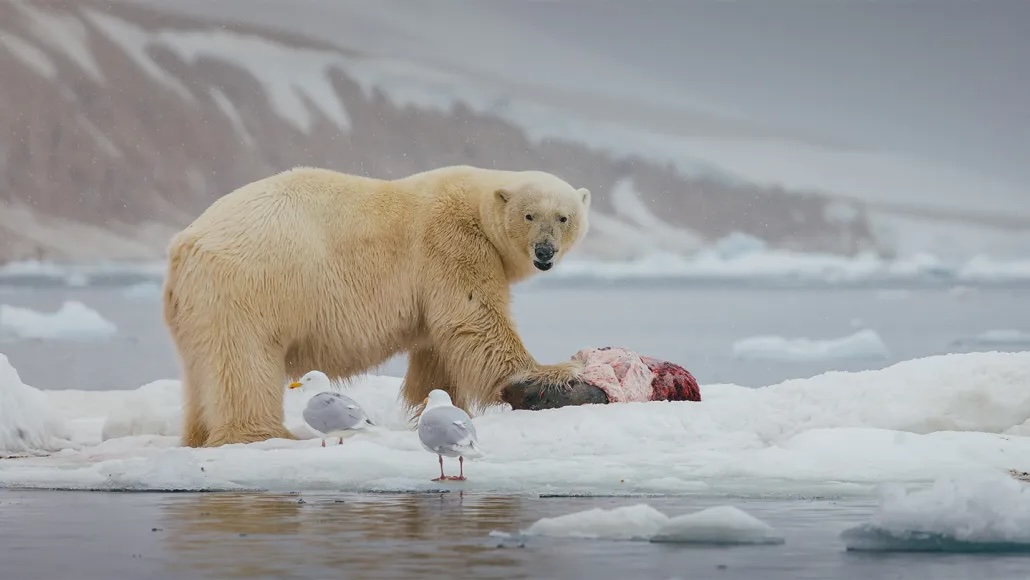
A polar bear in Norway picks at its prey. Gulls nearby and other animals will eat the leftovers. Polar bears typically leave about 30 percent of edible animal’s remains.
David Merron Photography/Getty Images
This is a human-written story voiced by AI. Got feedback? Take our survey . (See our AI policy here .)
Polar bears are picky eaters. And that’s great news for other hungry Arctic critters.
In one year, a polar bear can leave roughly 300 kilograms (660 pounds) of scraps behind on which other animals can dine. Altogether, that comes to an estimated 7.6 million kilograms (8,375 U.S. tons) of bear leftovers, researchers now estimate.
This leftover meat, called carrion, points to the crucial role these bears — top predators — play in feeding other species.
The research also sounds a warning. As climate change warms the Arctic, polar bears are at risk. A decline in their numbers could greatly threaten other species that are part of the Arctic food web.
Polar bears eat mainly seals, especially ringed seals. Scientists have long known these bears mostly eat the blubber of their prey. These diners often leave much of the rest behind. Until now, scientists have overlooked the size of those leftovers and their importance, says Nicholas Pilfold, A large-carnivore biologist, Pilfold works at the San Diego Zoo Wildlife Alliance in California. He has done research in the Arctic for 15 years.
As part of a team, Pilfold pored over studies, observations and anecdotes about scavenging activity around carcasses. These data went back as far as the 1930s. The researchers also analyzed studies on how many calories seals can provide. Then they also looked at studies that had tallied how many seals a polar bear consumes each year.
During its hunting season peak, they found, a bear kills roughly one seal every three to five days. That comes to some 1,000 kilograms (2,200 pounds) of prey each year. A bear eats about 70 percent of that mass. The remaining 30 percent is up for grabs.
Today’s Arctic hosts an estimated 26,000 polar bears. So all those leftovers add up to millions of kilograms — thousands of tons — of food for scavengers.
Pilfold’s team shared its new findings October 28 in Oikos.
Many species depend on polar bear leftovers
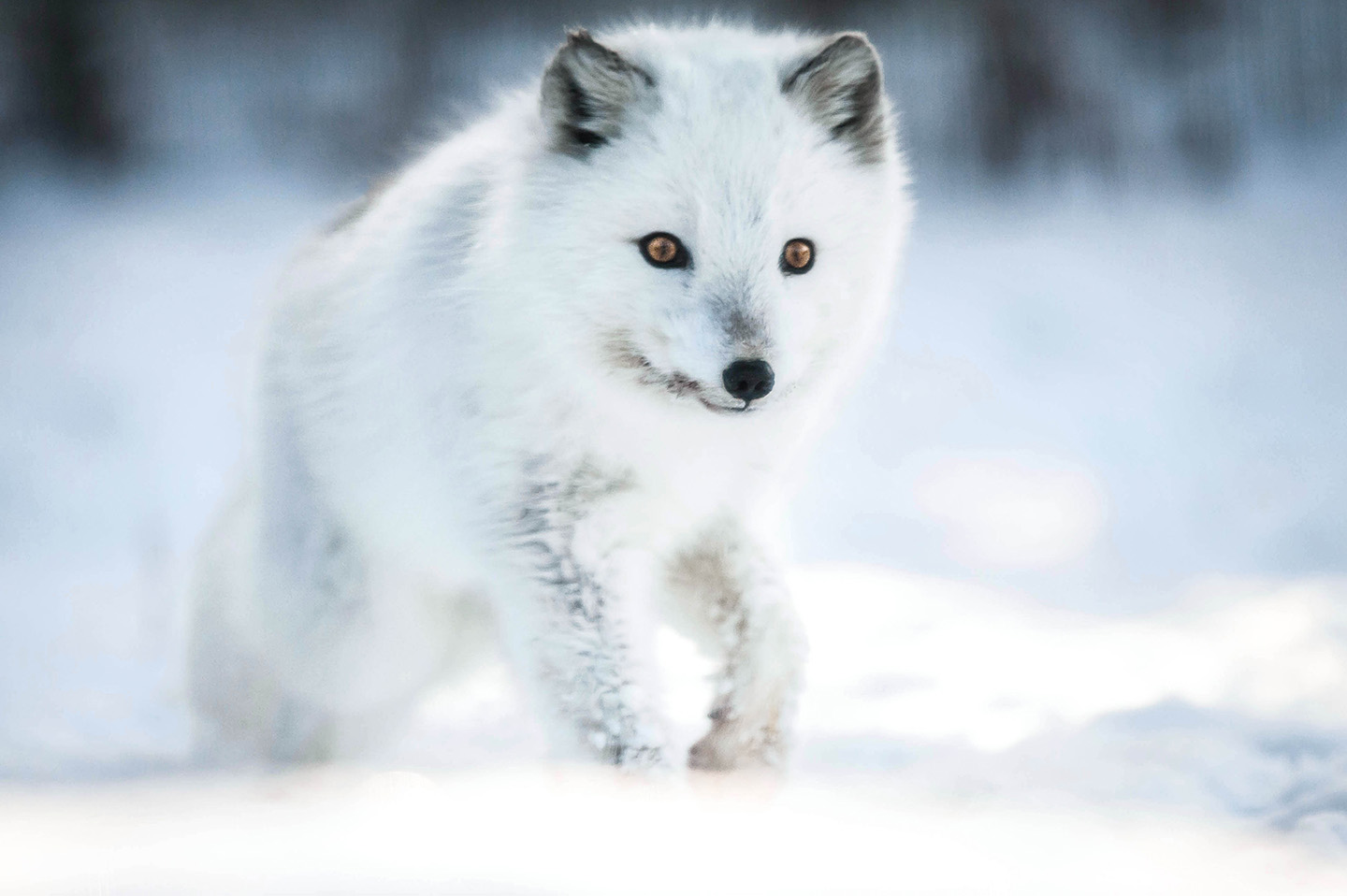
Those who benefit from the leftovers include Arctic foxes, gulls, ravens and other polar bears. Occasionally even snowy owls, wolves and grizzly bears will feast on the remains.
Pilfold has seen that “foxes will follow in the tracks of where the polar bears have gone,” waiting for the bears to abandon their meal. Birds also fly overhead, waiting their turn, he says. “There’s just this cacophony of sound of gulls,” he notes. “They’re all trying to get some of that seal.”
Other species couldn’t access this type of food if the polar bears hadn’t left it behind, says study coauthor Holly Gamblin. She is a wildlife biologist in Canada at the University of Manitoba in Winnipeg.
The new findings don’t surprise Jon Aars. A polar bear expert, he works at the Norwegian Polar Institute in Tromsø. Bear leftovers are probably a “rather important” food source for other species, he says — “particularly at a time of the year when alternative food is not so easy to get.”
Polar bears often swim to find seals at sea or on ice floes. As the Arctic has been warming, the ice has been melting, too. This gives bears fewer rest stops to catch their meals, dine and rest. Earlier work by Pilfold’s team showed that the bears often have to swim exhaustingly long distances between meals. They tracked one female who swam 400 kilometers (249 miles) nonstop over a period of nine days.
Such long treks are weakening bears and have led some to starve. This can reduce polar bear populations. If this happens, the carrion they provide will likely decrease as well, Pilfold now says.
His team looked at two regions where polar bears have been declining. Here, they calculate, about 323,000 kilograms (710,000 pounds) of carrion are likely being lost each year. Melting ice might also make it harder for some scavengers to reach bear leftovers.
It’s hard to predict how reduced leftovers might affect other species, Aars says. But “it will have [an] impact one way or another.” And how big an impact, he says, will depend on the species and which “part of the Arctic we look at.”