Meet CLA, a naturally ‘healthy’ fat in burgers, ice cream and more
This natural trans fat resembles saturated fats, but shows many health benefits
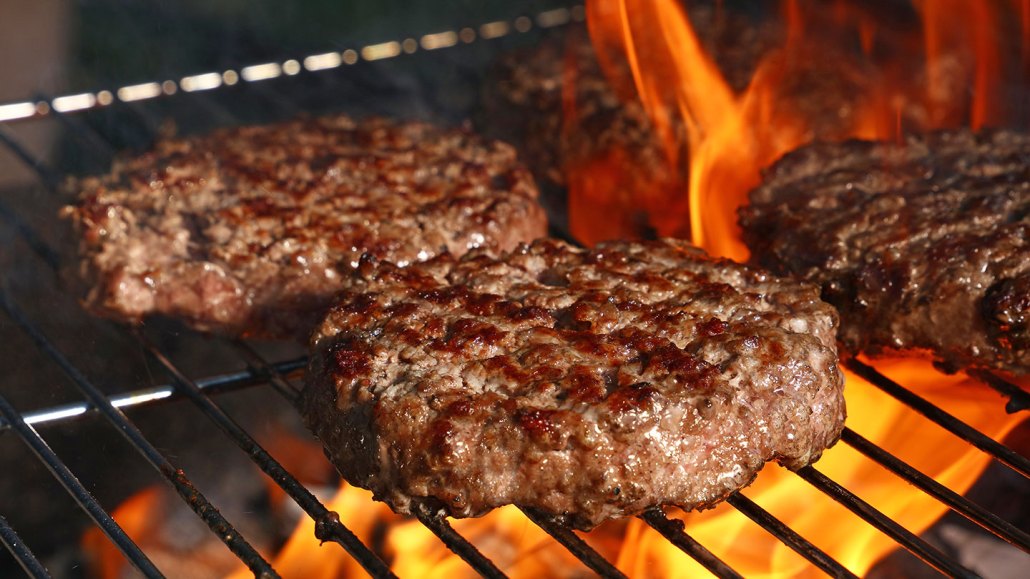
The health benefits of CLA first emerged in cooked ground beef. An unusual fat in the meat showed strong anti-cancer benefits.
BreakingTheWalls/iStock/Getty Images Plus
This is a human-written story voiced by AI. Got feedback? Take our survey . (See our AI policy here .)
Many meat and dairy products from cows and sheep contain an unusual type of fat. Due to the chemical bonds between their carbon atoms, these fats resemble saturated types such as the ones in butter. But unlike saturated fats, these naturally occurring trans fats are not bad for the heart. In fact, they’ve shown a host of health benefits. Among them: fighting cancer.
Michael Pariza and his team at the University of Wisconsin–Madison were the first to show this. And in 1984, they were as surprised as anyone when they turned up a cancer-fighting substance in cooked ground beef. It would take another three years before they would identify the active ingredient as a fat: CLA, short for conjugated linoleic acid.
When given in doses equal to what could be found in eight burgers, this fat prevented skin and stomach cancers in mice. But Pariza, a microbiologist, was quick to caution against going on a burger-binging spree. “We’re not seeing hamburgers as a magic bullet [against cancer],” he told Science News at the time. “There really are no anti-cancer foods. The best advice still is to eat a well-balanced diet.”
A year later, Pariza and his team found CLA in milk and cheeses. The processed spread Cheez Whiz proved its richest source. The spread had 4.5 times more CLA than Parmesan cheese and 6.5 times more than cheddar. What seemed to make this canned product special was how much milk-based whey protein it had.
CLA is an altered form of linoleic acid (LA). A type of polyunsaturated fat, LA has a long backbone of 18 carbon atoms held together by chemical bonds. What sets CLA apart from LA is some bonds along that backbone.
The backbones of both LA and CLA have two pairs of carbon atoms that are linked by double bonds. Those double bonds are conjugated in CLA, meaning they are separated by just one single bond. In LA and most other polyunsaturated fats, those double bonds are separated by two single bonds.
CLA’s conjugated chemical setup makes it a trans fat. That term refers to how atoms are arranged in the structure of the molecule.
Like butter, lard and other things rich in saturated fats, trans fats are solid at room temperature. Also like saturated fats, trans types resist going rancid. These traits made them attractive as cheaper alternatives to butter and lard. That’s why, around 1910, companies began making synthetic trans fats and using them in margarine and shortening, used for baking.
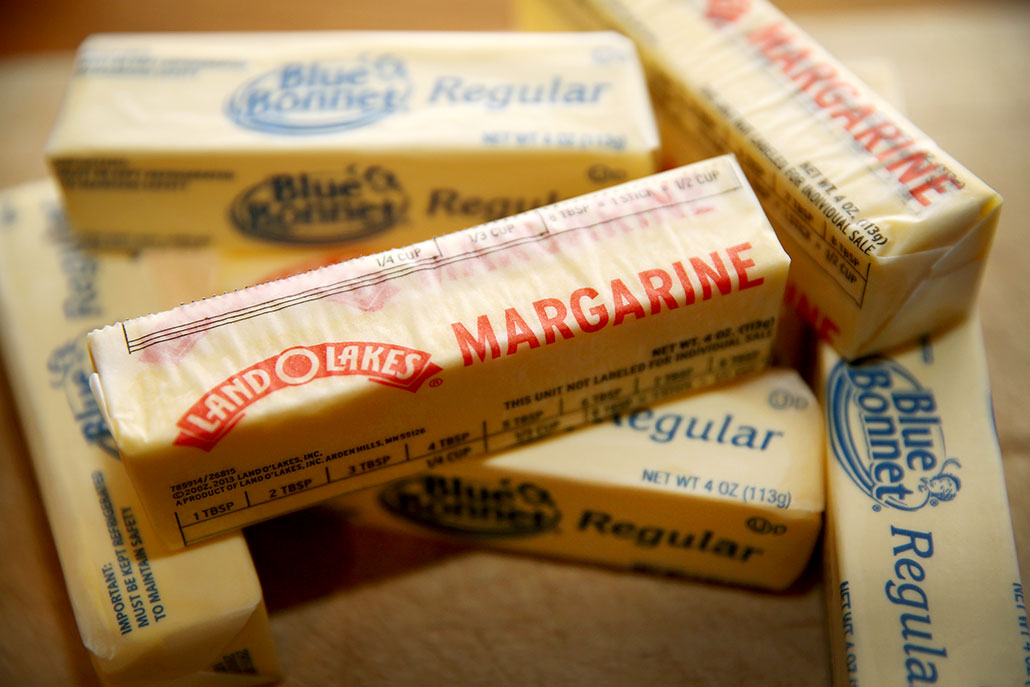
For about 80 years, these synthetic fats proved wildly popular. Then, in the 1990s, research started linking synthetic trans fats to heart disease. By 2006, these fats were estimated to cause up to one in five heart attacks per year in the United States. Twelve years later, the United States banned use of synthetic trans fats in foods. Today, nearly 60 nations have done so.
The natural trans fat CLA, though, has proved to have many health benefits. Early research focused on its cancer-fighting prowess. More recent work has linked CLA to lowering not only blood pressure and inflammation, but also blood markers of heart disease. CLA also appears to improve bone health and curb weight gain.
Do you have a science question? We can help!
Submit your question here, and we might answer it an upcoming issue of Science News Explores
CLAs have been linked with some side effects too, such as liver damage. These may be more common with levels of CLAs higher than what’s found in food. And they haven’t been linked with the main CLA found in beef and dairy products — a type known as cis-9, trans-11.
CLA is “a beneficial part of animal fats, which is often overlooked,” Pariza says. Especially for kids, he adds, “the best place to get it is probably from dairy.”
Want to boost your CLA? Treat yourself now and again to a cheeseburger with a scoop of your favorite ice cream. Pariza says the cheese, meat and dessert are all rich sources of what’s “clearly the healthiest form among CLAs (the cis-9, trans-11 isomer).” This one has been shown to be “important in the growth of animals,” he notes — “which kids are.”