A new cell model could help kids and teens with arthritis
A teen researcher built the model to help find treatments for juvenile idiopathic arthritis
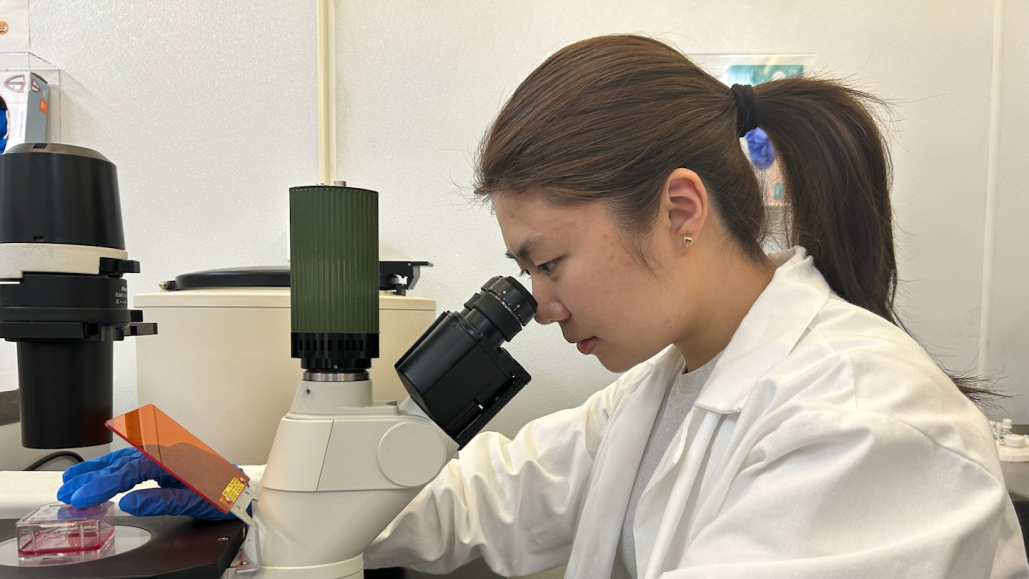
Though poorly understood, juvenile idiopathic arthritis (JIA) is the most common type of arthritis in kids and teens. One teen with JIA set out to help change that.
Society for Science
This is a human-written story voiced by AI. Got feedback? Take our survey . (See our AI policy here .)
Claire Jiang, 18, still vividly remembers starting to feel sick during a test in third grade. She felt feverish. Her elbow hurt, and she struggled to move it. Her symptoms, it turned out, had been triggered by juvenile idiopathic arthritis, or JIA. This chronic illness causes pain and damage to joints in kids. After her diagnosis, Claire learned how limited her treatment options were. One reason: Scientists lack a model of JIA-affected joint cells to study in the lab. So Claire built such a model herself.
She started with cells that are used to study a similar disease, rheumatoid arthritis. She treated those cells with a protein linked to joint damage in JIA. Then, she looked at patterns of cell growth and what genes turned on — were expressed. The treated cells, she found, behaved like those affected by JIA.
In the future, Claire hopes scientists will use her new model to learn more about this disease and devise new treatments.
Claire is currently a high-school senior at Bergen County Academies in Hackensack, N.J. Her research earned her a finalist spot at the 2026 Regeneron Science Talent Search. (That competition is run by Society for Science, which also publishes Science News Explores.) In this interview, Claire shares her research experiences and advice.
What was the most rewarding part of this project?
Adding to the scientific knowledge about an illness that affects her personally “is honestly one of the greatest accomplishments I could ever have imagined,” Claire says. “Growing up with JIA was a little bit scary.” She didn’t know anyone else who had it. Her friends and family didn’t know any more about JIA than she did. But now, she is on a mission to demystify the disease — and her work is already paying off.
Sharing her research has also helped Claire feel more comfortable discussing JIA. “I used to be really scared to talk about my diagnosis,” she says. But “research has really contributed to my self-confidence and being okay with talking about my diagnosis.”
What was the most challenging part?
“I never pull all-nighters, but I definitely was [going to sleep] later and later trying to figure out and analyze this data,” Claire says. She spent her lunch periods in the lab at her school and worked on her project during weekends.
“Ever since I was in seventh grade, I became really interested in using science … to help in some way contribute to JIA treatment,” Claire says. So while the long hours were difficult, “I wouldn’t have it any other way, because I always knew I wanted to do this.”
Any advice for research newbies?
“Always believe in yourself. There were nights that I felt that my research was bad and it didn’t make sense and I didn’t understand what was going on … all this spiraling,” Claire says. “Going through this is part of the process. But once you persevere, that’s what makes you really happy. The fact that you persevered and got through it.”