All Stories
- Health & Medicine
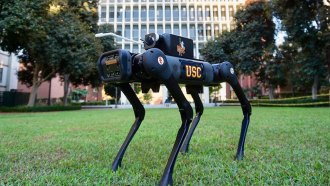
New robots can clean virus-laden surfaces so people won’t have to
Smart and nimble cleaning robots will soon help disinfect spaces. They twist and bend to hit hard-to-reach spaces with UV light or cleansing sprays.
- Archaeology
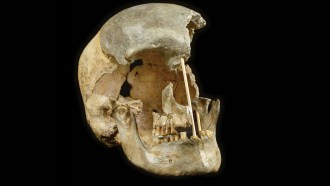
Europe’s ancient humans often hooked up with Neandertals
DNA from ancient bones shows humans and Neandertals were regularly mixing genes by about 45,000 years ago.
- Earth
Here’s how lightning may help clean the air
Airplane observations show that storm clouds can generate huge quantities of air-cleansing chemicals known as oxidants.
- Animals
Analyze This: Invasive species cost the world billions each year
A new study estimates that invasive species have cost the world more than $1 trillion since 1970. That’s almost certainly an underestimate.
- Chemistry
Scientists Say: Metal
Metals are substances that can be elements, alloys or compounds. They all conduct heat and electricity and can be formed into different shapes.
- Computing
New device gets power from 5G signals grabbed from the air
A new way to harvest electricity relies on a tiny array of antennas and a lens. Together, they collect and focus 5G signals coming from any direction.
- Physics
Why big nuts always rise to the top
X-rays scans of a box of mixed nuts now reveal why large Brazil nuts rise to the top.
- Animals
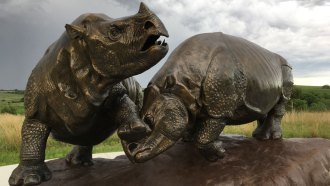
Rhinos, camels and bone-crushing dogs once roamed Nebraska
Scientists digging into the remnants of an ancient watering hole in Nebraska discovered evidence of an Africa-like savanna, complete with rhinos.
- Animals
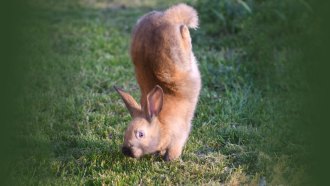
These rabbits can’t hop. A gene defect makes them do handstands
Mutations in a gene that helps nerve cells work properly rob rabbits of their ability to hop. Instead, the animals use their front paws to move.
- Animals
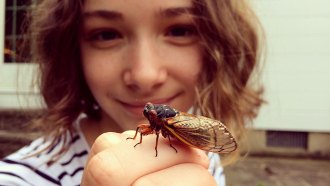
Explainer: What are cicadas?
There are more than 3,000 species of cicadas, but the best known in North America are periodical cicadas, which emerge every 13 or 17 years.
- Animals
How bees play telephone to form a swarm
Honeybees use pheromones and flapping wings to tell each other where to find the queen — so they can all be together. Learn more with this web comic.
- Chemistry
Copper ‘foam’ could be used as filters for COVID-19 masks
The lightweight new material could serve as a washable and recyclable, eco-friendly alternative for many current mask filters.