All Stories
- Chemistry
Sleep-friendlier lighting is on the way
Chemists have created a new glowing material for LEDs. It should lessen how much near-bedtime lighting impairs your ability to nod off.
- Animals
Mantis shrimp inspires somersaults of new soft robot
Its rolling acrobatics allow this robot to move especially swiftly — much as a fictional new Disney character can.
- Materials Science
‘Smart’ pasta morphs into fun shapes as it cooks
The trick to this shape-shifting are grooves cut into the raw pasta. Those grooves affect how the noodles swell as they cook.
- Animals
Most species of beetles pee differently than other insects
Scientists uncover their unique system for balancing ions and water. The findings may hint at why beetles are the most diverse animals on Earth.
- Space
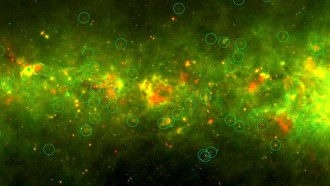
The Milky Way’s ‘yellowballs’ are clusters of baby stars
The mysterious cosmic objects — first spotted by citizen scientists — turn out to be infant stars of various masses.
- Climate
Let’s learn about lightning
Around 100 times a second, every hour of every day, lightning strikes somewhere on Earth. It’s beautiful — and deadly.
- Environment
Pond scum can release a paralyzing pollutant into the air
New study finds blooms of blue-green algae can seed the air with a poisonous pollutant.
- Brain
Scientists Say: Nicotine
Nicotine is an addictive substance found in tobacco plants. It's what makes it so difficult to quit smoking or vaping.
- Animals
A common antibiotic might save some sick corals
The antibiotic amoxicillin stopped tissue death in corals for at least 11 months after treatment.
- Environment
Warning: Wildfires might make you itch
Western wildfires are on the rise due to climate change and land use. Now a study adds eczema to the list of health risks that smoke might trigger.
- Climate
Climate may have sent drift of the North Pole toward Greenland
This mid-1990s shift in the pole’s movement was driven by glacial melt. And that was triggered in part by climate change, a new study reports.
- Animals
The secret to T. rex‘s incredible biting force is at last revealed
The force of a T. rex bite was roughly 6 metric tons. A new study points to what’s behind that mighty force.