Scientists Say
A weekly word defined, in a sentence and in context. Click here to find the alphabetized list.
- Ecosystems
Scientists Say: Bog
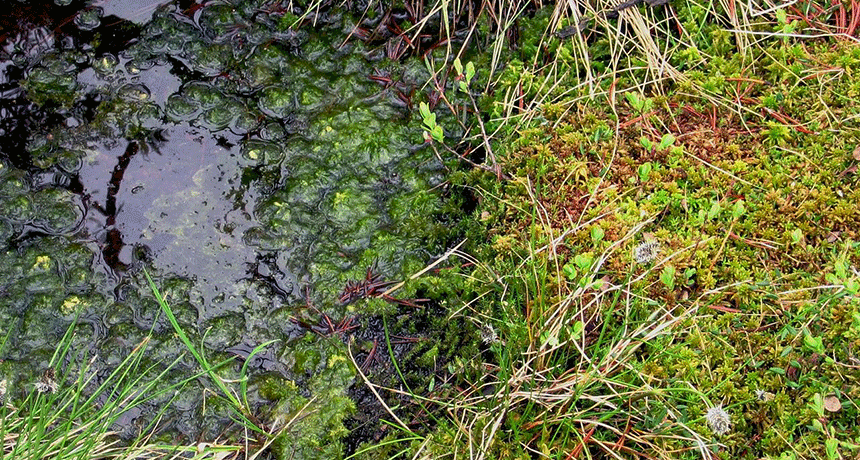
Bogs are a type of wetland in which partially decayed plants sink down and form peat.
- Chemistry
Scientists Say: Amino Acid
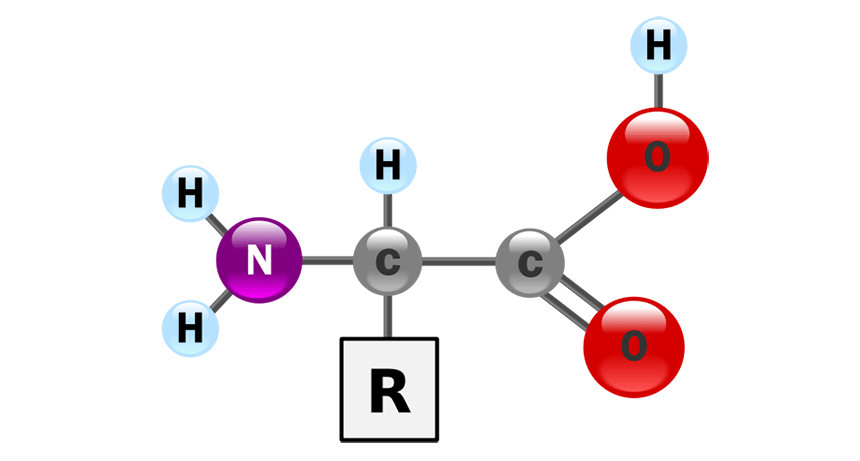
Amino acids are small molecules that make up proteins and serve as messengers in our cells.
- Health & Medicine
Scientists Say: Vestigial
This adjective is used to describe something — like a body part or organ — that doesn’t have a function. Often it is smaller or less developed than the functional version in another species.
- Earth
Scientists Say: Ionosphere
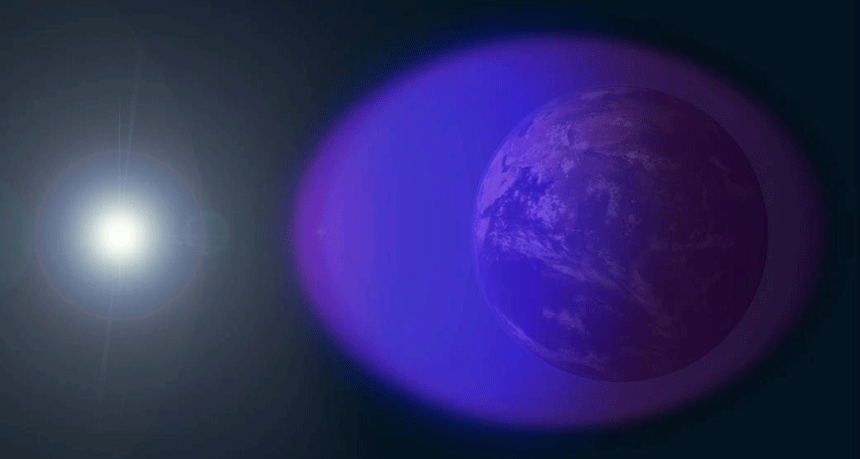
The ionosphere is a region of the Earth’s upper atmosphere. The molecules there absorb ultraviolet light and reflect radio waves.
- Animals
Scientists Say: Luminescence
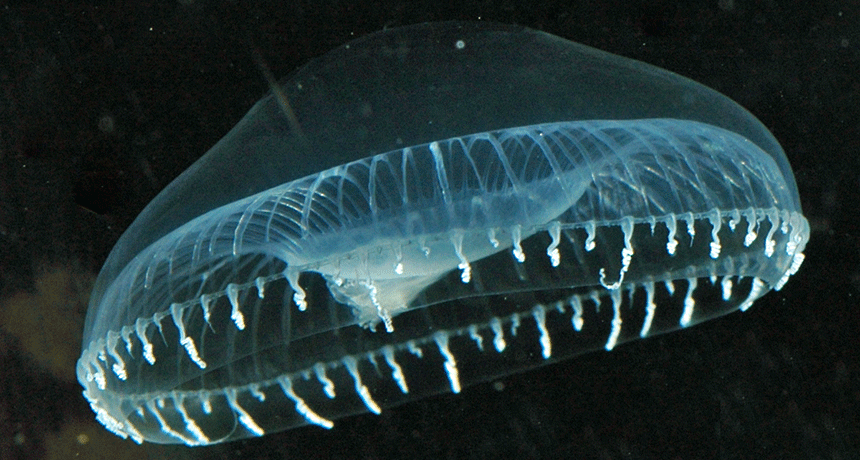
Light and heat don’t always have to go together! Luminescence is what occurs when a substance emits light without making heat.
- Brain
Scientists Say: Rabies
Rabies is a disease caused by the rabies virus. There is a vaccine, but without it, people and animals can die from this disease.
- Animals
Scientists Say: Vampire
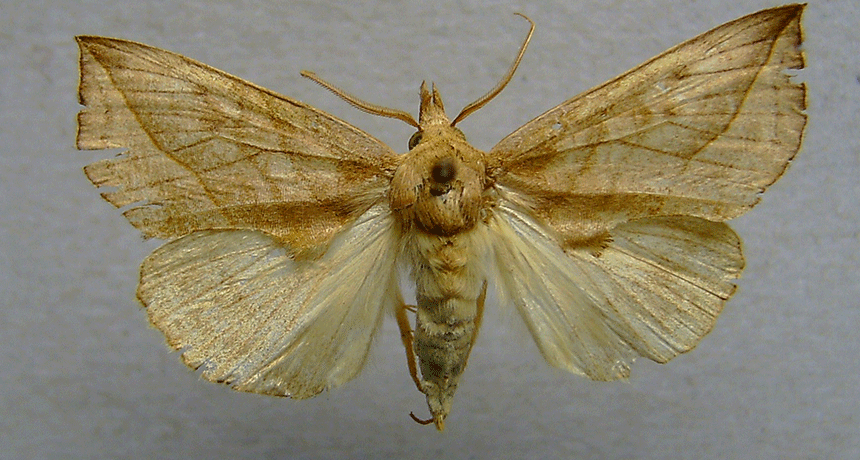
Human vampires are found only in fiction. But vampire bats and moths are the real thing. These animals love the taste of blood, and some can’t live without it.
- Chemistry
Scientists Say: Gradient
This is a word used to describe the rate that something changes over a distance or time. Examples include the strength of a smell or the steepness of a mountain.
- Brain
Scientists Say: Glia
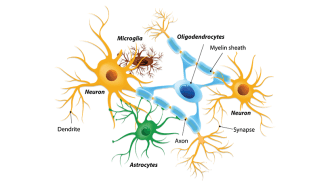
Scientists used to think glial cells did nothing more than glue the brain together. Now we know they do much, much more.
- Computing
Scientists Say: Radar
This is a system used to detect objects large and small. It works by sending out radio waves and waiting for them to bounce back.
- Animals
Scientists Say: Dung
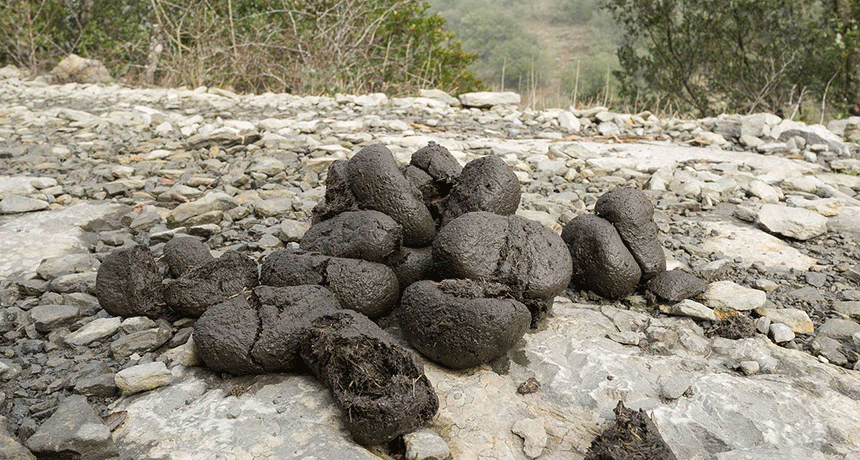
This word is used to refer to animal poop. You know, manure. Crap. Feces.
- Physics
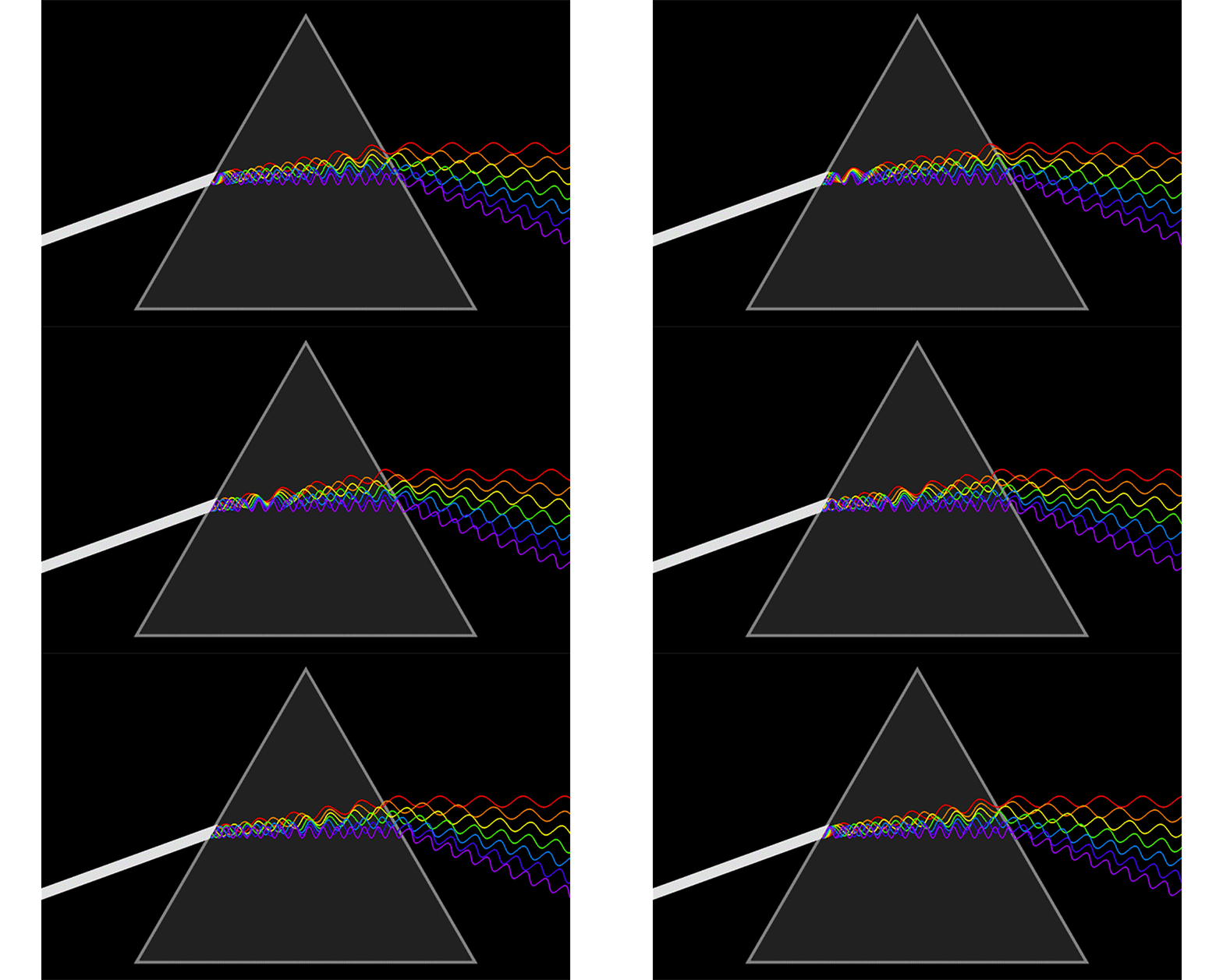
Scientists Say: Refraction
Light or sound may bend as it travels from one medium, such as air, to another, such as water. This bending is called refraction.