Scientists Say
A weekly word defined, in a sentence and in context. Click here to find the alphabetized list.
- Earth
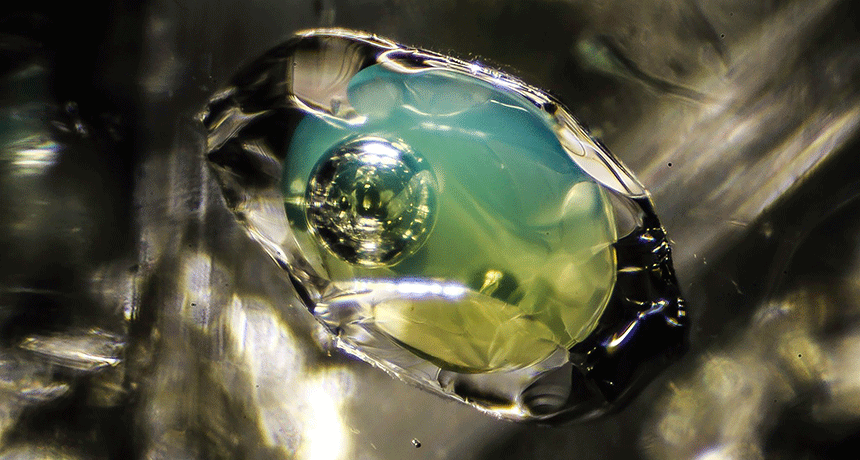
Scientists Say: Inclusion
As rocks form slowly, they can trap things in their timeless clutches. A material trapped inside a mineral is called an inclusion.
- Animals
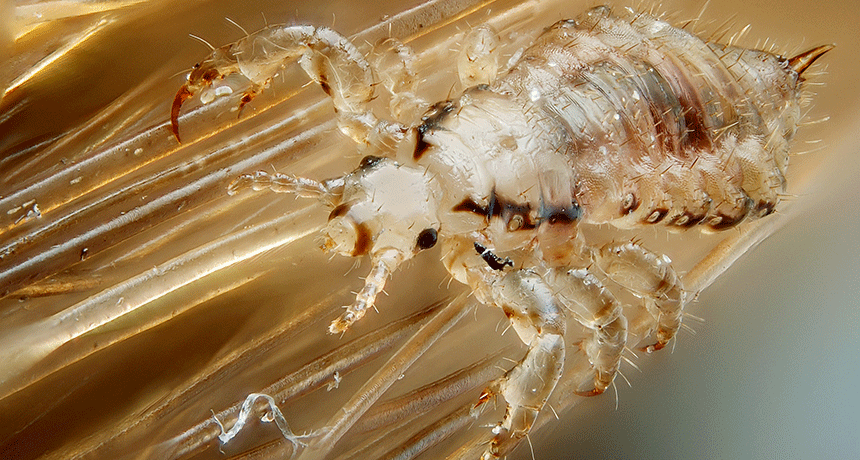
Scientists Say: Ectoparasite
Many people think of parasites as organisms that live inside their hosts. But some of them can be found on the outside instead.
- Health & Medicine
Scientists Say: CT scan
Short for computerized tomography, this technique lets scientists and doctors see insides in detail.
- Animals
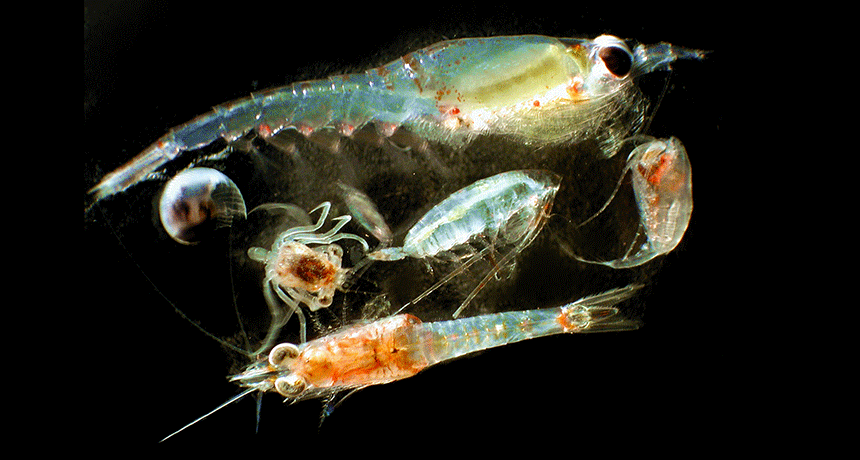
Scientists Say: Zooplankton
These plankton are tiny, but don’t let that fool you. They are predators, too.
- Health & Medicine
Scientists Say: Triclosan
This chemical is known for its bacteria-killing skills. But its use can also promote the development of dangerous, antibiotic-resistant bacteria.
- Computing
Scientists Say: Ampere
An ampere is a unit of electric current. It’s a base unit, meaning it’s one on which all electrical calculations are based.
- Life
Scientists Say: Archaea
Archaea are single-celled organisms that live anywhere from hot springs to your gut. Scientists used to think they were bacteria, but now they know they are their own domain.
- Chemistry
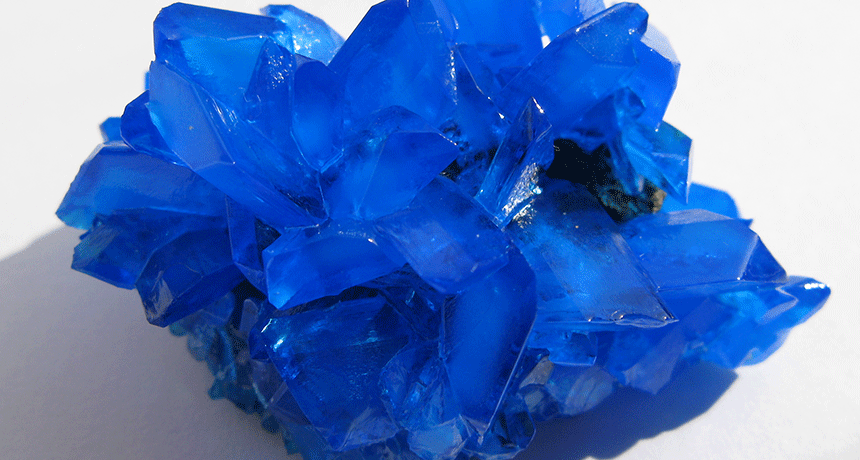
Scientists Say: Salt
Salts in chemistry are compounds made when a positively charged acid is combined with a negatively charged base. Table salt is one example.
- Space
Scientists Say: Neutron star
When large, ancient stars die, they explode. But they don’t disappear. The remnants become incredibly dense neutron stars.
- Health & Medicine
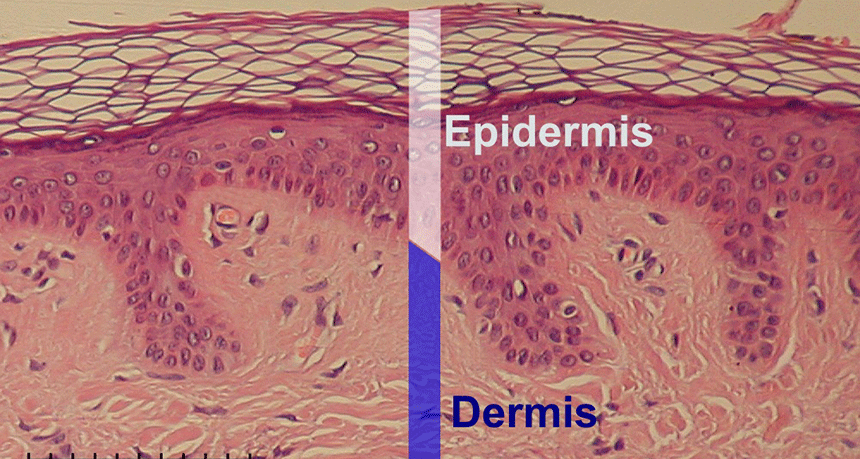
Scientists Say: Epidermis
The epidermis is the outer layer of your skin. It helps protect you from dangerous things in the environment, and helps control how much water evaporates from your body.
- Health & Medicine
Scientists Say: Microbiome
You’ve got company. Every animal and plant has microscopic organisms living on and in them. These include bacteria, protists, archaea, fungi and viruses.
- Physics
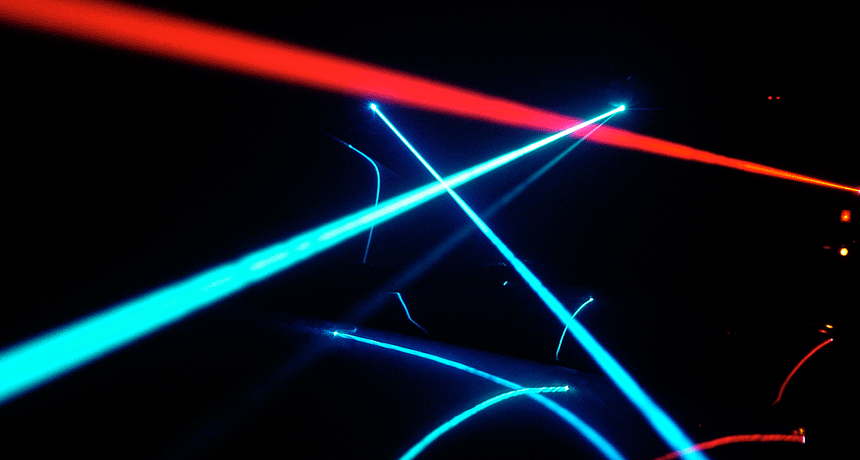
Scientists Say: Laser
A laser is a device that emits a strong, narrow beam of light. “Laser” is actually an acronym, and stands for “light amplification by stimulated emission of radiation.”