Uncategorized
- Computing
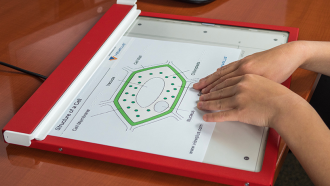
This printer makes ‘visual’ aids for people with sight problems
A physicist’s vision loss was the inspiration to develop new printers. They create touch-to-read maps, charts and graphs. Some can even talk to blind users.
- Climate
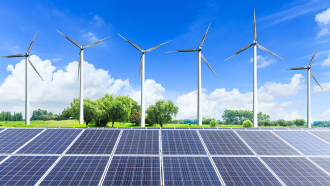
Renewable energy might be able to green a desert
Computer models show that placing wind turbines and solar farms in deserts could increase how much rain falls in nearby areas.
- Space
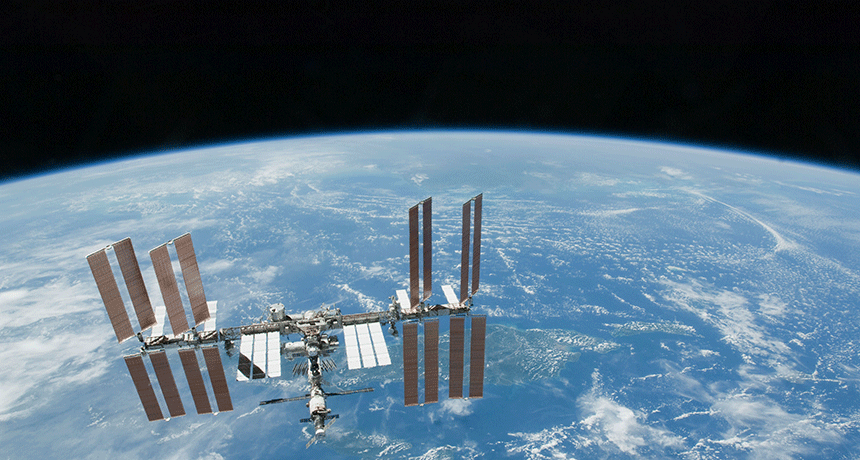
Scientists Say: Orbit
An orbit is the path one object in space takes around another, such as a planet, star or the center of an atom.
- Brain
People may be literally led by their noses
The brain links people’s senses of nagivation and smell, according to a new study.
- Archaeology
Fossils hint ancient humans passed through a green Arabia
Hundreds of thousands of years ago, migrating humans passed through the Arabian Peninsula, a study shows. Instead of desert, they found green grass.
- Health & Medicine
Why can’t bugs be grub?
Insects are tasty and nutritious, and raising them is good for the planet. So how can Westerners be convinced to give insects a taste?
- Life
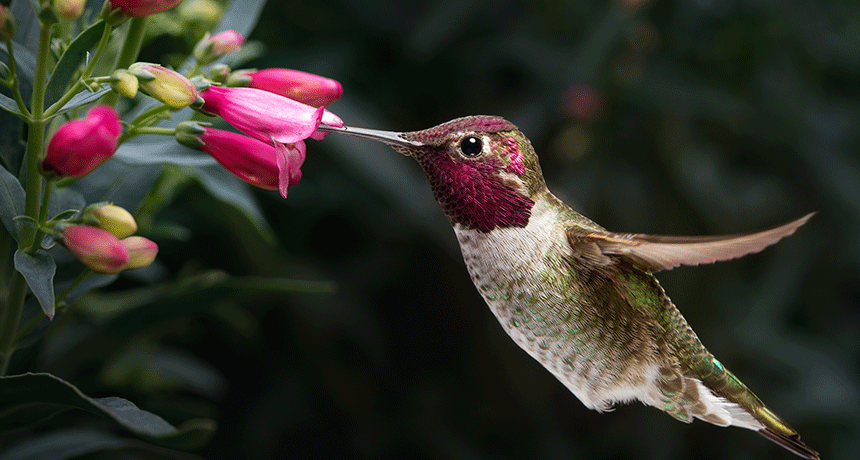
Scientists Say: Nectar
Nectar is a fluid filled with sugar that plants — especially flowers — produce. They use it to attract animals that will then spread their pollen to another plant.
- Physics
Harry Potter can apparate. Can you?
In the world of Harry Potter, wizards apparate and disapparate with ease. How would that work in the non-magical world? Physics has some answers.
- Physics
Scientists vote to fix the world’s weight-loss problem
Scientists will soon vote to change the definition of the kilogram. The event shows how much we depend on a tiny metal cylinder locked in an underground vault in France.
- Climate
California’s Carr Fire spawned a true fire tornado
On July 23, an innocuous spark grew into California’s deadly Carr Fire. Three days later, it unleashed a lethal fire tornado.
- Genetics
Plants don’t grow well when always on high alert
Plants make bitter-tasting chemicals to defend themselves against hungry bugs. But they pay a cost for always being on alert, scientists find.
- Chemistry
Super-water-repellent surfaces can generate energy
Scientists knew they could get power by running salt water over an electrically charged surface. But making that surface super-water-repellent boosts that energy production, new data show.