All Stories by Maria Temming
- Materials Science
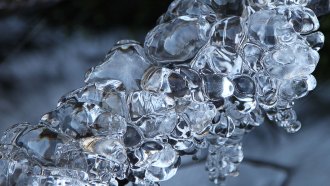
Let’s learn about the weird science of ice
Better understanding of ice could lead to new deicing materials or even, someday, weather control.
- Animals
How can Baby Yoda be 50 years old?
Animals with wings, big bodies or other protections from predators are more likely to evolve long lifespans.
- Chemistry
Scientists Say: Rubisco
Rubisco is a key protein in the process of photosynthesis, which feeds plants — and, in turn, us.
- Earth
Scientists Say: Seismology
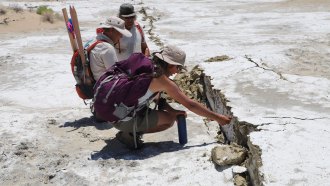
Seismology is the branch of science focused on seismic waves — vibrations that run through or around Earth.
- Humans
Let’s learn about Neandertals
Neandertals are an extinct species closely related to modern humans. They made tools and jewelry, controlled fires and cared for their sick.
- Materials Science
Scientists Say: Hydrogel
Tangled polymer chains help hydrogels hold their shape despite being full of water.
- Animals
Scientists Say: Metamorphosis
Animals that go through metamorphosis look very different as adults than they did as kids.
- Physics
Let’s learn about the quantum realm
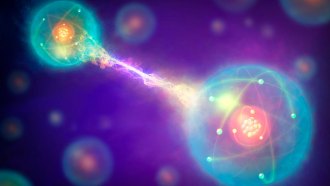
On the smallest scales, the universe behaves in some pretty strange ways.
- Physics
Scientists Say: Fusion
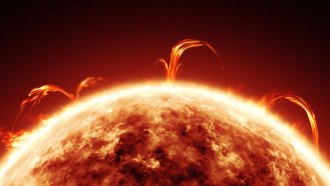
Nuclear fusion is the physics that powers the sun and could someday provide abundant clean energy on Earth.
- Science & Society
Let’s learn about why schools should start later
The American Academy of Pediatrics recommends that middle and high schools start no earlier than 8:30 a.m.
- Physics
Scientists Say: Fission
Nuclear fission is the process of splitting atoms apart to release huge amounts of energy.
- Computing
Scientists Say: Artificial intelligence
Artificial intelligence is technology smart enough to do tasks that would normally require human brainpower.