Antarctica: A continent mostly covered in ice, which sits in the southernmost part of the world.
aquatic: An adjective that refers to water.
biodiversity: (short for biological diversity) The number and variety of species found within a localized geographic region.
bog: A type of wetland that forms peat from the accumulation of dead plant material — often mosses.
carbon: A chemical element that is the physical basis of all life on Earth. Carbon exists freely as graphite and diamond. It is an important part of coal, limestone and petroleum, and is capable of self-bonding, chemically, to form an enormous number of chemically, biologically and commercially important molecules. (in climate studies) The term carbon sometimes will be used almost interchangeably with carbon dioxide to connote the potential impacts that some action, product, policy or process may have on long-term atmospheric warming.
climate: The weather conditions that typically exist in one area, in general, or over a long period.
climate change: Long-term, significant change in the climate of Earth. It can happen naturally or in response to human activities, including the burning of fossil fuels and clearing of forests.
continent: (in geology) The huge land masses that sit upon tectonic plates. In modern times, there are six established geologic continents: North America, South America, Eurasia, Africa, Australia and Antarctica. In 2017, scientists also made the case for yet another: Zealandia.
downstream: Further on in the direction in which a stream is flowing or the path stream water takes as it flows towards a lake or sea.
ecologist: A scientist who works in a branch of biology that deals with the relations of organisms to one another and to their physical surroundings.
ecosystem: A group of interacting living organisms — including microorganisms, plants and animals — and their physical environment within a particular climate. Examples include tropical reefs, rainforests, alpine meadows and polar tundra. The term can also be applied to elements that make up some artificial environment, such as a company, classroom or the internet.
erosion: (v. erode) The process that removes rock and soil from one spot on Earth’s surface, depositing it elsewhere. Erosion can be exceptionally fast or exceedingly slow. Causes of erosion include wind, water (including rainfall and floods), the scouring action of glaciers and the repeated cycles of freezing and thawing that occur in many areas of the world.
filter: (n.) Something that allows some materials to pass through but not others, based on their size or some other feature. (v.) The process of screening some things out on the basis of traits such as size, density, electric charge.
forest: An area of land covered mostly with trees and other woody plants.
freshwater: A noun or adjective that describes bodies of water with very low concentrations of salt. It’s the type of water used for drinking and making up most inland lakes, ponds, rivers and streams, as well as groundwater.
greenhouse gas: A gas that contributes to the greenhouse effect by absorbing heat. Carbon dioxide is one example of a greenhouse gas.
habitat: The area or natural environment in which an animal or plant normally lives, such as a desert, coral reef or freshwater lake. A habitat can be home to thousands of different species.
hurricane: A tropical cyclone that occurs in the Atlantic Ocean and has winds of 119 kilometers (74 miles) per hour or greater. When such a storm occurs in the Pacific Ocean, people refer to it as a typhoon.
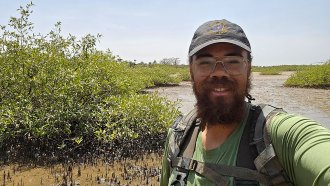
mangrove: A type of shrub or tree that lives mostly in coastal swamps and usually has long, tangled, above-ground roots.
marsh: A low-lying wetland usually covered with grasses and shrubs, not trees. It’s a prime feeding and nesting ground for waterfowl.
media: A term for the ways information is delivered and shared within a society. It encompasses not only the traditional media — newspapers, magazines, radio and television — but also digital outlets, such as Twitter, Facebook, Instagram, TikTok and WhatsApp. The newer, digital media are sometimes referred to as social media. The singular form of this term is medium.
peat: Largely decomposed plant material that develops in the absence of oxygen within a water-saturated site, such as a bog. When dried out, peat can be burned as a low-grade fuel.
pesticide: A chemical or mix of compounds used to kill insects, rodents or other organisms harmful to cultivated plants, pets or livestock; or unwanted organisms that infest homes, offices, farm buildings and other protected structures.
pollutant: A substance that taints something — such as the air, water, our bodies or products. Some pollutants are chemicals, such as pesticides. Others may be radiation, including excess heat or light. Even weeds and other invasive species can be considered a type of biological pollution.
sea level: The overall level of the ocean over the entire globe when all tides and other short-term changes are averaged out.
sediment: Material (such as stones and sand) deposited by water, wind or glaciers.
sentient: (n. sentience) An adjective to describe the ability to perceive or feel things, such as pain, boredom, awe or sadness.
sewage: Wastes — primarily urine and feces — that are mixed with water and flushed away from homes through a system of pipes for disposal in the environment (sometimes after being treated in a big water-treatment plant).
species: A group of similar organisms capable of producing offspring that can survive and reproduce.
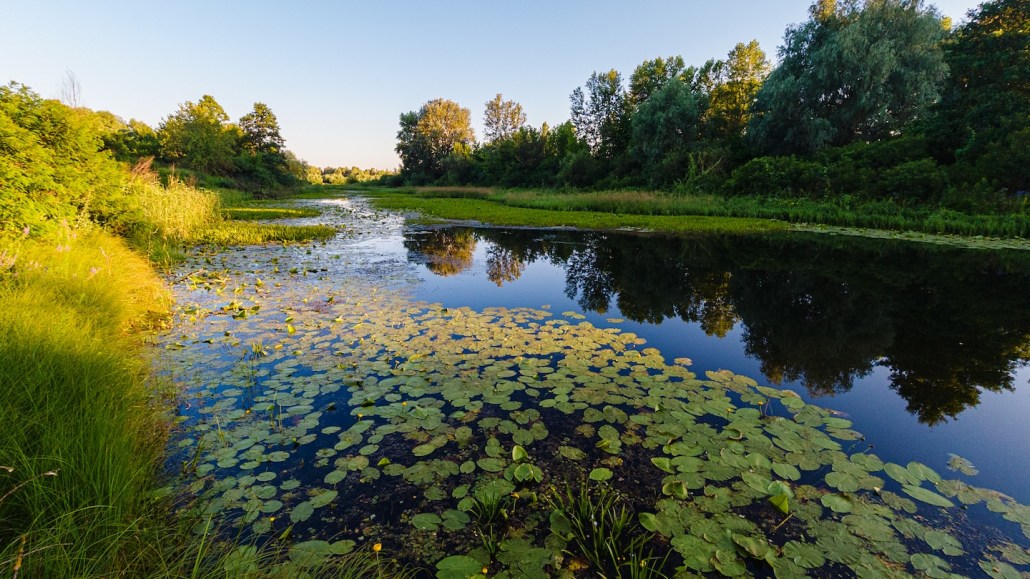
wetland: As the name implies, this is a low-lying area of land either soaked or covered with water much of the year. It hosts plants and animals adapted to live in, on or near water.
wood: A porous and fibrous structural tissue found in the stems and roots of trees, shrubs and other woody plants.