Questions for ‘Chopping an onion? Sharp knives can keep its juice out of your eyes’
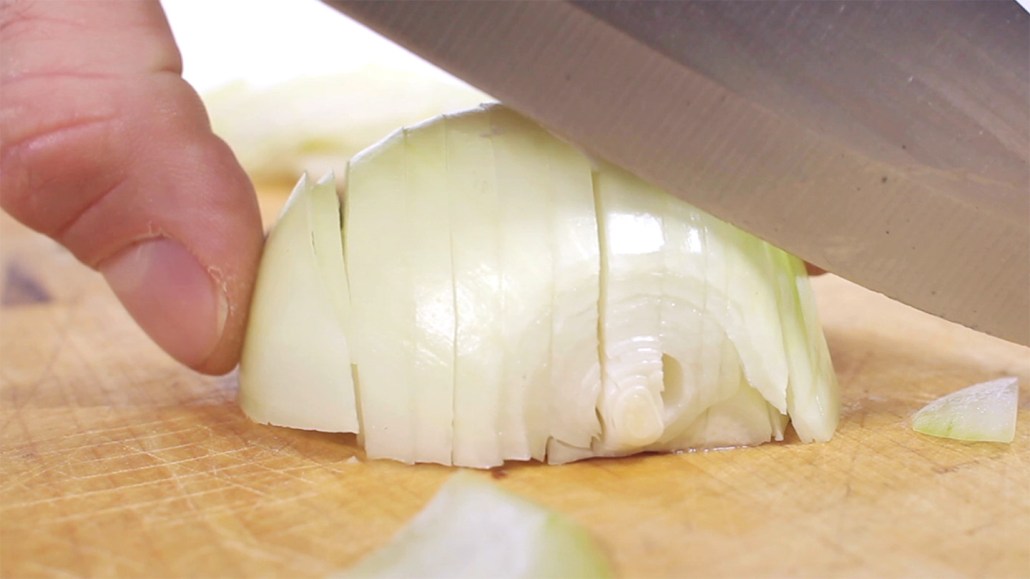
a close up view of a person holding half an onion on a cutting board and using a knife to cut it

A chemical in flying onion juice is the culprit for a cook’s stinging tears. Changing how the onion is chopped can eliminate those tears.

chiinka/Creatas Video+/Getty Images Plus

To accompany ‘Chopping an onion? Sharp knives can keep its juice out of your eyes

SCIENCE

Before Reading:

  1. Contrast the sensory experience of slicing a juicy onion vs an apple. Brainstorm some reasons for the differences.

During Reading:

  1. What is the name of the chemical responsible for the tears that can be triggered by slicing an onion? What causes that chemical to form?
  2. Describe step-by-step what is happening to cause a cook’s eyes to get irritated while cutting an onion.
  3. How else might this research help people besides offering relief to cooks?
  4. Describe the event that inspired Navid Hooshanginejad to study tear-inducing onion cutting.
  5. What question did Hooshanginejad ask himself that led him to research onion-cutting techniques?
  6. List two pieces of equipment the team used to compare different cutting techniques.
  7. Describe how onion juice droplets can become airborne. Include the concept of pressure in your answer.
  8. Describe two adjustments you could make in onion cutting or your tools to increase the speed of onion-droplet sprays.

After Reading:

  1. Explain why a blunt blade causes more droplet spray than a sharp blade, in your own words. Include the concept of pressure in your explanation.
  2. An analogy is a literary technique used by writers to clarify an unfamiliar concept to a reader. It works by relating the unfamiliar concept to something familiar. Search through this story and find one example of an analogy. Describe that analogy and explain how it clarifies a concept in this story.