Questions for ‘Here’s what nutrition experts say about dietary fat’ 
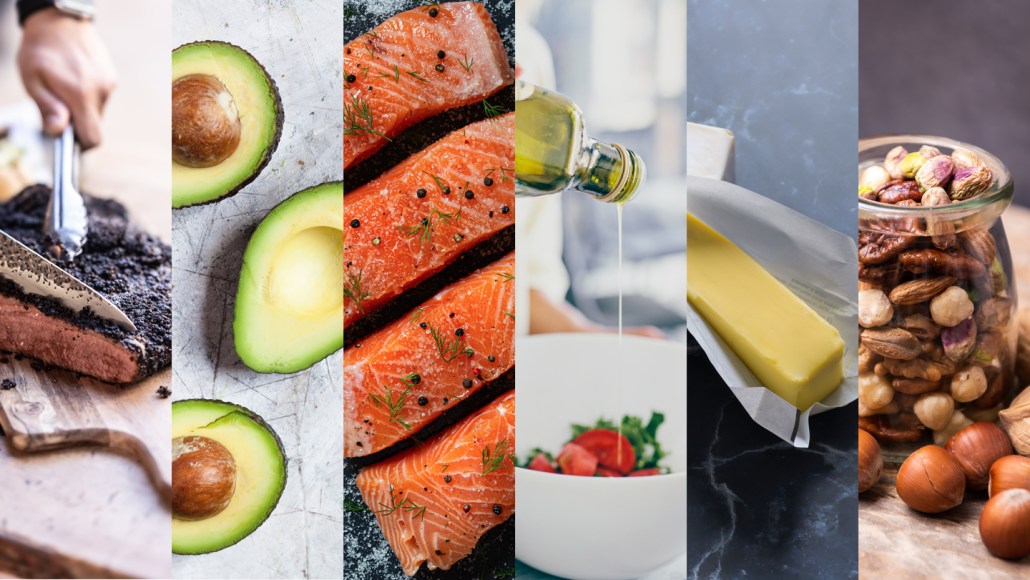
This composite image shows different sources of fat in our diets: someone slicing steak, three half avocados, four strips of salmon ready to cook, someone pouring olive oil on a salad, a stick of butter with its wrapper half off and a jar of nuts.

Many foods are sources of fat. But some fats are healthier than others. Pictured from left to right are steak, avocados, salmon, olive oil, butter and nuts.

From left: SimpleImages/Moment/Getty Images; Westend61/Getty Images; VIKTORIIA DROBOT/Moment/Getty Images; Ekaterina Goncharova/Moment/Getty Images; Wirestock/iStock/Getty Images Plus; HUIZENG HU/Moment/Getty Images

To accompany Here’s what nutrition experts say about dietary fat

SCIENCE

Before Reading:

  1. What is the benefit of a food label’s nutritional information panel? Either from memory or by examining food wrappers, write down three types of fat subgroups that a label might reference. Which of these do you perceive as being the healthiest? Briefly explain why you associate this particular fat subgroup with being healthier than others.
  2. Do you believe that a typical person — not necessarily you — perceives fats as a generally healthy, unhealthy or health-neutral part of our diet? To what extent does your own perception of the value of fats in our diet align with this assessment? Briefly explain your answer.
  3. Describe a typical healthy meal that you enjoy. What makes this meal healthy? Identify three aspects of this meal that you believe make it good for you.

During Reading:

  1. In one or two sentences, contrast the new food pyramid with the old one. Highlight the major differences.
  2. What concern does Deirdre Tobias express regarding the new health recommendations on butter and animal fat consumption?
  3. List three examples of foods containing high levels of saturated fat.
  4. Contrast the consistency of typical unsaturated fats with that of saturated fats at room temperature.
  5. Describe one role fats play in our bodies.
  6. What does LDL stand for?
  7. To what extent did people at high risk of heart disease benefit from cutting saturated fats out of their diet? To what extent did people at low risk of heart disease benefit from this change?
  8. Compare the calories in one gram of saturated fat with those in one gram of unsaturated fat.
  9. Give one example of a food high in alpha-linolenic acid.
  10. What is the relationship between linoleic acid, arachidonic acid and inflammation?

After Reading:

  1. Draw a concept map to represent the relationship between the following fat-related terms: fats, unsaturated fats, fish, nuts, seeds, saturated fats, oleic acid, monounsaturated, polyunsaturated, butter, dairy, animal fats and alpha-linolenic acid. Use this example of a concept map to guide you. Also feel free to refer to the images in this story for ideas about how to organize the terms. To get started, simply write the broadest term at the top of your page. From this list, that word is “fats.” Think of this as the biggest idea in your concept map. All other terms will branch from “fats,” either directly or indirectly. Use arrows or lines to connect these words. Next to each line, write a brief explanation to connect the ideas, as shown in the example.
  2. How does an omega-3 type fatty acid differ from an omega-6? Based on this pattern, how might you identify an omega-8 fatty acid? Draw a sketch to highlight the differences between an omega-3 fatty acid and an omega-8 fatty acid.
  3. Based on the information in this story, approximately how many calories will you consume if you eat something with the following nutritional profile: 5 grams of unsaturated fats, 2 grams of saturated fats, 2 grams of protein and 7 grams of carbohydrates? Show how you arrived at your answer.